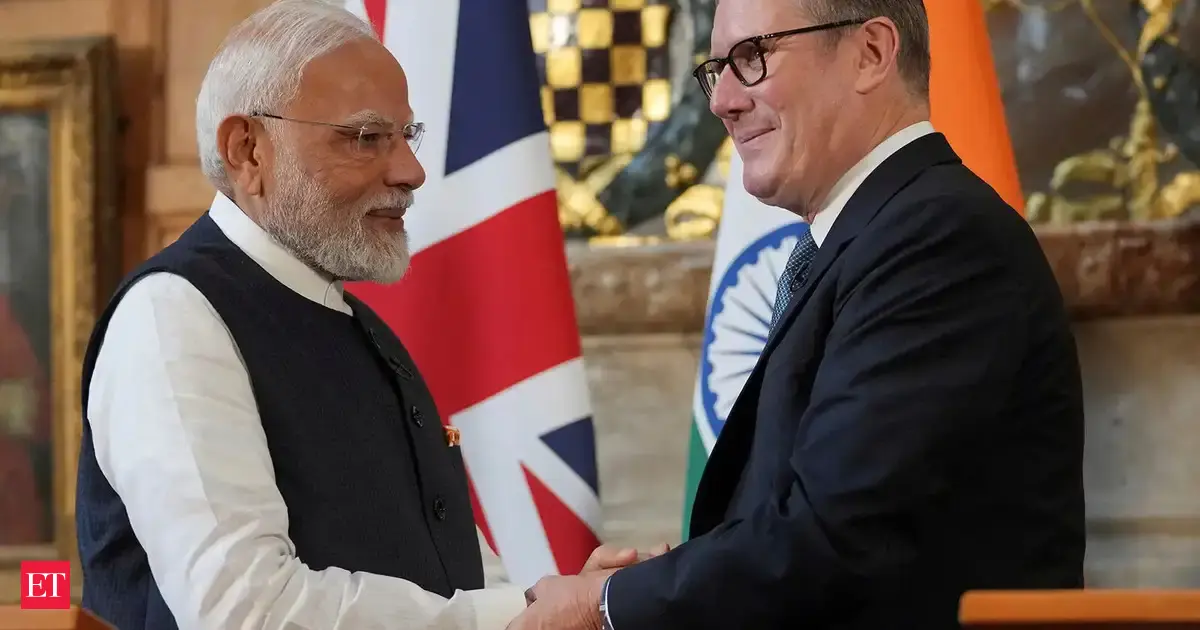
The India-UK comprehensive economic and trade agreement (CETA) officially came into force on Wednesday, July 15, 2026, according to the Economic Times. The pact aims to boost bilateral trade in goods and services from the current level of about USD 55-60 billion to USD 100 billion within the next 3-4 years. Under the agreement, several Indian export sectors will immediately benefit from zero-duty access to the British market, while sensitive segments like internal combustion engine vehicles and affordable EVs remain protected. A Double Contribution Convention (DCC) will exempt Indian professionals and their employers from dual social security contributions.
Zero-Duty Access for Indian Exports
From July 15 itself, a number of India’s export sectors will enter the British market at zero duty, the report stated. These sectors include:
- Textiles
- Leather and footwear
- Gems and jewellery
- Plastics
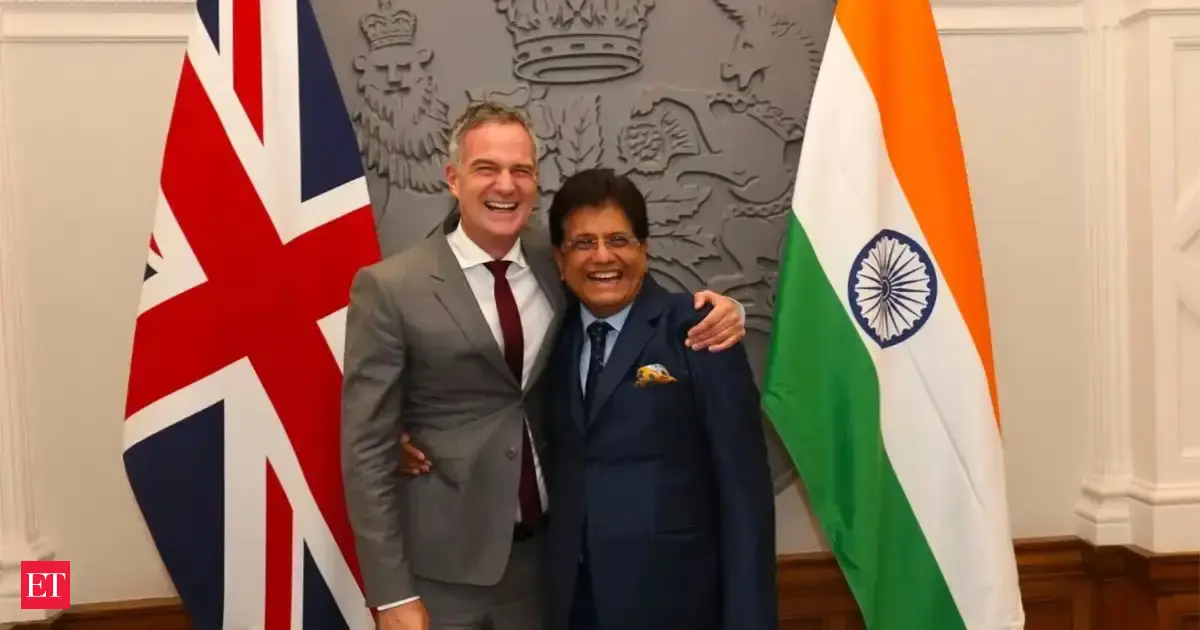
Darpan Jain, from the Department of Commerce, said sensitive segments, including small and mid-segment ICE (internal combustion engine) vehicles and affordable EVs, remain protected, allowing Indian manufacturers to strengthen scale, technology and competitiveness.
| Sector | Treatment Under Pact | Effective Date |
|---|---|---|
| Textiles, leather, footwear, gems & jewellery, plastics | Zero duty | July 15, 2026 |
| Small/mid ICE vehicles, affordable EVs | Protected (no immediate liberalisation) | July 15, 2026 |
Silver Imports and Rules of Origin
India has granted duty concessions on imports of silver from the UK under CETA, but an official emphasised that rules of origin are quite stringent and “does not lead to a potential abuse of the duty concessions.” According to the think tank GTRI, the current 10.75% duty on silver will be eliminated over 10 years, although imports remain subject to licencing requirements.
India’s import data highlights the significance of silver: India imported nearly USD 5.2 billion worth of silver from the UK in FY26, accounting for about 45% of its global silver-bar imports. By contrast, gold bars, despite imports of USD 111 million, receive no tariff concession, reflecting India’s sensitivity over precious-metal imports.
"We have given the concession, but rules of origin are quite stringent," an official said.
Double Contribution Convention (DCC)
The agreement includes an India-UK Double Contribution Convention (DCC) that addresses social security contributions for Indian professionals posted to the UK. Currently, Indian employees and their employers contribute around 23% of the salary to the UK’s National Insurance System. Jain explained, "Current contribution is like a tax of 23% as employees are unable to draw benefits. DCC will ensure that workers will not pay double contributions towards their social security."
Industry estimates suggest annual savings of more than USD 600 million on this account. The DCC will benefit over 75,000 Indian workers and over 900 employers by exempting Indian professionals and their employers from UK social security contributions for a stay of up to 5 years, the Economic Times reported.
Sources: