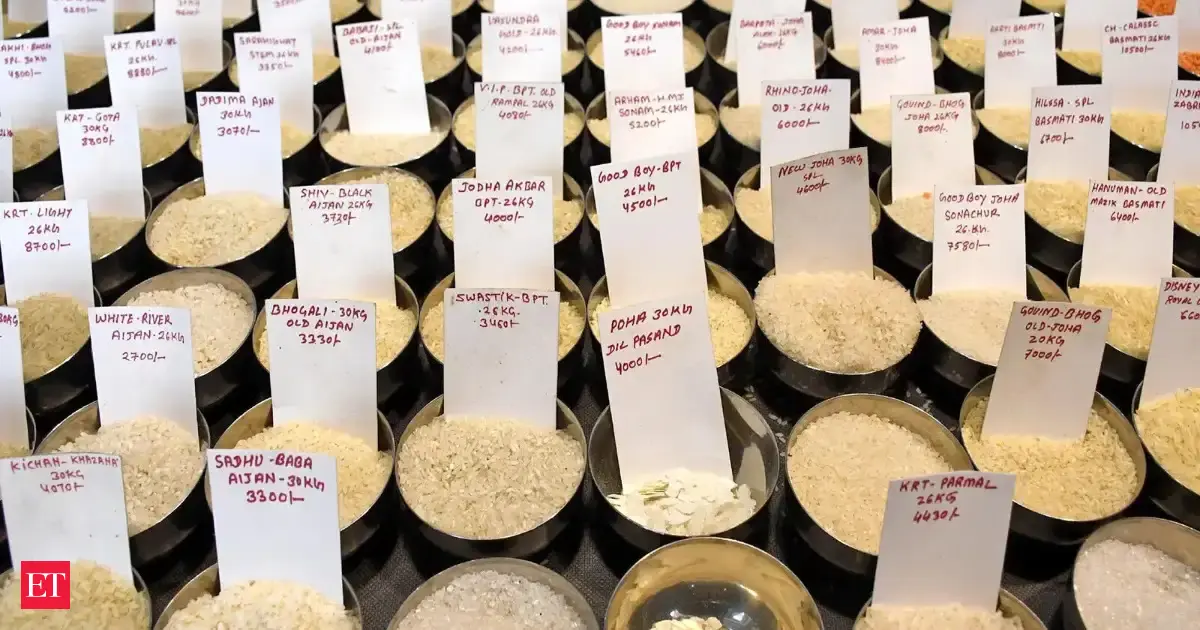
Rice trade between India and China has ground to a halt, according to The Hindu BusinessLine, after Beijing revoked the registrations of seven Indian rice exporters over the alleged presence of genetically modified organisms. The General Administrations of Customs of the People's Republic of China (GACC) revoked the registrations of exporters based in Chhattisgarh, Karnataka and Andhra Pradesh, including three that had been suspended earlier this year, the report said.
Registrations revoked amid GMO allegations
According to The Hindu BusinessLine, the GACC revocation amounts to a ban on the seven exporters, including the three suspended earlier. An official source, speaking on condition of anonymity, said: "China's intentions are malafide. It has resorted to this step since its rice requirements for this year have been fulfilled."
Exporters question GMO finding after pre-shipment clearance
Officials, traders, exporters and analysts told The Hindu BusinessLine that the Chinese move is questionable because one of its agencies clears pre-shipment consignments before they are loaded. India does not grow any GM crop at all, leave alone GM paddy, the report said. Until the end of May, China rejected at least 70 Indian non-basmati rice consignments, alleging they contained GMO. These rejections continued despite the Narendra Modi government's communication to Beijing specifically stating that no GM crop is grown in the country.
An exporter whose licence was revoked asked: "How can a consignment cleared by its agency in India suddenly contain GMO when it reaches the destination?" Another exporter added: "China seems to be finding GMOs in alternate shipments. Exports to China are not worth the risk. Half of the costs of the consignments goes towards freight. As a result, rice trade with China has come to a total halt."
Rice Exporters Association writes to APEDA
The Rice Exporters Association, Chhattisgarh, wrote to APEDA Chairman Abhishek Dev to approach GACC to resolve the issue of China's GMO claims. The association cited a 520-tonnes consignment of Swarna white rice 100% broken sent from Visakhapatnam port to Shekou in China that was rejected recently for alleged GMO presence. The consignment had undergone a pre-shipment test in India, but Chinese authorities rejected it. Association president Mukesh Jain said in the letter: "Genetically modified paddy is not approved in India and there is no commercial cultivation of GM paddy in the country."
India's rice trade numbers at a glance
In the 2025-26 season, India exported 21.56 million tonnes of rice, including basmati, valued at $11.53 billion, according to The Hindu BusinessLine. Global rice trade was estimated at 59.8 million tonnes, and Indian exports make up 40 per cent of the global rice export market, the report said.
| Metric | Value |
|---|---|
| Indian rice exports in 2025-26 (incl. basmati) | 21.56 million tonnes |
| Export value | $11.53 billion |
| Global rice trade estimate | 59.8 million tonnes |
| India's share of global rice export market | 40% |
| Non-basmati rice consignments rejected by China by end-May | at least 70 |
China silent on testing methodology
Official sources told The Hindu BusinessLine in May that Indian officials held talks with GACC officials in the third week of that month. However, Chinese officials did not explain the methodology for rejecting Indian consignments. The Chinese move has triggered fears of a trade war being waged by Beijing. The ban on the seven exporters comes despite APEDA having clear-cut procedures to follow for rice shipments to China, the report said. Exporters worry that Beijing is not being openly questioned by New Delhi.
Government urged to counter narrative
A trade analyst in the report said China is building a narrative against India in the global market and could be trying to prop up Pakistan rice. "The Government must come out to take on this narrative. Otherwise, it could harm our interests. Silence may work in some cases, but it cannot be construed as weakness," the analyst said. The analyst also warned that such a narrative could harm India's exports of basmati and non-basmati rice to western nations, particularly the European Union.
The development comes at a time when India is planning to begin cultivation of gene-edited paddy from the oncoming kharif season, according to The Hindu BusinessLine. The report noted that a gene-edited crop differs from a genetically modified one, as the latter has a foreign gene inserted.
Sources: