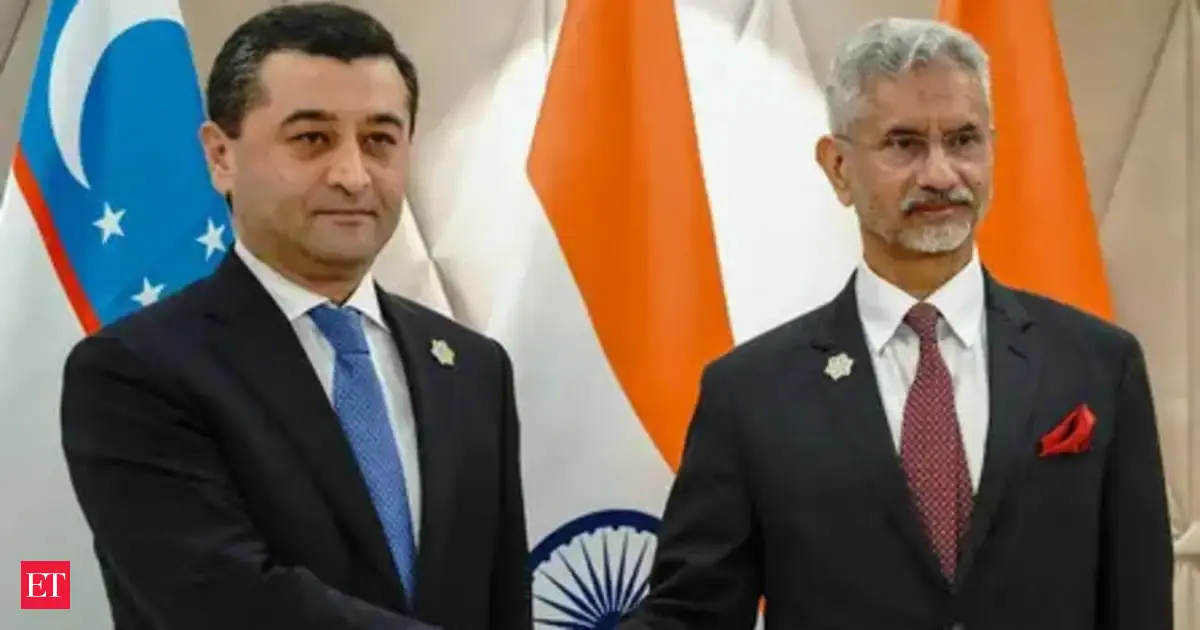
India and Uzbekistan have set an ambitious target to double bilateral trade within the next three years, according to a statement from India's commerce and industry ministry. The goal was discussed at the 14th Session of the India-Uzbekistan Intergovernmental Commission on Trade, Economic, Scientific and Technological Cooperation, as reported by the Economic Times.
Bilateral Trade Target
India-Uzbekistan goods trade stood at $672.5 million in FY26. The two sides aim to double this figure within three years, signaling stronger economic ties. The commission session served as a platform to review progress and identify new areas of collaboration.
Customs Data Exchange and Payment Infrastructure
The Indian side proposed cooperating on customs data exchange and exploring interlinking of payment infrastructure for secure and efficient payments, the commerce and industry ministry stated. These measures are intended to support tourism, trade, and commerce between the two nations.
Strategic Sectors: ICT, Digital Cooperation, and Energy
Both countries discussed ICT and digital cooperation as well as energy as strategic areas. India highlighted its fast-growing digital economy, including rising demand from artificial intelligence, data centres, and advanced computing, which requires reliable and clean baseload power.
In this context, ensuring critical minerals supply was identified as an important area for advancing India-Uzbekistan energy cooperation, according to the ministry statement.
Non-Tariff Barriers and Regulatory Dialogue
New Delhi stated that non-tariff barriers relating to approvals, standards, testing, certification, customs procedures, and market-access requirements need regular review. The ministry emphasized that businesses need predictability, regulators need dialogue, and standards bodies need direct contact. A time-bound mechanism on resolving non-tariff barriers to trade would help convert goodwill into trade outcomes.
| Key Discussion Points | Details |
|---|---|
| Current Trade Value (FY26) | $672.5 million |
| Target | Double within 3 years |
| Proposed Cooperation | Customs data exchange, payment infrastructure interlinking |
| Strategic Sectors | ICT, digital cooperation, energy (including critical minerals) |
| Non-Tariff Barriers | Approvals, standards, testing, certification, customs procedures |
Implications for Importers and Exporters
The explicit target and proposed mechanism for resolving non-tariff barriers provide a more predictable operating environment for trade professionals. Customs data exchange and payment infrastructure improvements could reduce transaction costs and clearance times. The focus on critical minerals and energy cooperation opens opportunities for Indian importers of raw materials and Uzbek exporters of mineral resources. Regular review of standards and certifications will be essential for maintaining market access.
Sources: