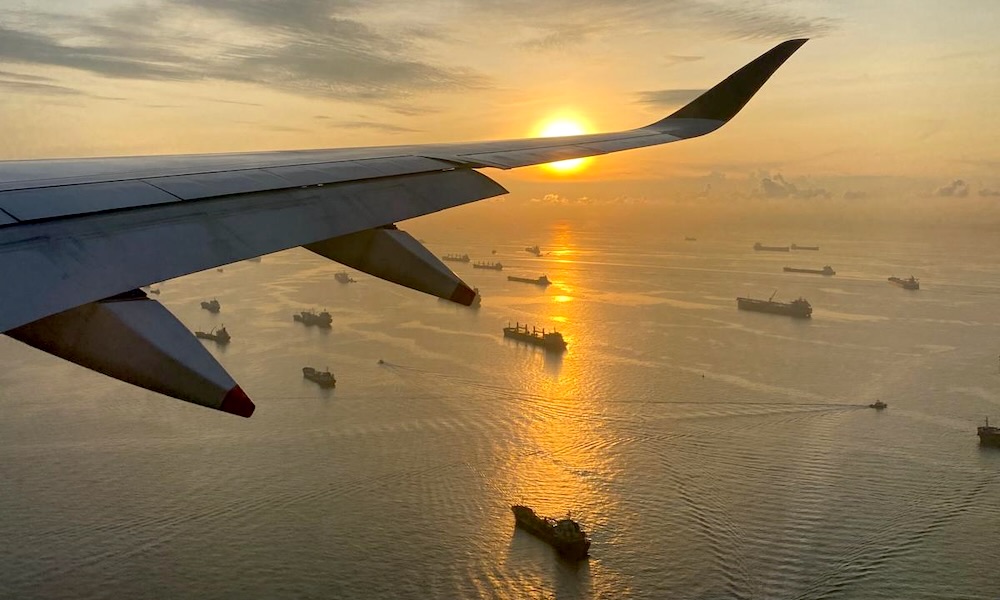
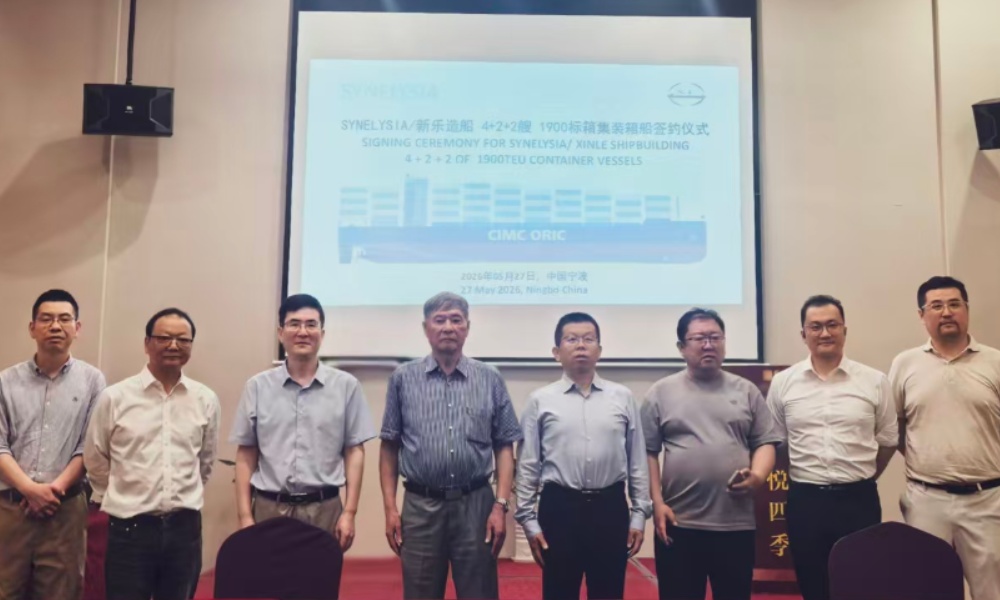
The global shipping industry — reliant on two million seafarers to crew the world's commercial fleet — is facing an intensifying talent crisis that could disrupt supply chains and raise operational costs, according to industry leaders gathered at a seminar in Athens. Without urgent action to recruit and retain skilled personnel, shipowners and operators may struggle to maintain vessel schedules and comply with evolving safety and environmental regulations.
The Talent Gap Widens
Paul Pathy, president of the Baltic and International Maritime Council (BIMCO), opened the Copenhagen-based association's seminar in Athens by stressing the human dimension of maritime geopolitics. "This could hardly be more topical at a time when around 20,000 seafarers are stuck in the Persian Gulf," Pathy said. "At times like these, it's not only the principle of freedom of navigation that is compromised, but also the freedom of our seafarers who are prevented from going home to their families." BIMCO Secretary General David Loosley added that "when shipping makes the headlines, it's usually because something has gone wrong, and too often what gets lost behind the headlines is the human dimension; the people."
Julia Anastasiou, chief crew management officer at OSM Thome, a leading ship management company headquartered in Norway with U.S. offices, identified a critical distinction: "There are gaps in the recruitment and training processes," she said. Anastasiou described a "fight for talent" rather than simply a fight for recruitment, and warned that these gaps — and the costs they create — translate to human beings. She emphasized that improvements must be made collectively, involving governments, flag states, and other stakeholders.
Elpi Petraki, an executive with Greek shipowner Enea Management and president of the Women's International Shipping & Trading Association (WISTA), underscored the dual challenge of attracting younger seafarers while retaining the institutional knowledge of experienced crew transitioning to shore-based roles.
Upskilling for New Fuels and Technologies
The rapid adoption of alternative fuels is adding urgency to the training challenge. Marina Papaioannou, regional maritime academies manager at DNV in Oslo — one of the oldest classification societies setting technical standards for vessel safety — noted that "with the new fuels coming in, the industry will need to address this due to the transitional period." She specifically cited liquefied natural gas (LNG) and ammonia as fuels requiring new safety protocols. "Skills such as leadership and communication must be enhanced to make the seafarers feel safe and that the human element must never be left behind," Papaioannou said.
Criminalization and Welfare Risks
A separate panel highlighted the growing problem of seafarer criminalization. Eleni Antoniadou, a maritime lawyer at Gard AS, a protection and indemnity (P&I) mutual insurance association in Greece, said that seafarers are frequently scapegoated in drug-related incidents. "Such cases often get a lot of media attention and often lead to long detentions for the seafarers," she noted. Antoniadou reported a rise in drug cases and urged shipowners to provide legal support, accommodations, medical care, and food for affected crew.
Alan Croft, business development manager at the International Seafarers’ Welfare and Assistance Network (ISWAN), added that seafarers in detention and their families often do not know what will happen next. "The role of the network is to reduce the human impact and that prevention and preparedness is critical, including education on the consequences, the risk of cutting corners, what to do, who to contact immediately, what their rights are and how to preserve evidence," Croft said. He suggested a practical emergency pack could make a real difference for seafarers who are essential to global trade but often not treated as such.
What This Means for Shippers and Operators
The talent shortage has direct implications for freight forwarders, logistics managers, and port authorities. Vessel delays and reduced capacity can arise if crewing gaps lead to ships unable to sail. Operators should prepare for higher crewing costs as competition for skilled seafarers intensifies. Additionally, the criminalization risk means that any drug-related incident on a vessel can result in prolonged detentions, disrupting schedules and incurring legal expenses. Shippers should engage with carriers that demonstrate strong seafarer welfare programs and transparent compliance practices.
| Key Issue | Impact on Operations | Recommended Action |
|---|---|---|
| Recruitment gaps | Potential crew shortages, delayed sailings | Collaborate with training institutions and governments |
| New fuel technology upskilling | Need for qualified crew for LNG/ammonia vessels | Invest in continuous training programs |
| Criminalization of seafarers | Risk of vessel detention, legal costs | Provide legal support and emergency protocols |
| Retention of experienced crew | Loss of institutional knowledge | Offer shore-side transition paths and incentives |
Watch List
- Maritime Workforce Report: BIMCO is set to release a detailed report later this month covering workforce issues, which may provide quantitative data on the shortage.
- Geopolitical Tensions: The situation of seafarers stuck in the Persian Gulf could worsen if conflicts escalate, further constraining crew availability.
- Regulatory Changes: New safety standards for alternative fuels
Sources: