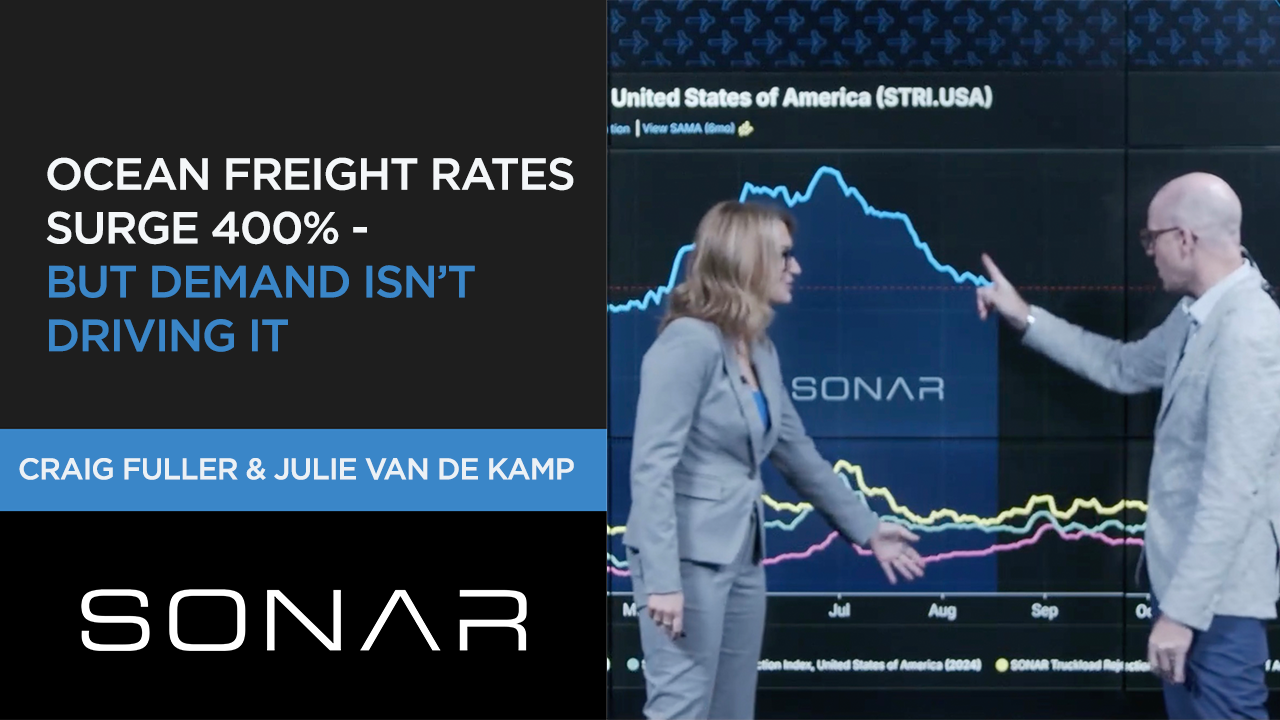
Ocean spot rates on the benchmark Asia-U.S. West Coast route held steady at $4,836 per forty-foot equivalent unit (FEU) in the latest week, while Asia-U.S. East Coast service rose 4% to $6,558 per FEU, according to the Freightos Baltic Index. These rates come as multiple factors converge to reset ocean freight pricing in the coming weeks, including a potential reopening of the Strait of Hormuz and the activation of peak season surcharges.
Strait of Hormuz Reopening Timeline
The United States and Iran are scheduled to sign a memorandum of understanding on June 19, which will reopen the Strait of Hormuz within a reported 30 days, according to FreightWaves. The strait has been effectively closed to global shipping since shortly after the war began in late February. Washington and Iran will have 60 days to negotiate a formal deal.
“The war’s broadest impact on freight markets has been via upward pressure on fuel prices,” said Judah Levine, Freightos Research Chief. “The reopening could mean some near term easing of fuel costs for carriers.” However, he noted that a full return of traffic will likely take months as the narrow passage is further narrowed by Iranian mines. Some countries committed to de-mining have expressed reservations until a final peace accord is completed. Estimates suggest it could take several weeks for daily vessel transits to reach half of pre-war levels, and as long as six months for oil flows to normalize. Levine added: “even once vessels exit, it takes about seven weeks for crude to arrive in the Far East, with an even longer timeline for availability of refined products like bunker and jet fuel.”
Fuel Cost Implications for Container Rates
Near-term easing of fuel costs would reduce some upward pressure on container rates that have kept prices higher year-on-year since the start of the war, according to Levine. However, large shippers with annual contracts will still pay higher rates through third-quarter Bunker Adjustment Factors (BAFs) even as fuel costs decline. Post-fuel issues, Levine expects vessel capacity to pressure container prices downward as it did before the war. “And if the peace deal hastens a broad carrier return to the Red Sea, that downward pressure will be even stronger,” he said.
Peak Season Surcharges and Early Demand
General Rate Increases (GRIs) and Peak Season Surcharges (PSSs) went into effect June 1, making mid-month increases likely to stick as carriers roll containers and reduce allocations. The peak season’s early start is driven in part by frontloading ahead of BAF increases, tariffs, and coming manufacturer price hikes. Bookings could top out in June, spurring resistance to July increases. The gradual timeline for Strait of Hormuz normalization is too late to influence the peak season, where demand is driving spiking rates.
Shipper Implications
| Factor | Impact on Rates | Timeline |
|---|---|---|
| Asia-USWC spot rate | Unchanged at $4,836/FEU | Latest week |
| Asia-USEC spot rate | +4% to $6,558/FEU | Latest week |
| Strait of Hormuz reopening | Potential easing of fuel costs | 30 days post-June 19 signing; full normalization months |
| GRIs and PSSs | Upward pressure | June 1 effective; July increases possible |
| Peak season frontloading | May top out in June | June/July |
Shippers with annual contracts should expect higher BAFs through Q3 despite potential fuel cost declines, while spot shippers may see near-term relief from reduced emergency fuel surcharges. The early peak season means capacity may tighten further, and resistance to July GRIs could build if bookings plateau in June.
Watch List
- Implementation of the U.S.-Iran MOU and actual reopening of the Strait of Hormuz.
- Carrier decisions on July GRIs and PSSs as peak season demand evolves.
- Speed of de-mining and return of vessel transits through the Strait.
- Impact of crude and refined product supply normalization on bunker fuel prices.
- Frontloading trends ahead of potential tariff changes and manufacturer price hikes.
Supply chain normalcy is likely months off as anxious shippers spur an early peak in a rush to beat fuel surcharges and price hikes by Asian manufacturers, according to FreightWaves.
Sources: