iGEN
Visit IGEN World Explore IGEN Expo
EXPLORE UPGRADE PLANS
BREAKING
Home ›› Logistics ›› Shipping Freight ›› Container Spot Rates Surge Amid Early Peak Season

Container Spot Rates Surge Amid Early Peak Season

Container spot rates are surging as an early peak season combines with disruptions in the Red Sea and increased demand. The Shanghai Containerized Freight Index and Drewry World Container Index show significant increases, affecting major trade lanes.

iG
iGEN Editorial
June 8, 2026
Container Spot Rates Surge Amid Early Peak Season

Container shipping spot rates are surging at a pace not seen for years as an early peak season combines with Red Sea disruptions, front-loaded cargo demand, and aggressive carrier pricing power. The Shanghai Containerized Freight Index (SCFI) today jumped 155 points to 2,726.48, its highest level in the last couple of years, marking the fifth consecutive week of gains.

Rate Increases Across Major Trade Lanes

The rally is being echoed across global benchmarks. The Drewry World Container Index (WCI) climbed 23% this week to $3,433 per FEU, driven by sharp increases on the transpacific, intra-Asia, and Asia-Europe trades. On the transpacific, spot rates from Shanghai to Los Angeles surged 31% to $4,565 per FEU, while rates to New York rose 20% to $5,505 per FEU. On Asia-Europe, rates from Shanghai to Rotterdam increased 25% to $3,579 per FEU, while Shanghai-Genoa climbed 20% to $5,089 per FEU.

Factors Driving the Surge

Drewry noted that the traditional peak season has started earlier than usual this year, with demand boosted by shippers accelerating bookings ahead of possible US tariff changes expected in July. Additional cargo linked to preparations for the 2026 FIFA World Cup and inventory replenishment ahead of major retail promotions are also supporting volumes. Carriers have capitalized on the stronger market by successfully implementing peak season surcharges and higher freight-all-kinds rates.

"Spot rates virtually exploded this week," said Lars Jensen, container shipping analyst and CEO of Vespucci Maritime. "We are continuing to see a strong supply-demand balance in favor of the carriers as an early peak is clearly gaining momentum."

Implications for Shippers and Operators

The market has tightened dramatically, with only three blank sailings scheduled on the transpacific next week as liners position vessels to capture rising demand. Shippers should anticipate further rate increases and potential capacity constraints as carriers manage vessel supply. It is advisable to secure bookings early and consider alternative routes where possible.

Trade Lane Rate Increase New Rate (per FEU)
Shanghai-Los Angeles 31% $4,565
Shanghai-New York 20% $5,505
Shanghai-Rotterdam 25% $3,579
Shanghai-Genoa 20% $5,089

Watch List

  • US Tariff Changes: Potential changes in July could further impact demand.
  • Middle East Tensions: Ongoing disruptions in the Red Sea and Hormuz crisis.
  • Carrier Capacity Management: Monitoring blank sailings and vessel positioning.
  • Global Economic Indicators: Watch for shifts in consumer demand and inventory levels.
Keep Reading

Recommended Stories

Ocean Freight Rates Surge 400% as Carriers Cut Capacity, Demand Flat Logistics

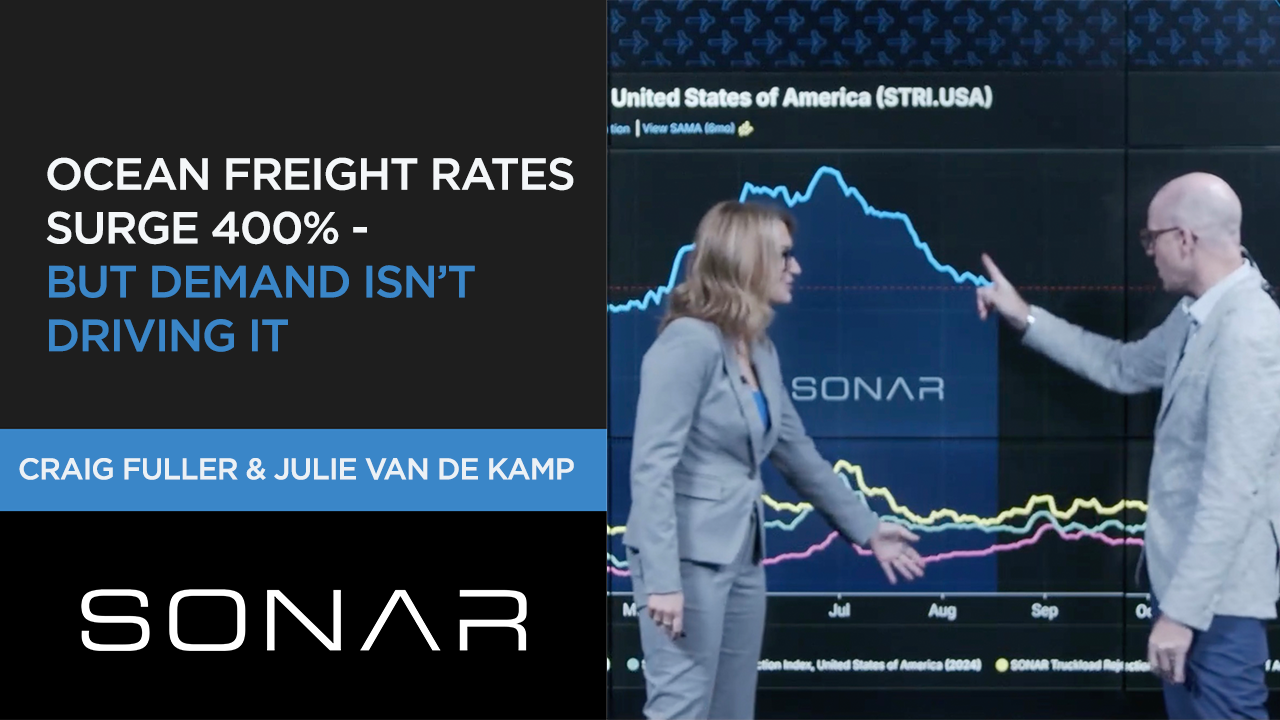
Ocean Freight Rates Surge 400% as Carriers Cut Capacity, Demand Flat

Ocean freight spot rates have surged more than 400% on transpacific lanes even as China-to-U.S. volumes decline roughly 1%, according to FreightWaves SONAR data. The spike is driven by capacity control and strategic blank sailings by top carriers, not demand. Shippers should prepare for continued rate and capacity volatility through Q4.

August 18, 2026
Are Index-Linked Freight Contracts Optimising Rates Instead of Supply Chains? Logistics

Are Index-Linked Freight Contracts Optimising Rates Instead of Supply Chains?

Dr Raymon Krishnan of Singapore's Logistics & Supply Chain Management Society argues that index-linked freight contracts, while solving pandemic-era pricing problems, are steering the industry toward optimising rates rather than supply chains. He warns that this approach rewards volatility and shifts focus away from service capabilities like schedule reliability and risk management.

August 4, 2026
Freight Rates Soar on Capacity Crunch, Not Demand: Q2 Earnings Confirm Tight Market Through 2027 Logistics

Freight Rates Soar on Capacity Crunch, Not Demand: Q2 Earnings Confirm Tight Market Through 2027

Major carriers' Q2 earnings reports indicate the freight market is tightening due to capacity constraints rather than surging demand, with spot rates at $3.53 per mile and contract rates up 18% year-over-year. Regulatory pressures and high barriers to entry are keeping capacity tight, while Brent crude oil at $100 per barrel adds fuel cost pressure. FreightWaves analysts expect the cycle to persist through at least 2027.

July 30, 2026
Hormuz in the rearview as Asia-US ocean container rates soar past $7,900 Logistics

Hormuz in the rearview as Asia-US ocean container rates soar past $7,900

Asia-US ocean container rates surged past $7,900 per FEU as peak season demand drives the trans-Pacific market. Rates to the East Coast hit $7,998/FEU, up 8%, and to the West Coast $6,175/FEU. The early peak season, geopolitical tensions in the Strait of Hormuz, and carrier capacity shifts are key factors, according to FreightWaves.

July 2, 2026