iGEN
Visit IGEN World Explore IGEN Expo
EXPLORE UPGRADE PLANS
BREAKING
Werner Enterprises Posts Highest Revenue Per Truck Growth in One-Way Segment in a Decade CMA CGM and Stonepeak Launch United Ports LLC in $2.4 Billion Terminal Joint Venture UPS shift away from Amazon shows bigger payoff Lanesurf: 62% of Loads Get Vetted Carrier Offers Before Brokers Arrive India-China Border Trade Via Lipulekh Resumes Aug 1; China Permits 20 Traders Geopolitics Drives CMA CGM Q2 Profit Surge of 42% as Volumes and Rates Climb Benchmark Diesel Price Rises Third Week as Futures Plunge; Spread Hits Record Indian Government Limits Sugar Dealers to 400 Tonnes Stock Until November to Curb Hoarding Tenants signing longer leases for larger warehouses as 3PLs lock in capacity US stock market flat as S&P 500 and Dow barely move, Nasdaq slides over 1% on chip rout Werner Enterprises Posts Highest Revenue Per Truck Growth in One-Way Segment in a Decade CMA CGM and Stonepeak Launch United Ports LLC in $2.4 Billion Terminal Joint Venture UPS shift away from Amazon shows bigger payoff Lanesurf: 62% of Loads Get Vetted Carrier Offers Before Brokers Arrive India-China Border Trade Via Lipulekh Resumes Aug 1; China Permits 20 Traders Geopolitics Drives CMA CGM Q2 Profit Surge of 42% as Volumes and Rates Climb Benchmark Diesel Price Rises Third Week as Futures Plunge; Spread Hits Record Indian Government Limits Sugar Dealers to 400 Tonnes Stock Until November to Curb Hoarding Tenants signing longer leases for larger warehouses as 3PLs lock in capacity US stock market flat as S&P 500 and Dow barely move, Nasdaq slides over 1% on chip rout
Home ›› Logistics ›› Shipping Freight ›› Freight Brokers ›› Liability in Trucking: How Bad Legislation and Nuclear Verdicts Drive Up Costs for Brokers and Carriers

Liability in Trucking: How Bad Legislation and Nuclear Verdicts Drive Up Costs for Brokers and Carriers

The trucking insurance market is in turmoil due to 'nuclear verdicts' and legislative changes. Cover Whale's CRO Myles Oppenheimer highlights how poor legislation and underwriting discipline create a 'self-inflicted wound' that traditional insurers cannot handle. A recent SCOTUS decision unraveling federal preemption adds further cost pressures for brokers and carriers.

iG
iGEN Editorial
July 1, 2026
Liability in Trucking: How Bad Legislation and Nuclear Verdicts Drive Up Costs for Brokers and Carriers

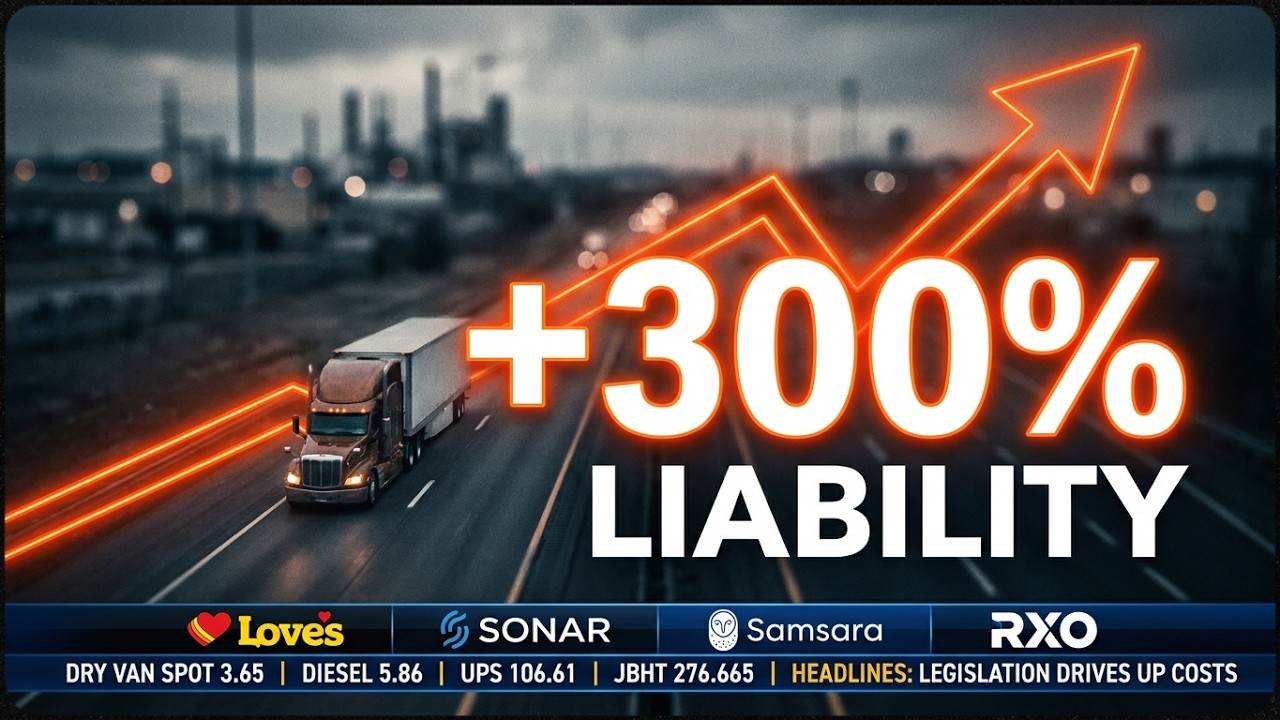
The trucking insurance market is in turmoil, and a recent U.S. Supreme Court decision is only adding to the cost pressures for freight brokers and carriers. According to FreightWaves, the real issue extends beyond so-called 'nuclear verdicts' to a legislative environment that is creating a 'self-inflicted wound' for the industry.

The Self-Inflicted Wound

Myles Oppenheimer, Chief Revenue Officer at Cover Whale, explained that legislative environments and a lack of underwriting discipline are the core problems. FreightWaves reported that these factors are creating conditions that traditional insurers cannot handle. The consequence is rising insurance costs that ripple through the entire supply chain — from carriers to freight brokers to shippers.

SCOTUS Decision Removes Federal Preemption

A key factor exacerbating the situation is a recent decision by the U.S. Supreme Court (SCOTUS) that unravels federal preemption in trucking liability cases. FreightWaves noted that this decision has massive implications for freight brokers and carriers. Without federal preemption, brokers and carriers face greater exposure to state-level lawsuits, which can result in higher settlements and verdicts — the 'nuclear verdicts' that have been driving up insurance premiums.

Implications for Freight Brokers and Carriers

The cost implications are direct and severe. As insurance premiums rise, carriers face higher operating costs, which are often passed down to brokers and ultimately to shippers. Freight brokers, in particular, are caught in the middle: they must absorb some costs or risk losing business. The FreightWaves report indicated that tech-forward solutions are becoming essential for survival. These solutions can include better risk assessment tools, data analytics, and automated compliance systems that help lower liability exposure.

Key Factors Driving Up Costs

  • Legislative environment: State-level laws that allow larger verdicts.
  • Lack of underwriting discipline: Insurers not properly pricing risk.
  • SCOTUS decision: Removal of federal preemption increases liability exposure.
  • Nuclear verdicts: Large jury awards that spike premiums industry-wide.

What Operators Should Do

Freight forwarders, logistics managers, and 3PL operators should review their insurance coverage and risk management strategies. Given the legislative uncertainty, shifting to tech-forward insurance platforms like Cover Whale may offer more stability. FreightWaves stressed that traditional insurers are struggling to adapt, making alternative solutions more critical.

Watch List

Upcoming factors that could change the situation include:

  • Developments in federal trucking liability legislation.
  • Further court rulings on preemption and liability caps.
  • Adoption of technology by carriers and brokers to reduce accident rates.
  • Changes in state laws governing tort reform.

The situation is dynamic, and operators should monitor legislative and judicial actions closely. Industry events like the Supply Chain AI Symposium and F3: Future of Freight Festival in Chattanooga, Tennessee, are venues where these issues will be discussed, as noted by FreightWaves.


Sources: FreightWaves
Keep Reading

Recommended Stories

Supreme Court Eliminates Broker Defense, Raising Liability Risks for Truck Leasing Companies Logistics

Supreme Court Eliminates Broker Defense, Raising Liability Risks for Truck Leasing Companies

The Supreme Court ruled 9-0 on May 14, 2026, that state-law negligent-hire claims against freight brokers are not preempted by federal law. Legal analysts warn that the same reasoning could extend liability to truck leasing companies like Ryder and Penske, which have relied on a different statute for protection.

July 8, 2026
After Montgomery Decision, Industry Scrambles for Reliable Carrier Safety Ratings Logistics

After Montgomery Decision, Industry Scrambles for Reliable Carrier Safety Ratings

The Supreme Court's unanimous decision in Montgomery v. Caribe Transport II eliminated a key procedural defense for brokers in negligent selection lawsuits, forcing the industry to confront the lack of dependable carrier safety data. A FreightWaves analysis argues that FMCSA's Safety Measurement System (SMS) is not reliable for judging carrier safety, as even the agency itself warns against drawing conclusions from the data. Brokers and carriers are now pushing for a federal safety standard and modernization of safety fitness determinations.

June 23, 2026
C.H. Robinson Hit With $604M Nuclear Verdict in Post-Montgomery Liability Landmark Logistics

C.H. Robinson Hit With $604M Nuclear Verdict in Post-Montgomery Liability Landmark

A jury in Dallas County Court handed down a $604 million verdict against C.H. Robinson in a case stemming from a 2021 crash in Mississippi. The ruling could reshape broker liability standards, as the jury found the carrier's driver was effectively acting as C.H. Robinson's employee.

July 24, 2026
Staged Truck Crashes Could Bring 20 Years in Federal Prison Under New Bill Introduced by Sen. Moody Logistics

Staged Truck Crashes Could Bring 20 Years in Federal Prison Under New Bill Introduced by Sen. Moody

Sen. Ashley Moody introduced the Staged Accident Fraud Prevention Act, which would make staged crashes with commercial motor vehicles a federal crime punishable by up to 20 years in prison. The bill also targets organizers and co-conspirators, with minimum 20-year sentences for serious injury or death. Industry groups including OOIDA and ATA support the measure, citing rising insurance premiums from fraud.

July 23, 2026