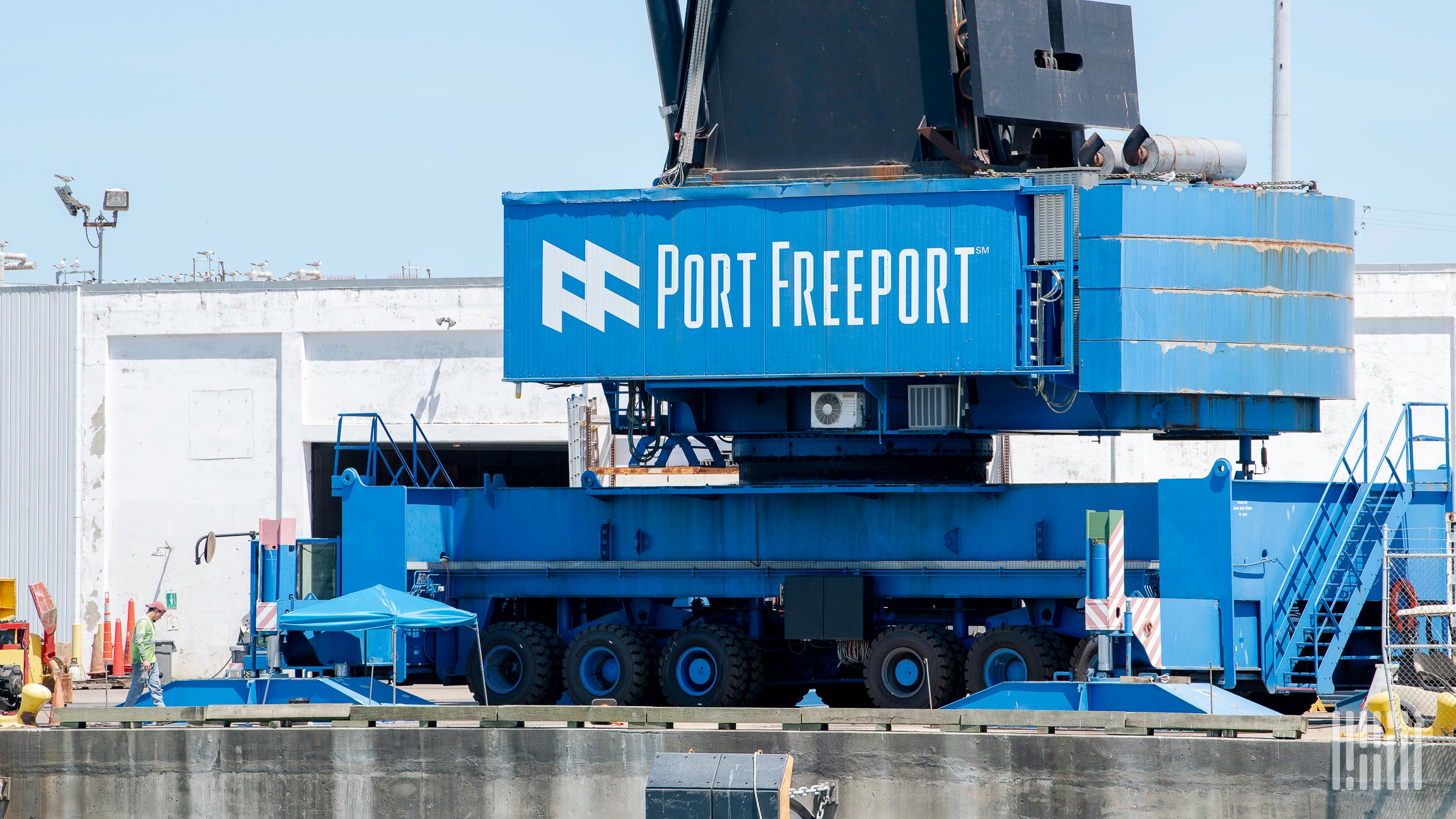
Port Freeport is solidifying its position as a rapidly expanding automotive gateway after Mitsubishi Motors North America (MMNA) selected the Texas port for its U.S. distribution network, adding vehicle volumes and triggering new infrastructure investments.
Mitsubishi partnership details
According to FreightWaves, port officials announced on July 7, 2026, that MMNA, automotive terminal operator AMPORTS, and Port Freeport have launched a logistics collaboration designed to increase automotive volumes moving through the Texas Gulf Coast. The partnership gives Mitsubishi a new distribution gateway serving dealers across the Gulf Coast and Midwest, helping the automaker expand its U.S. sales network and improve supply chain efficiency.
Mitsubishi has worked with AMPORTS since 1983 at facilities in Baltimore and Jacksonville, but is now adding Port Freeport to streamline vehicle distribution and reduce inland transportation costs. “The addition of Port Freeport to our U.S. distribution system will be key to improving efficiency, reducing waste and speeding up deliveries to our dealer partners throughout the Gulf and the Midwest,” said Ken Konieczka, MMNA’s senior vice president of sales operations, in a statement.
Under the agreement, imported Mitsubishi vehicles are unloaded by AMPORTS stevedoring teams before moving directly to on-site vehicle processing operations for accessorization and final preparation prior to shipment to dealerships. MMNA began operating through Port Freeport on April 28, with more than 500 vehicles arriving during the first month. The companies formally launched the partnership during a July 1 ribbon-cutting ceremony held alongside the arrival of the Höegh Sunrise, which delivered Mitsubishi vehicles to the port.
According to trade data cited by FreightWaves, cars represented approximately $2.14 billion of the port’s exports and $3.81 billion of its imports during 2025, making automobiles one of Freeport’s largest traded commodities.
Automotive momentum continues
The Mitsubishi announcement follows several recent milestones underscoring Port Freeport’s growing importance in automotive logistics. Volkswagen Group of America announced it had shipped more than 250,000 vehicles as of May 28 through Port Freeport since establishing its Gulf Coast vehicle processing hub in 2022. Volkswagen’s Freeport operations now serve nearly 300 dealerships nationwide.
The port’s automotive business received another boost July 1 when it welcomed the Höegh Sunrise during the vessel’s inaugural North American call. The Höegh Sunrise is the fifth ship in Höegh Autoliners’ new Aurora Class of pure car and truck carriers. The vessel can transport up to 9,100 car equivalent units and is designed to operate on future low-carbon fuels, including ammonia and methanol, making it among the world’s largest and most environmentally advanced vehicle carriers.
Port Freeport handled 198,475 vehicles during fiscal 2025, reflecting continued growth in automotive imports and exports along the Texas Gulf Coast, according to port officials. Höegh Autoliners has called at Port Freeport since 2015.
| Milestone | Details |
|---|---|
| Mitsubishi operations start | April 28, 2026 – more than 500 vehicles in first month |
| Volkswagen cumulative volume | Over 250,000 vehicles since 2022, serving ~300 dealerships |
| Fiscal 2025 port vehicle throughput | 198,475 vehicles |
| Grant amount | $11 million from U.S. Maritime Administration |
Infrastructure investment supports growth
Port Freeport is also expanding the infrastructure needed to accommodate rising cargo volumes. In May, the port received an $11 million Port Infrastructure Development Program grant from the U.S. Maritime Administration to modernize 10 acres at its Velasco Terminal. The project will convert the area into a heavy-duty cargo handling facility by replacing limestone surfaces with concrete pavement, improving stormwater drainage and installing high-mast lighting to enhance operational efficiency and security.
These upgrades, combined with growing vehicle volumes from Mitsubishi and Volkswagen, position Port Freeport as a key automotive logistics hub on the U.S. Gulf Coast. For freight forwarders and logistics managers, the expanded gateway offers an alternative to more congested ports, potentially reducing inland transportation costs and delivery times for vehicle shipments to Gulf and Midwest dealerships.
Watch list: Further vessel calls from Höegh Autoliners’ Aurora Class, additional OEM announcements, and progress on the Velasco Terminal modernization will determine how quickly Port Freeport scales its automotive capacity.
Sources: