

iGEN
Visit IGEN World Explore IGEN Expo
EXPLORE UPGRADE PLANS
BREAKING
India-UK free trade deal to take effect on July 15 opening 99% of exports to tariff-free access Canada’s CPP Investments Commits Rs 7,000 Crore to Hyderabad-Based CtrlS Datacenters Backlash over delivery robots: Chicago residents demand ban as councils weigh regulation C.H. Robinson sued in post-Montgomery Florida broker liability case Bank of England Expected to Hold Interest Rates at 3.75% for Fourth Consecutive Meeting FastMix: Gradient-Based Data Mixture Optimization Reduces Search Cost in AI Training New Temporal Pyramid Model Enhances Spoofed Speech Detection for Voice Security Systems InvDesMobility Framework Enables Auditable Closed-Loop Materials Discovery New Study Challenges Prior Claims on Scaling Context Length in Imitation Learning AI-Powered SaaS Platform Optimises Temporary Accommodation Placement for London Boroughs India-UK free trade deal to take effect on July 15 opening 99% of exports to tariff-free access Canada’s CPP Investments Commits Rs 7,000 Crore to Hyderabad-Based CtrlS Datacenters Backlash over delivery robots: Chicago residents demand ban as councils weigh regulation C.H. Robinson sued in post-Montgomery Florida broker liability case Bank of England Expected to Hold Interest Rates at 3.75% for Fourth Consecutive Meeting FastMix: Gradient-Based Data Mixture Optimization Reduces Search Cost in AI Training New Temporal Pyramid Model Enhances Spoofed Speech Detection for Voice Security Systems InvDesMobility Framework Enables Auditable Closed-Loop Materials Discovery New Study Challenges Prior Claims on Scaling Context Length in Imitation Learning AI-Powered SaaS Platform Optimises Temporary Accommodation Placement for London Boroughs
Home ›› Logistics ›› Shipping Freight ›› Shipping Lines ›› Backlash over delivery robots: Chicago residents demand ban as councils weigh regulation

Backlash over delivery robots: Chicago residents demand ban as councils weigh regulation

Delivery robots are facing backlash from residents and local authorities in multiple US cities, with calls for bans and stricter regulation due to safety, accessibility, and sidewalk obstruction concerns. John Roberts in Chicago launched a petition gathering 4,400 signatures, while Glendale, California is considering a temporary ban as councilors seek a regulatory framework.

iG
iGEN Editorial
June 17, 2026
Backlash over delivery robots: Chicago residents demand ban as councils weigh regulation

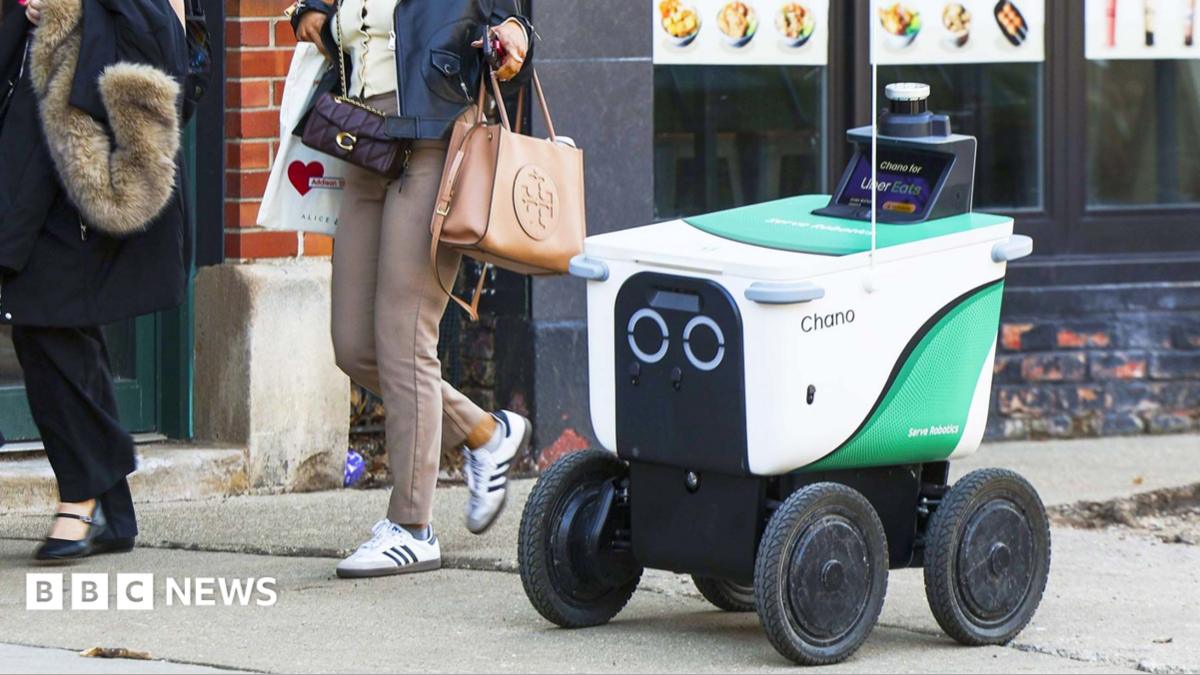
Operational managers in last-mile logistics should note growing public and regulatory opposition to autonomous delivery robots in several US cities, which may disrupt rollout plans and require contingency routing. Chicago resident John Roberts has launched a petition calling for a suspension of all delivery robots across the city until safety tests are completed and clear usage rules are established. The petition has gathered around 4,400 signatures, according to the BBC.

The backlash stems from robots operating on sidewalks, which pedestrians often have to step into the street to avoid. Roberts told the BBC that he has seen reports of collisions and injuries, including one incident where a person was struck by a robot's safety flag. He also reports robots blocking emergency vehicles and causing issues at crosswalks. Similar concerns are emerging in Glendale, California, where the local council is considering a temporary ban on the vehicles. Councilor Ardy Kassakhian cited increased visibility of robots downtown, questions about accessibility and pedestrian movement, uncertainty over regulatory authority, and impact on workers as triggers for the discussion.

Cities and Actions

The following table summarizes the backlash actions mentioned in the source article:

City Action Taken or Proposed Key Individual Petition Signatures
Chicago, Illinois Roberts launched petition calling for suspension until safety tests and clear rules John Roberts ~4,400
Glendale, California Council considering temporary ban; seeking regulatory framework (operating rules, insurance, accessibility standards, permitting fees, accountability) Coun Ardy Kassakhian N/A

Context of the Backlash

Autonomous urban delivery vehicles, which transport groceries and fast food using cameras, sensors, and GPS, have appeared on pavements in several US cities, as well as in the UK, Japan, South Korea, and Germany, according to the BBC. Operators claim the robots can reliably identify and avoid objects, cross streets safely, and reduce traffic and emissions. However, local authorities and members of the public are pushing back. In Glendale, Kassakhian noted that sidewalks are not particularly wide and he personally witnessed a 'stand-off' between a robot and an elderly person, as well as broken-down robots causing obstructions. The robots appeared without warning, and at first the council did not even know which company supplied them.

Implications for Last-Mile Operators

Logistics companies deploying or planning to deploy delivery robots should monitor these regulatory developments closely. The motions in Chicago and Glendale could lead to temporary or permanent bans, forcing operators to reroute autonomous deliveries or revert to human couriers in affected areas. The demand for a regulatory framework, including insurance requirements, permitting fees, and operational limits in high pedestrian areas, may increase compliance costs. Companies should engage with local councils proactively to address safety and accessibility concerns, as the backlash suggests that public acceptance lags behind technological rollout.

Watch List

  • Chicago City Council response to Roberts' petition (potential temporary ban or new regulations)
  • Glendale Council vote on temporary ban (any decision could set precedent for other California cities)
  • Responses from robot operators (e.g., Starship Technologies, Coco, Kiwibot) to safety concerns
  • Expansion of similar regulation discussions in other US cities and the UK

Sources: BBC-Business
Keep Reading

Recommended Stories

Deep Learning Enables Autonomous Logistics Vehicles to Detect and Pick Load Carriers Technology

Deep Learning Enables Autonomous Logistics Vehicles to Detect and Pick Load Carriers

A research paper presents a deep learning-based framework that uses a convolutional neural network on RGBD images to identify landmarks on load carriers and compute their pose. Experiments show sufficient accuracy for reliable detection in industrial environments, supporting autonomous intralogistics operations.

June 16, 2026
Neuro-Symbolic Framework Improves Motion Prediction for Autonomous Vehicles in Mixed Traffic Technology

Neuro-Symbolic Framework Improves Motion Prediction for Autonomous Vehicles in Mixed Traffic

Researchers propose TraCS, a neuro-symbolic framework that augments black-box motion prediction with probabilistic first-order logic, improving accuracy and interpretability for autonomous vehicles in heterogeneous traffic. Tested on the Argoverse 2 benchmark, TraCS consistently improves state-of-the-art backbones.

June 16, 2026
Humanoid robots for battlefield: Foundation Robotics' Phantom aims to keep soldiers out of harm's way Technology

Humanoid robots for battlefield: Foundation Robotics' Phantom aims to keep soldiers out of harm's way

Foundation Robotics is developing a humanoid robot called Phantom for military applications including supply pickup, reconnaissance, and potentially frontline weaponization. The startup has $24m in research contracts with the US and Ukrainian militaries, and aims to produce 40,000 units a year by end of 2027. Critics raise ethical concerns, but CEO Sankaet Pathak argues it could keep soldiers safe.

June 14, 2026
FRA Greenlights Expanded Rail Track Tech Tests as CSX Prepares July 2026 Rollout Logistics

FRA Greenlights Expanded Rail Track Tech Tests as CSX Prepares July 2026 Rollout

The Federal Railroad Administration (FRA) approved a five-year waiver allowing expanded use of Automated Track Inspection (ATI) technology. CSX will begin deployment on July 1, 2026, covering over 3,000 route miles. The technology uses lasers and sensors to detect track defects missed by human inspectors, with early data showing a 90% reduction in geometry defects.

June 16, 2026