BNSF has publicly argued that Union Pacific's new agreement with Canadian National undermines the competitive justification for UP's proposed merger with Norfolk Southern, according to a statement from BNSF chief of staff and vice president of communication Zak Andersen reported by FreightWaves.
The UP-CN Agreement
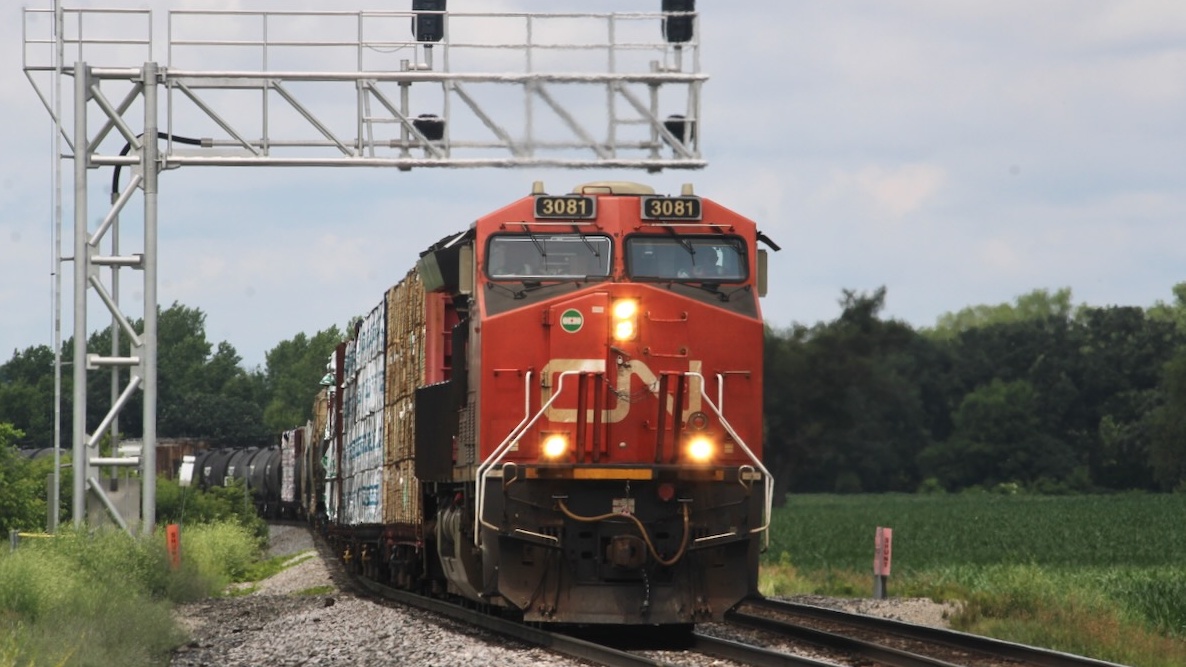
On Wednesday, Canadian National (CN) announced it would drop its opposition to UP's acquisition of Norfolk Southern (NS) in exchange for better access to the U.S. Midwest and Mexico. In return, Union Pacific gains operating rights on CN's route around Chicago to the East Coast. The deal aims to ease regulatory hurdles for the transcontinental merger.
BNSF's Core Argument
BNSF, Union Pacific's western competitor, said the agreement directly contradicts UP's central merger argument. As Andersen stated, "UP's agreement with CN undermines one of the core arguments for the merger. For a year, UP has claimed that partnerships cannot deliver the benefits it says this transaction would create. Yet the CN agreement closely resembles partnerships that BNSF and other Class I railroads have successfully operated for decades."
Andersen added that the arrangement "does nothing to change the fact that this merger doesn't enhance competition and would leave thousands of rail customers with fewer competitive options and a single railroad controlling roughly 50% of the market."
A table summarizing BNSF's key counterpoints:
| Issue | BNSF's Assessment |
|---|---|
| Competition enhancement | Merger fails to enhance competition; reduces options for shippers |
| Partnership efficacy | CN agreement proves partnerships deliver benefits, contrary to UP's claims |
| Market concentration | Single railroad would control ~50% of the market |
| Regulatory compliance | Deal does not meet STB requirement to affirmatively enhance competition |
Shipper and Competitive Implications
For shippers and logistics operators, BNSF's opposition signals potential disruption if the merger proceeds. The STB requires that any merger "enhance competition" — a standard BNSF argues the UP-NS combination fails to meet. The agreement between UP and CN, while reducing one source of opposition, does not address broader competitive concerns, according to BNSF.
The outcome could affect rail service on key transcontinental lanes, including routes through Chicago, the U.S. Midwest, and connections to Mexico. Shippers reliant on competitive rail pricing may face higher rates and fewer service choices if the merger moves forward.
Regulatory Timeline
The Surface Transportation Board (STB) has requested additional information from UP and NS, which must be submitted by July 27. The evaluation of the merger will not formally begin until that data is filed. Observers speculate that the CN agreement may be the first in a series of compromises UP negotiates with large shippers and other stakeholders to win support.
Watch List
- July 27: Deadline for UP and NS to submit additional information to the STB.
- Potential further opposition or conditional support from other shippers and railroads.
- STB's preliminary assessment of whether the merger meets competition standards.
Sources: