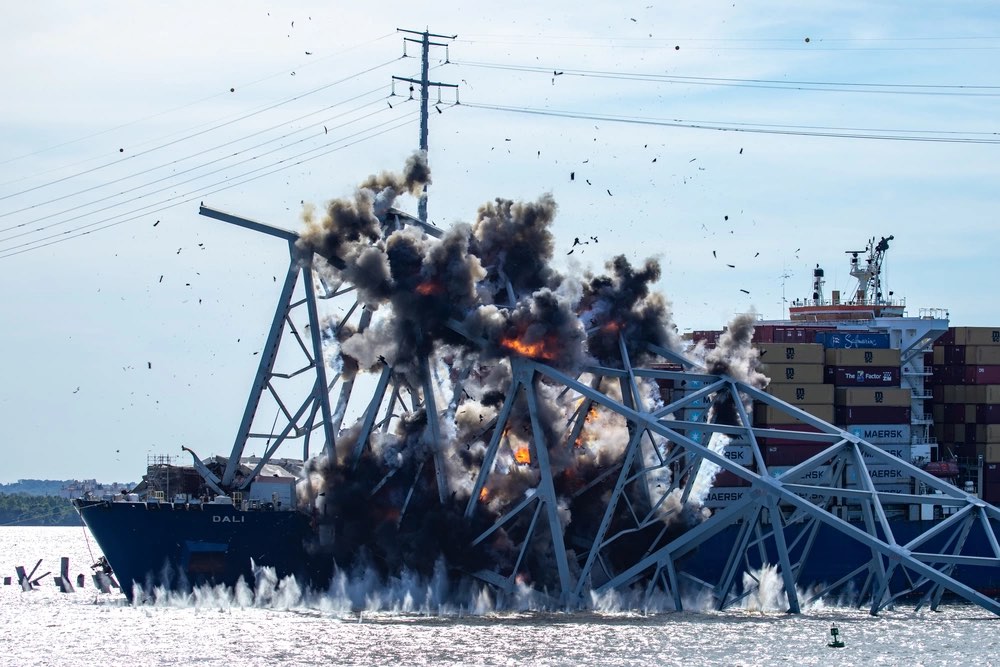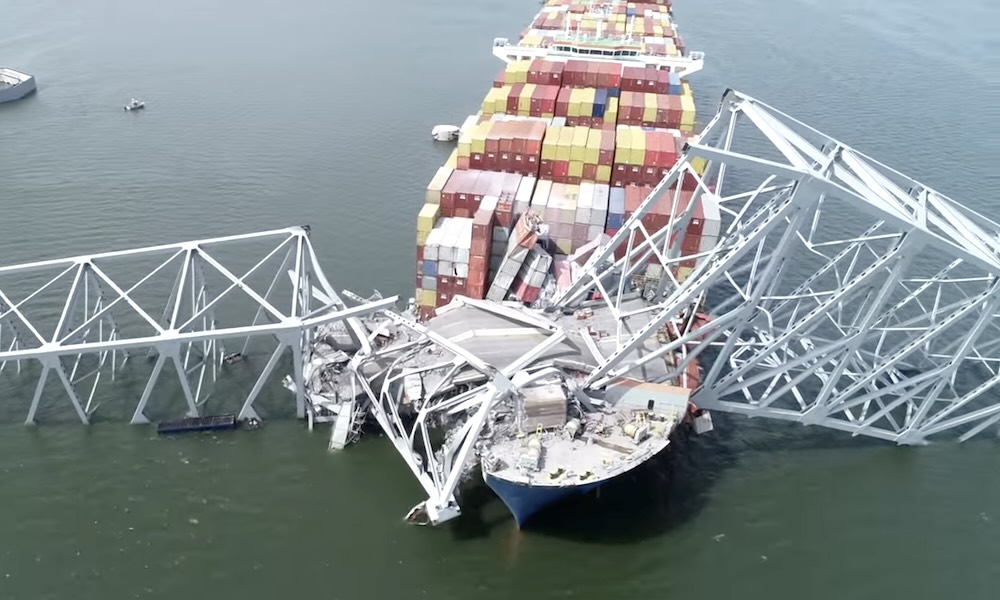
The chief engineer of the containership Dali has admitted to conduct constituting a criminal violation of US maritime safety laws in connection with the vessel’s allision with Baltimore’s Francis Scott Key Bridge last year, according to Splash247.
Karthikeyan Deenadayalan, an Indian national who served as chief engineer aboard the Dali, entered into a deferred prosecution agreement with US authorities. He admitted failing to report a hazardous condition to the US Coast Guard, a violation of the Ports and Waterways Safety Act, Splash247 reported.
Background and Context
The agreement follows the unsealing last month of a criminal indictment against three defendants linked to the March 2024 disaster, which killed six construction workers and caused the collapse of the Key Bridge. The Dali, owned by Grace Ocean and managed by Synergy Marine, lost power shortly after departing Baltimore before striking one of the bridge’s support piers, triggering one of the most significant maritime casualties in recent US history, according to Splash247.
Unsafe Fuel Arrangement
According to court documents cited by Splash247, Deenadayalan admitted he was aware that the Dali and sister vessels Maersk Saltoro and Cezanne were operating with an unsafe fuel supply arrangement involving a flushing pump. Prosecutors said the pump lacked redundancy, compromising the vessels’ ability to safely recover from a loss of power. Deenadayalan admitted he understood that such a failure could affect not only the safety of the vessel but also “any bridge, structure, or shore area” and that he failed to report the condition to the Coast Guard.
Communications and Charged Individuals
The statement of facts also details communications between Deenadayalan and Synergy personnel, including Radhakrishnan Karthik Nair, who has been separately charged in the case, Splash247 reported. According to prosecutors, Nair instructed Deenadayalan to send a “convincing” email to the vessel’s charterer to avoid further scrutiny of fuel consumption figures that could have revealed the use of the flushing pump.
Under the deferred prosecution agreement, criminal proceedings against Deenadayalan will be suspended provided he complies with the terms of the arrangement, Splash247 stated. The case forms part of a broader federal investigation into the causes of the Dali blackout that preceded the bridge collapse. US authorities have also brought criminal charges against Synergy Maritime and Synergy Marine, the companies involved in managing the vessel.
Operational Implications for Shippers and Carriers
For ocean carriers and vessel management companies, this case underscores the critical importance of reporting safety defects to the Coast Guard. The admission by a senior engineer on a vessel operated by Synergy Marine and chartered to a major line (the source notes the vessel’s charterer was contacted about fuel figures) suggests that compliance with US maritime safety laws will face heightened scrutiny. The involvement of sister vessels Maersk Saltoro and Cezanne — both container ships — signals that fleet-wide fuel system configurations may be examined by regulators. Operators whose vessels call at US ports should review their fuel supply arrangement redundancy and ensure that any hazardous conditions are promptly reported, as failure to do so can lead to criminal liability.
Watch List
- Broader federal investigation: The US Department of Justice continues to probe the Dali blackout and may issue further indictments or regulatory findings.
- Criminal proceedings against Synergy: The outcome of charges against Synergy Maritime and Synergy Marine could set precedents for corporate liability in maritime casualties.
- Port of Baltimore operations: While the source does not detail current port status, the bridge collapse had severe impacts on shipping through Baltimore; ongoing legal actions may affect vessel clearance procedures and insurance costs for the port.
- Industry-wide safety reviews: The admission and charges may prompt the US Coast Guard to issue safety alerts or increase inspections of fuel systems on container ships calling at US ports.
Sources: