Midwest less-than-truckload (LTL) carrier Dohrn cut accidents by almost 20% after finishing a full-fleet rollout of dual-facing AI event recorders roughly a year ago, FreightWaves reported. The carrier's president and CEO, Robert Howard, told FreightWaves that insurers are not the ones pushing hardest on fleet insurance costs — carriers are.
Who’s Actually Pushing on Fleet Insurance Costs
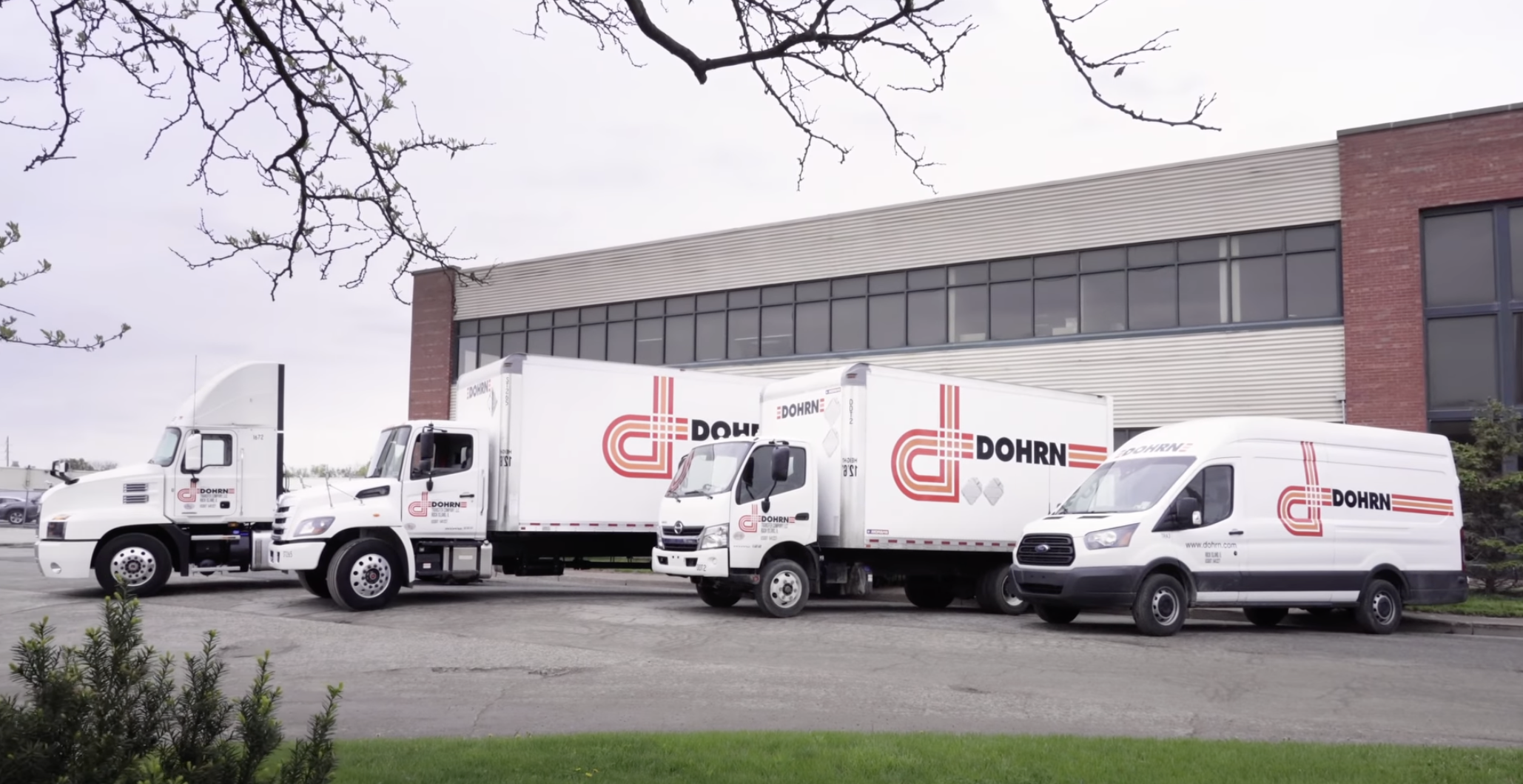
Insurance premiums keep climbing across trucking, and carriers cannot opt out of the trend, according to FreightWaves. What a fleet can control is the experience data sitting underneath its own renewal. Dohrn, a Midwest LTL carrier with about 2,000 employees, is a standalone subsidiary of Chuck Hammel’s Pitt Ohio Transportation Group, which acquired the carrier in 2014, the year Howard joined. The carrier runs about 25 terminals from Indianapolis to Nebraska and Minnesota down to Missouri, and operates 1,100 drivers, 900 trucks and 1,800 trailers.
No, it’s definitely us pushing it. I mean, the insurance costs are skyrocketing, there’s no question about that, but it’s all based on experience. — Robert Howard, president and CEO of Dohrn
Howard treats the insurance line as an output of safety performance. “What we want to do is be as safe as we can and use technology that we can implement, such as the event recorders and the AI and everything else that we add to newer equipment, to make us as safe as possible,” he said. “And that in turn helps us keep the insurance costs down.”
The Paradigm Shift Cameras Introduced
Dohrn’s relationship with Samsara began in 2016 as a compliance purchase ahead of the electronic logging device (ELD) mandate, FreightWaves reported. Samsara CEO and co-founder Sanjit Biswas came to the facility to pitch the product himself. Trailer trackers gave the carrier its first live picture of the fleet. Outward-facing cameras eliminated the practice of reconstructing crashes from memory or limited photos taken at the scene.
“For the first time we could see what happened when there was a critical accident,” Howard said. “And we found, more times than not, that gave us the ability to exonerate our drivers.”
Dual-facing cameras were the harder sell, and Dohrn initially passed on them. “They were so new, a lot of drivers were really cautious about that, we were cautious as a business,” Howard said. Results from the outward-facing rollout eventually settled the question; Dohrn upgraded a couple of years ago and completed the transition across the full fleet, acquisitions included, about a year ago. “That was a paradigm shift for us and culturally a big change,” he said.
The payoff showed up in the loss record. “And we’ve seen tremendous improvement, almost 20% reduction on our accidents,” Howard said.
Three Companies, One Tech Stack
The camera conversion overlapped with a major integration. Dohrn acquired Sutton Transport, a carrier roughly 70% its size, along with US Special Delivery, nearly doubling the business and spending 18 months folding three companies into one, FreightWaves reported. Both acquired companies arrived running their own technology.
“We’re running two companies together, different technology, shipments aren’t connected the same way,” Howard said. “So our early decision for us was we’ll change all of those providers, get out of the contracts, and then put everything on Samsara and all of our other TMS operations.”
| Dohrn fleet snapshot | Figure |
|---|---|
| Employees | ~2,000 |
| Drivers | 1,100 |
| Trucks | 900 |
| Trailers | 1,800 |
| Terminals | ~25 (Indianapolis to Nebraska/Minnesota/Missouri) |
| Accident reduction since dual-facing camera rollout | almost 20% |
Claims Resolution and the Shipper View
Claims resolution is the secondary yet tangible benefit of the camera data, according to Howard. Video is taking the guesswork out of the fight-or-settle decision. “Definitely if you know what’s happened, if you’re at fault, we settle it and we move on,” he said. “But the ideal for us is to be as safe as possible.”
Customers run the same evaluation. Safety now sits next to price in Dohrn’s request-for-proposal (RFP) conversations, alongside sustainability, FreightWaves reported. For freight forwarders, 3PLs and shippers contracting LTL capacity, this signals that carriers are investing in telematics to control insurance costs and that safety performance will feature more prominently in carrier selection discussions.
Watch list
- Whether Dohrn’s near-20% accident reduction holds as the newly acquired fleets from Sutton Transport and US Special Delivery are fully absorbed onto the Samsara platform.
- How the integration of the three carriers’ technology stacks progresses over the next year, and whether the unified TMS and camera system produces further claims-resolution gains.
- Whether other carriers follow Dohrn’s lead in pushing insurers on experience-based pricing, as insurance premiums continue to rise across trucking, according to FreightWaves.
Sources: