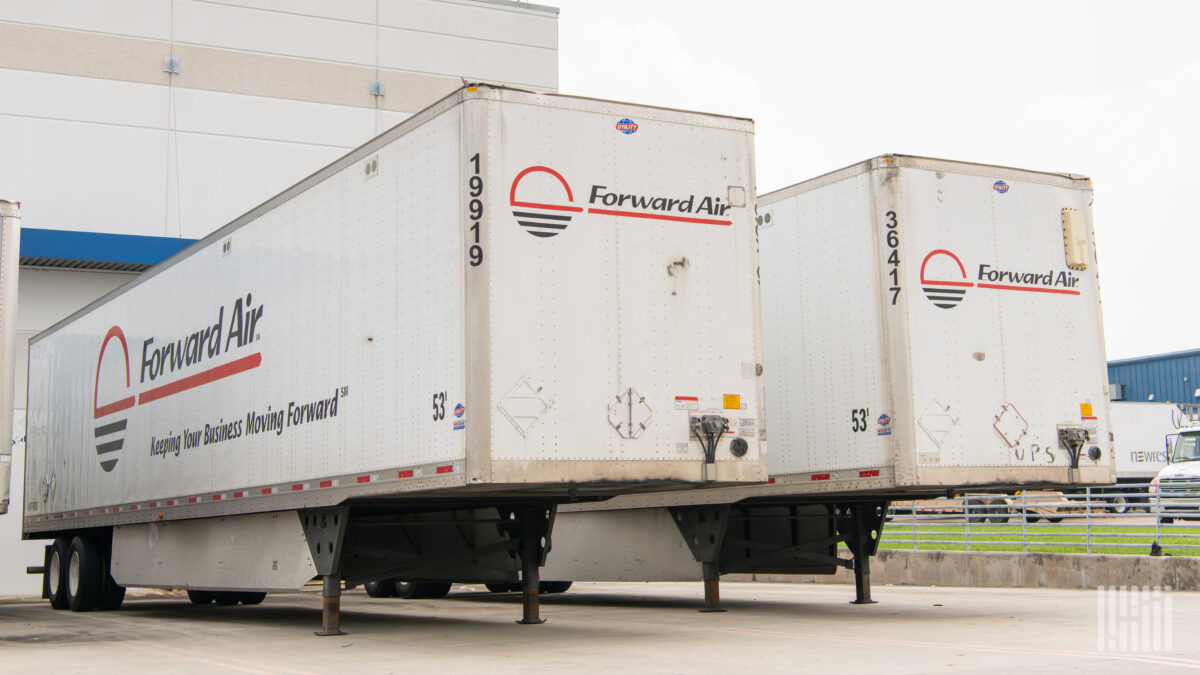
Forward Air (NASDAQ: FWRD) announced Tuesday that it has secured a non-binding arrangement to retain at least 50% and up to 75% of a $250 million account with one of its largest customers, averting a complete loss of business that had previously caused shares to plummet over 40%. The Memorandum of Understanding (MOU) keeps the current contract in place for at least the next two years, according to the company.
Operational Impact
The customer had provided notice in May that it might pull all of its business, prompting Forward Air to disclose the potential departure. The company emphasized at the time that the customer’s decision was not related to service quality but rather a desire to diversify its vendor list. The loss of this account, which represented 10% of Forward Air’s annual revenue, also scuttled the company’s plan to sell itself. Now, with the MOU in place, Forward Air will retain the majority of the revenue stream, but the service transition of the unretained portion is expected to occur in December 2026 and throughout 2027.
Financial and Strategic Context
Forward Air’s balance sheet remains under pressure. Net debt stood at $1.65 billion at the end of the first quarter, equivalent to 5.4 times the last twelve months’ adjusted EBITDA. To deleverage, the company is now looking to sell its intermodal unit and two smaller legacy Omni Logistics businesses. Those assets generated a combined $394 million in revenue last year. The sale proceeds will be used to reduce debt.
| Metric | Value |
|---|---|
| Account value | $250 million |
| Retained portion | 50-75% |
| Contract extension | At least 2 years |
| Net debt | $1.65 billion |
| Debt/EBITDA | 5.4x |
| Revenue from assets for sale | $394 million (2025) |
Customer and CEO Statements
“We are extremely pleased with the productive conversations we have had with one of our largest customers, including the prospect of retaining up to 75% of the Customer’s business with us and meaningfully extending the contract term,” said Shawn Stewart, Forward president and CEO, in a Tuesday news release. “This agreement builds on our 20-year relationship and underscores the impeccable service the Forward Air team continues to provide.”
Market Reaction
Shares of Forward Air were up 19% in early trading on Tuesday, compared to the S&P 500’s 0.5% gain, reflecting investor relief that the worst-case scenario was avoided.
Why This Matters for Logistics Operators
This story highlights the outsized impact a single large customer can have on a logistics provider. It also underscores critical industry dynamics around vendor reliability, risk mitigation, and service strategy. Freight forwarders and 3PL operators should note that even long-term relationships can be tested by customer diversification efforts. Forward Air’s ability to retain most of the account demonstrates the value of service excellence and contractual flexibility.
Watch List
- Service Transition: The unretained portion of the account will shift to other providers starting December 2026, potentially affecting capacity and rates in the less-than-truckload (LTL) and intermodal markets.
- Asset Sales: The planned sale of Forward Air’s intermodal unit and legacy Omni businesses will reshape its network. Proceeds will be used for deleveraging, but buyers and terms remain unknown.
- Customer Diversification Trends: Other logistics companies may face similar pressures as large shippers seek multiple vendors to reduce dependency, influencing contract negotiations industry-wide.
Sources: