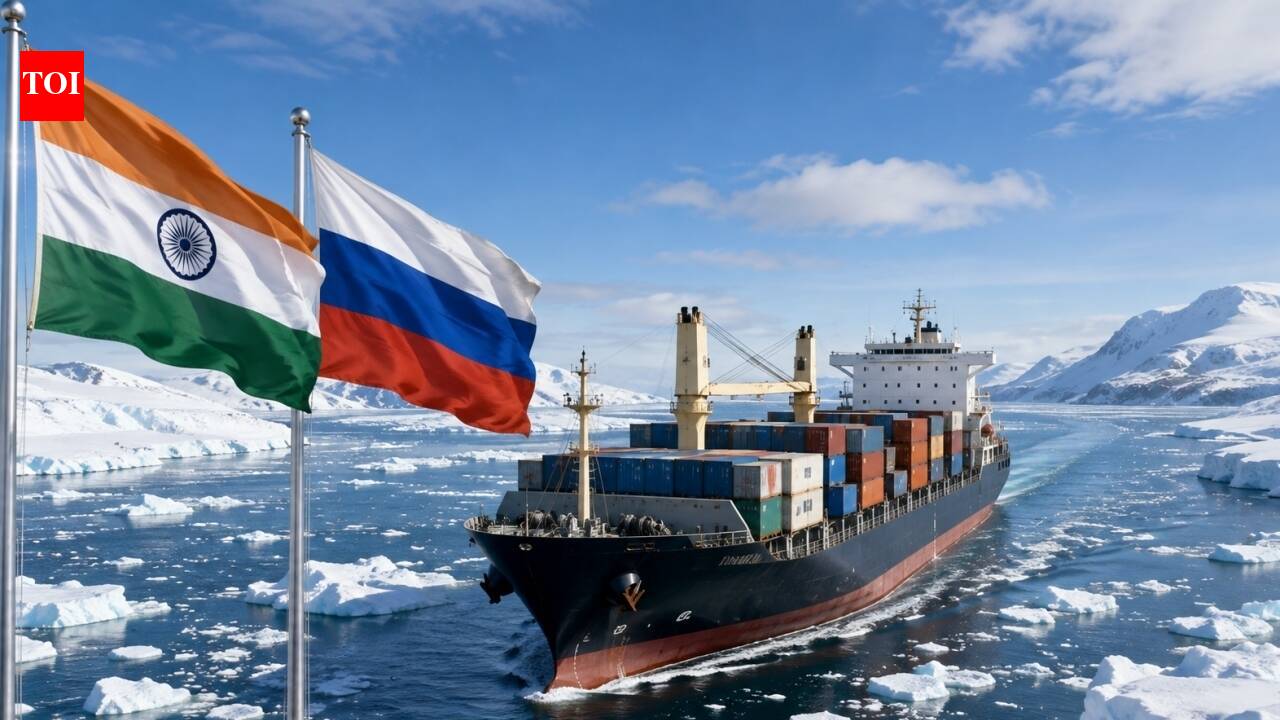
India may send its first cargo ship along the Northern Sea Route (NSR) to Russia next year, according to Business-Today, after Russia's Arkhangelsk region held discussions with New Delhi on ways to tap the Arctic route's economic potential.
The discussions were confirmed at the 'Arctic – Regions' Forum, where India was a key partner, and where Arkhangelsk Region Governor Aleksandr Tsybulsky told RT that India sees "huge possibilities" in using the route. Business-Today reported that Tsybulsky said the NSR, also referred to as the Arctic Route, is assuming "a new level of importance" for India.
Why the Northern Sea Route matters
The Russian Arctic is rich in hydrocarbons, including LNG, as well as natural resources such as nickel, copper, platinum, palladium and rare earth elements, according to the report. Arkhangelsk lies on the Northern Dvina River and serves as a major cargo centre connected to the NSR.
The NSR stretches about 5,600 km across Russia's Arctic waters. Much of the route remains covered by thick ice for most of the year, although climate change and the retreat of sea ice have extended the period during which vessels can navigate it, Business-Today reported. Ships with specialised ice-strengthened designs are needed to operate along the route.
| Route factor | Value per Business-Today |
|---|---|
| Distance reduction vs Suez Canal for Indian ships | As much as 40% |
| Time saved to northern and eastern Europe | Around two weeks |
| Suez Canal current condition | Disruptions linked to the Iran war are affecting traffic |
Russian President Vladimir Putin recently said Moscow was witnessing "growing interest" from countries such as China and India in tapping the economic opportunities presented by the NSR, the report said. Russian Deputy Foreign Minister Alexander Grushko said Russia is making substantial investments in infrastructure along the Arctic route, and Moscow is pleased with the interest shown by international partners.
What India and Arkhangelsk are negotiating
The discussions between India and Arkhangelsk cover a range of possibilities, Business-Today reported, including:
- Constructing ships for India at shipyards in the Arkhangelsk region.
- Using Arkhangelsk's port infrastructure to handle cargo moving from India and shipments headed to India.
- Exploring the possibility of locating manufacturing facilities around ports in the region.
"Building ships for India at shipyards in the Arkhangelsk region, to using our port facilities to deliver cargo from India, and to export cargo to India, and technological options such as placing and locating production around the ports of the Arkhangelsk Region," Tsybulsky told RT.
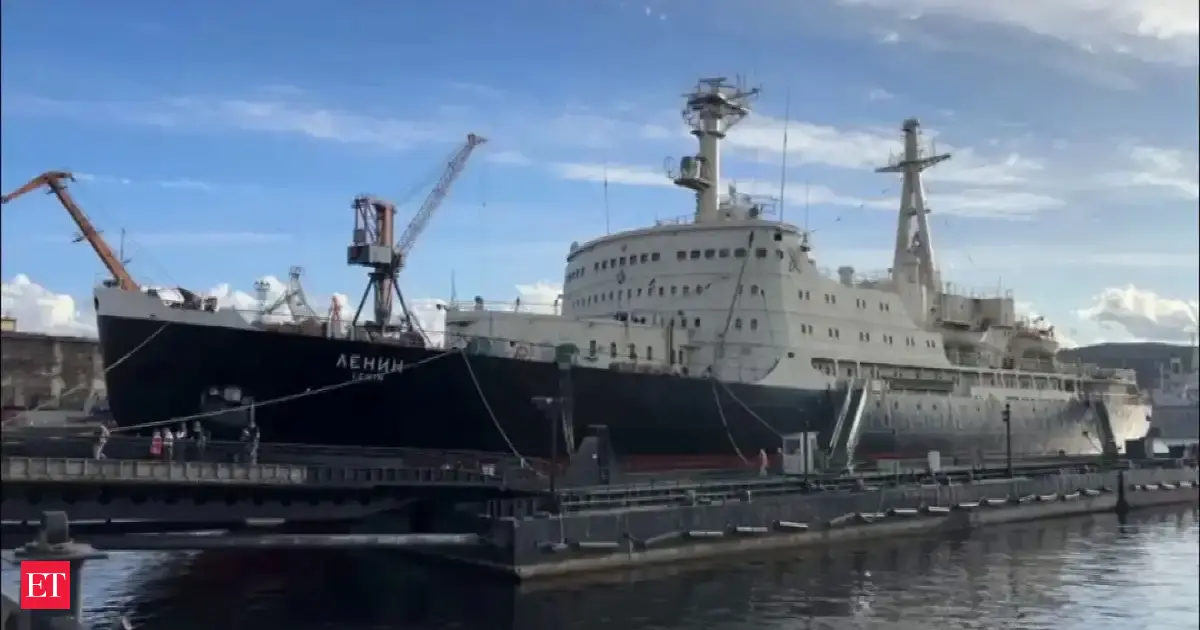
Russia's nuclear major Rosatom, which manufactures such ice-strengthened vessels, is expected to sign a memorandum of understanding with India for the NSR, according to the report. S. Venkatesapathy, joint secretary in India's Ministry of Shipping, also took part in the forum.
Implications for freight operators and shippers
For Indian ships, the Arctic route could reduce the sailing distance by as much as 40% and cut around two weeks from journeys to northern and eastern Europe compared with conventional shipping through the Suez Canal, where disruptions linked to the Iran war are affecting traffic, Business-Today stated.
The NSR is expected to provide another boost to trade between India and Russia. Cargo movement along the Chennai-Vladivostok corridor, also known as the Eastern Maritime Corridor (EMC), has increased 70%, the report said. Operators serving India-Russia lanes will need ice-strengthened tonnage and, based on the discussions, may gain access to Arkhangelsk's port infrastructure for transshipment and future production facilities — factors that could reshape routing decisions for northern Europe-bound cargo.
Watch list
- Signing of the Rosatom-India memorandum of understanding on NSR cooperation.
- India's first cargo shipment via the NSR, targeted for next year.
- Russian infrastructure investment along the Arctic route and its effect on cargo handling capacity at Arkhangelsk.
- Extended navigation seasons as Arctic sea ice retreats.
- Continued growth on the Eastern Maritime Corridor as a complementary India-Russia trade lane.
Sources: