The early-season transit of a sanctioned LNG carrier through the Northern Sea Route (NSR) signals a growing logistics workaround for Russian Arctic gas exports, according to Splash247.
Operational Impact
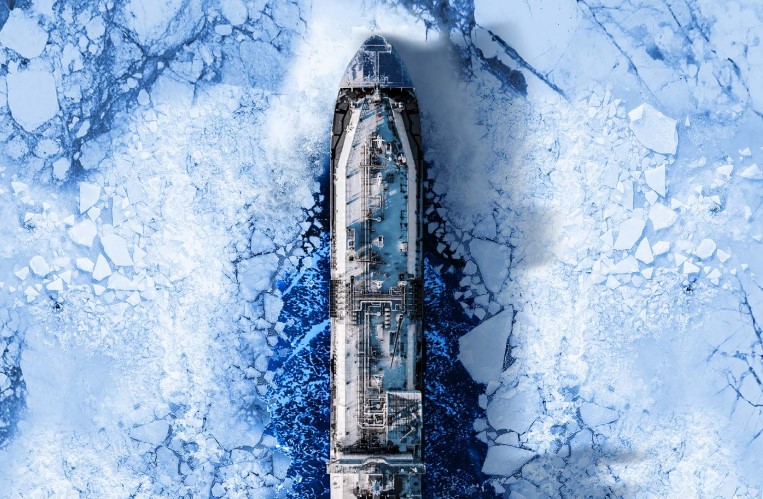
The 300 m-long, 174,000 cu m Christophe de Margerie entered the NSR at the end of May, heading east through heavy sea ice while carrying LNG from Novatek’s sanctioned Arctic projects. The voyage attracted attention as the year’s first eastbound passage, with the vessel breaking through the ice almost a month earlier than comparable transits in previous years. Publicly available MarineTraffic data now lists the nine-year-old vessel as out of range, with its last reported position in the Asian part of the Bering Sea, clearing the NSR.
Context and Route Details
The eastbound transit underlines Moscow’s efforts to keep sanctioned Arctic LNG moving despite difficult ice conditions, trading restrictions and logistical hurdles. In recent months, Christophe de Margerie has been shuttling cargoes from the sanctioned floating storage unit Saam off Russia’s Kola Peninsula. Last year, another Arc7 ice-class LNG carrier, Georgiy Ushakov, became the first vessel to sail eastbound along the route. That vessel is also under sanctions and has previously been associated with periods of AIS silence.
| Vessel | Length | Capacity | Ice Class | Status |
|---|---|---|---|---|
| Christophe de Margerie | 300 m | 174,000 cu m | Arc7 | Sanctioned |
| Georgiy Ushakov | N/A | N/A | Arc7 | Sanctioned |
Implications for Shippers and Operators
The combination of ice-class tonnage, floating storage units and early-season transits points to an expanding logistics workaround intended to maintain Russian Arctic gas flows to Asian buyers. For logistics managers and freight forwarders, this development means:
- Increased likelihood of additional early-season NSR transits by sanctioned vessels, potentially compressing schedules for non-sanctioned Arctic shipping.
- Continued reliance on floating storage (e.g., Saam) as intermediate nodes, introducing operational risks such as ship-to-ship transfer delays and AIS masking.
- Greater pressure on insurance, bunkering, and port services related to sanctioned cargoes, with possible spillover effects on regional shipping costs.
- Heightened scrutiny from regulators and trading partners, requiring careful due diligence on Arctic LNG cargo origins and vessel history.
“The combination of ice-class tonnage, floating storage units and early-season transits points to an expanding logistics workaround.” — Splash247
Watch List
- Further early-season NSR transits by other sanctioned Arc7 carriers, potentially shifting the seasonal window for Arctic shipping.
- Additional floating storage deployments near the Kola Peninsula or along the NSR to support year-round LNG movement.
- Responses from sanctions enforcement bodies, including potential expansion of vessel designations or tighter AIS monitoring.
- Ice conditions in the Bering Strait and East Siberian Sea, which could affect transit windows and operational safety.
Sources: