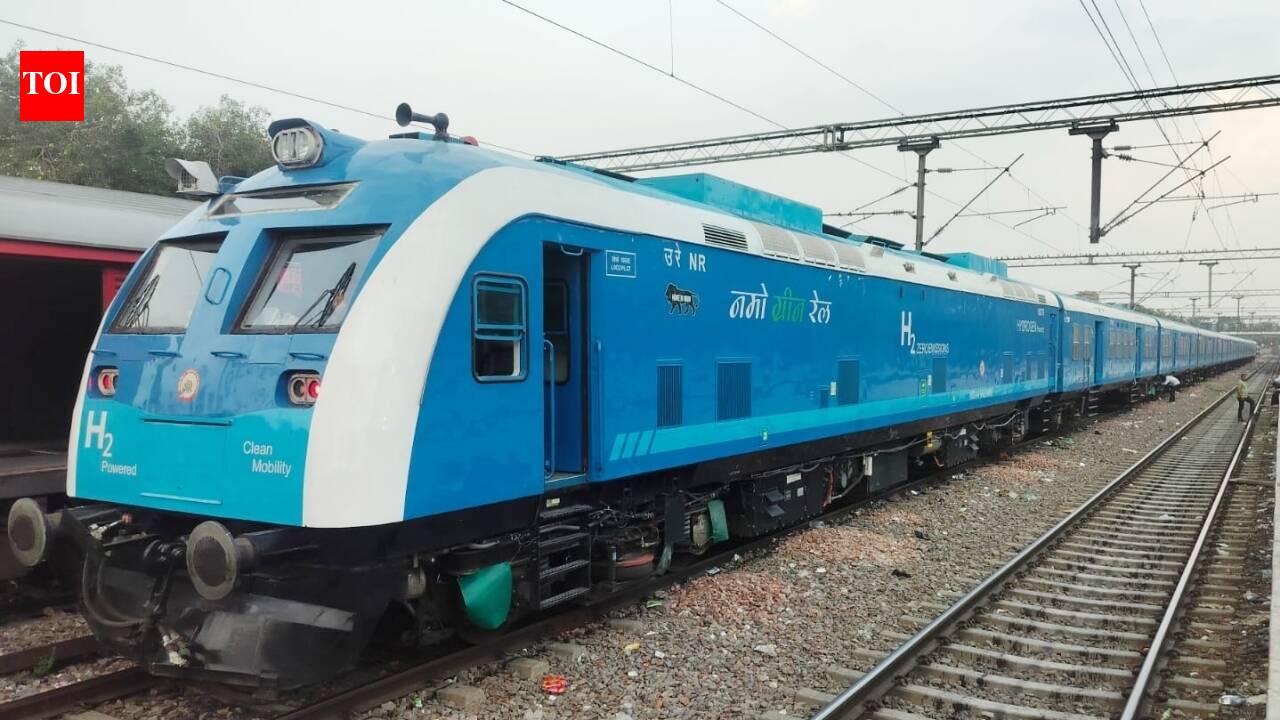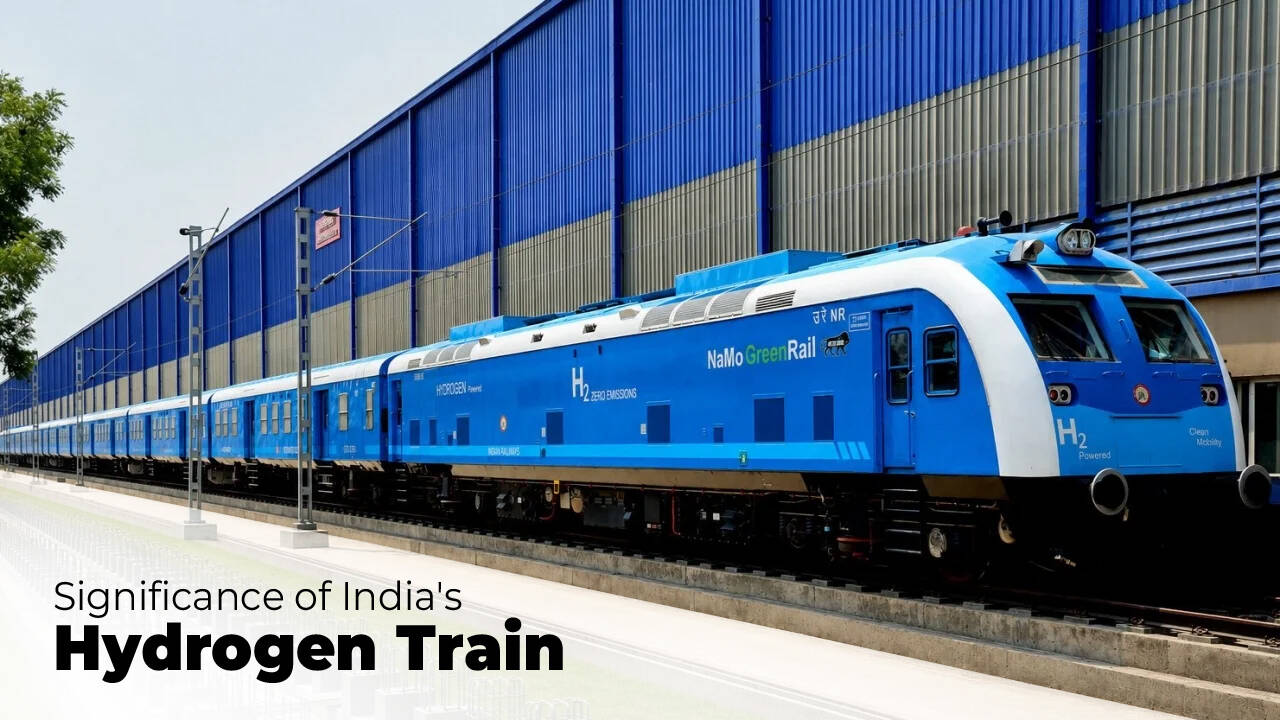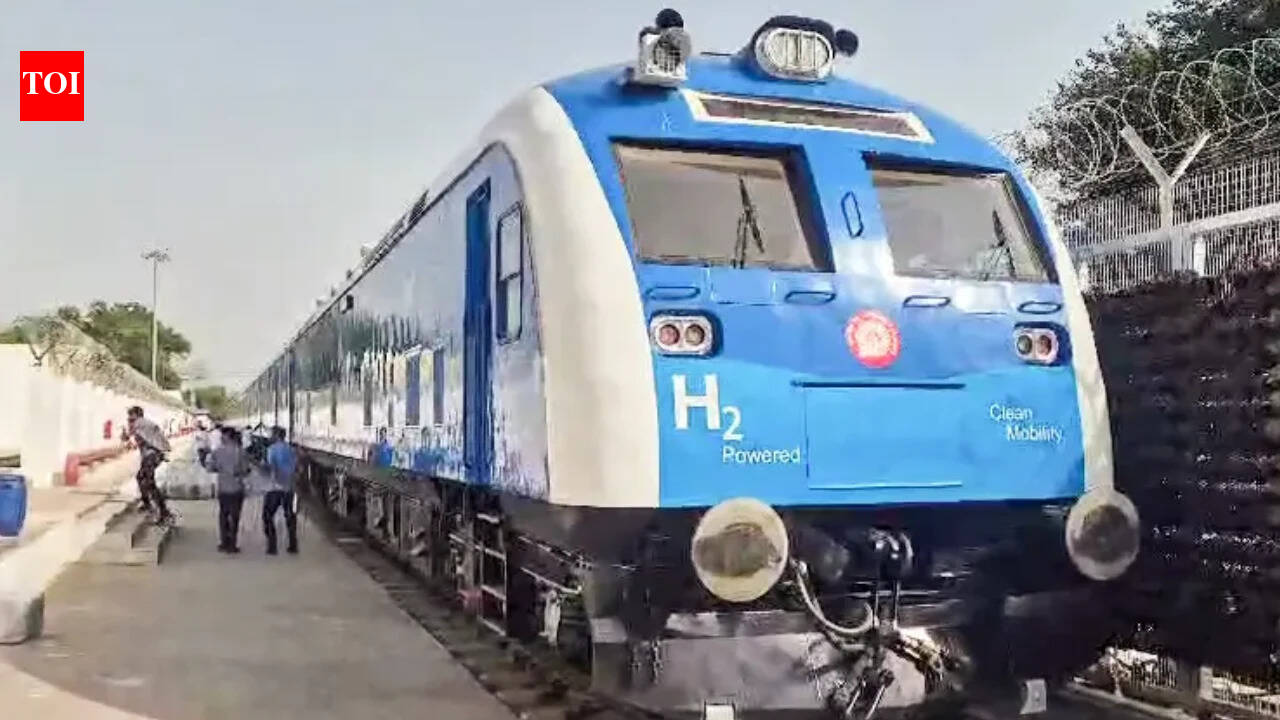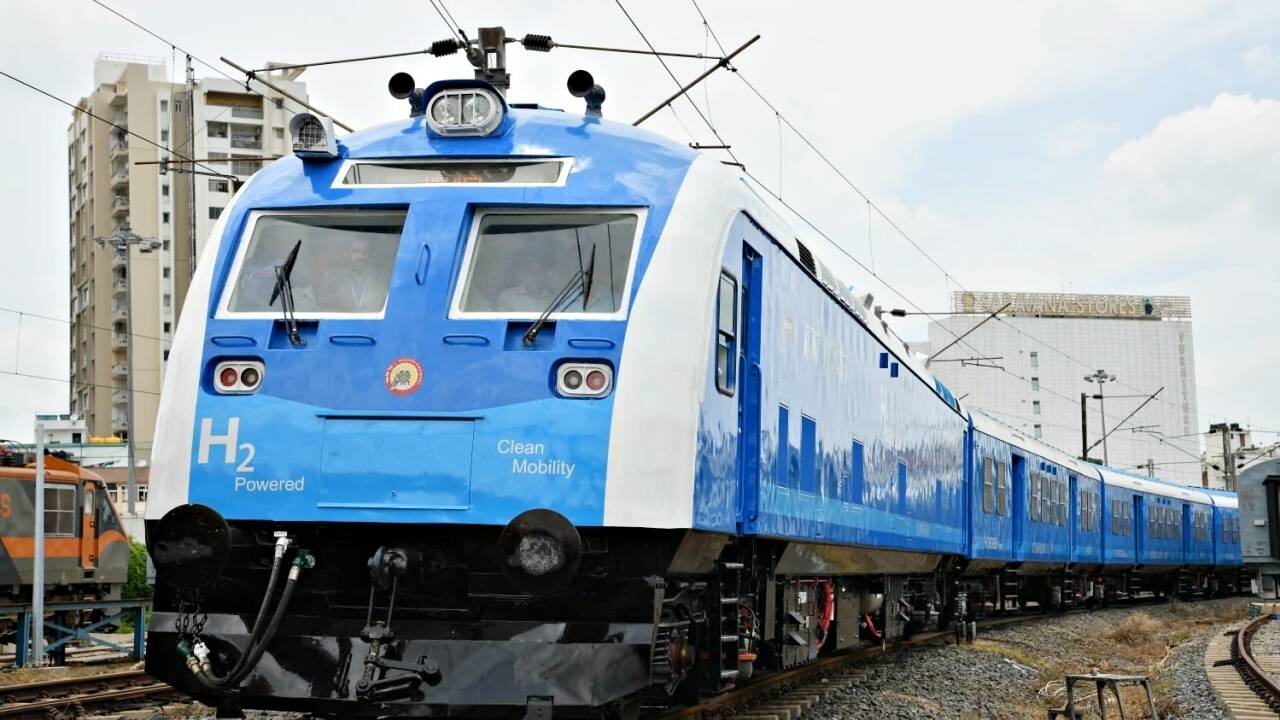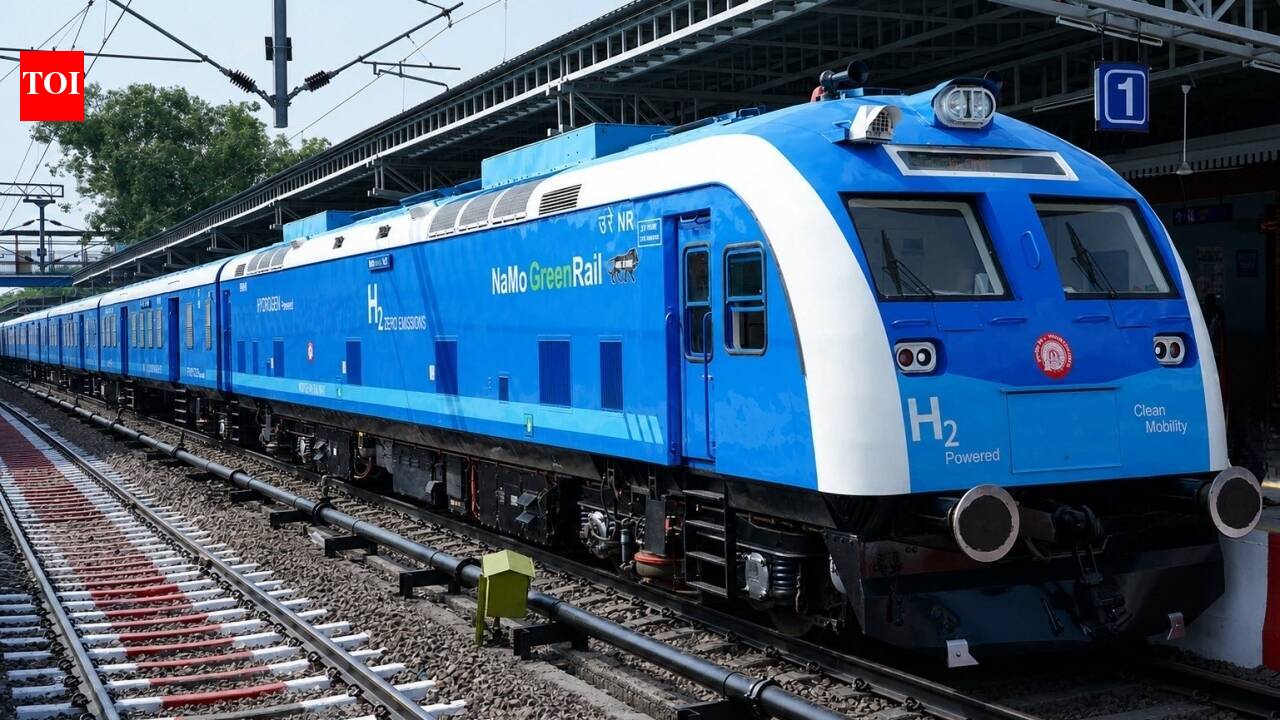
India’s first hydrogen-powered passenger train will be flagged off by Prime Minister Narendra Modi on July 17, according to a Business Today report (via Times of India). The train, which produces its own electricity using hydrogen fuel cells, places India among the few countries testing this technology.
The hydrogen train generates power by combining hydrogen with oxygen, with only water vapour as a by-product, making it a near-zero emissions operation. This milestone is part of Indian Railways' push into green mobility.
Route and Operational Details
The train will operate on the 89-kilometre route between Jind and Sonipat in Haryana, stopping at stations including Pandu Pindara Junction, Lalit Khera Halt, Bhambhewa, Isapur Kheri Halt, Butane Halt, Khandrai Halt, Rabrah Halt, Lath Halt, Mohana, and Barwasni Halt. It is designed for speeds up to 110 km/h but will run at a maximum operational speed of 75 km/h.
| Feature | Details |
|---|---|
| Route | Jind–Sonipat, Haryana (89 km) |
| Design speed | 110 km/h |
| Operational speed | 75 km/h |
| Number of coaches | 10 (2 power cars + 8 trailers) |
| Passenger capacity | ~2,600 |
| Power per driving car | 1,200 kW (1,600 hp) |
| Refuelling facility | Country's largest hydrogen refuelling station at Jind |
Technical Specifications and Safety
Each of the two driving power cars is equipped with hydrogen fuel cells, lithium iron phosphate batteries, and hydrogen storage cylinders that work together to generate traction power. The combined output from both power cars is sufficient to propel the train at speeds up to 110 km/h. A comprehensive multi-layered safety architecture has been designed to detect hydrogen leaks, excessive heat, flames, and smoke, according to the report.
Indigenisation and Partners
The hydrogen train has been designed, engineered, and integrated in India using indigenous technology. The Research Designs and Standards Organisation (RDSO) prepared the technical specifications and led the design approval process. Medha Servo Drives integrated the trainset, while the Integral Coach Factory handled the train's exterior.
Global Context
Hydrogen-powered passenger trains remain at an early stage globally. Germany was the first country to introduce commercial hydrogen train services. France, Italy, China, Japan, and several other nations are either testing the technology through pilots or deploying it on a limited scale. Most existing hydrogen trains have 2–3 coaches; India's 10-coach train is notably larger, capable of carrying around 2,600 passengers.
Implications for Rail and Logistics
While this is a passenger service, the operational experience gained from the Jind–Sonipat corridor will inform Indian Railways' evaluation of hydrogen trains on heritage routes, including the Kalka-Shimla section. The success of this pilot could accelerate the adoption of hydrogen technology across the network, which is significant for logistics operators who rely on rail for cost-effective and sustainable freight movement. Indian Railways' demonstrated capability in indigenous hydrogen rail engineering also positions the country as a potential technology exporter in the green rail segment.
Sources: