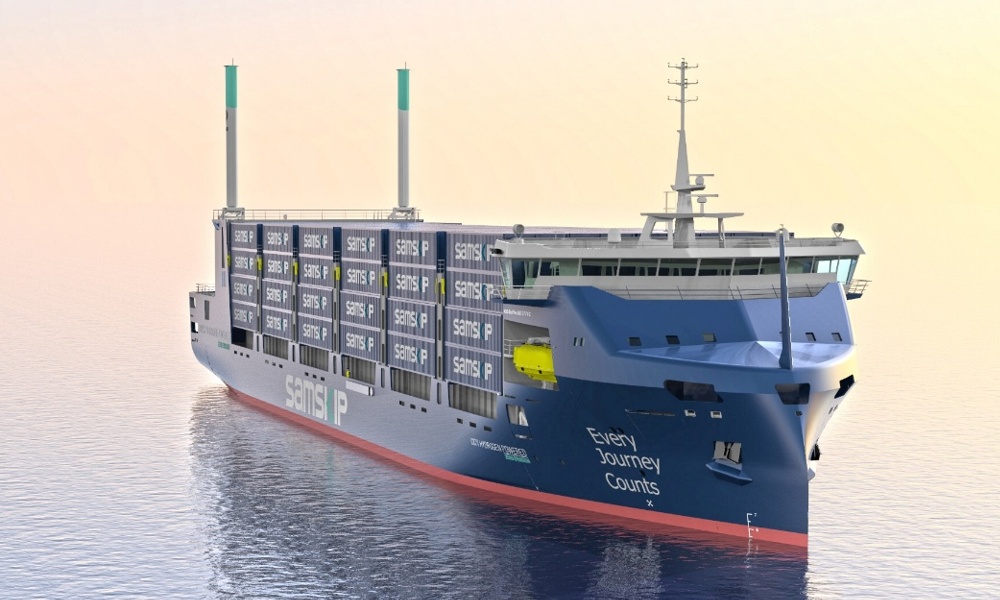
Samskip’s emissions-free, autonomous box shipping project SeaShuttle will serve as the new demonstrator in the EU-backed HyShip project, providing the short-sea shipping initiative with a real vessel and a practical route to test liquid hydrogen at scale, according to Splash247.
Real-World Application on Key Freight Route
The move gives HyShip a real-world application on a key freight route between Oslo and Rotterdam, linking liquid hydrogen innovation to vessels already under construction for commercial operation. SeaShuttle is an existing initiative with two hydrogen-powered container vessels under construction to serve the route between Oslo and Rotterdam. By integrating onboard hydrogen storage systems with quayside bunkering systems, the project will connect fuel supply and port infrastructure with vessel operations.
Consortium and Roles
LH2 Shipping also joined the project. The company will support Samskip in developing safe, scalable onboard hydrogen systems and will be responsible for the design, construction, and operation of the port bunkering system for SeaShuttle. The consortium includes a wide range of European organizations:
| Organization | Role / Expertise |
|---|---|
| Maritime CleanTech | EU Projects lead (Tore Boge) |
| LMG Marin France | Design/engineering |
| sus.lab at ETH Zurich | Sustainability research |
| DNV | Classification and risk assessment |
| PERSEE | Hydrogen systems |
| NCSR Demokritos | Research |
| University of Strathclyde | Maritime research |
| Wilhelmsen Holding | Maritime services |
| Diana Shipping | Shipowner |
| NAV-Tech | Navigation technology |
Strategic Importance
“SeaShuttle was created to demonstrate that zero-emission shipping can move beyond ambition and become a practical reality. Through HyShip, we have an opportunity to connect vessel technology, hydrogen supply, and port infrastructure in a real operating environment, helping to establish the foundations needed for the wider adoption of hydrogen-powered shipping across Europe,” said Jeroen Hollebrands, head of newbuilding and projects at Samskip. Tore Boge, Head of EU Projects at Maritime CleanTech, added: “This collaboration is strategically important because it helps build confidence in liquid hydrogen as a viable fuel for shipping.”
Implications for Freight Operators
For freight forwarders, logistics managers, and ocean carriers monitoring the shift to low-emission shipping, the SeaShuttle-HyShip integration marks a concrete step toward operational hydrogen bunkering infrastructure on a major intra-European corridor. The Oslo-Rotterdam lane moves significant container volumes and is a candidate for future green shipping mandates. While the vessels are not yet in service, the project builds a foundation for scalable hydrogen supply chains that could eventually serve other short-sea lanes. Port authorities in both Oslo and Rotterdam will gain firsthand experience with liquid hydrogen bunkering, which may influence future infrastructure investment decisions across Northern Europe.
Watch List
- Construction milestones for the two SeaShuttle hydrogen-powered container vessels currently under construction.
- Bunkering infrastructure development at Oslo and Rotterdam ports, including safety approvals and supply chain arrangements.
- Regulatory developments in the EU on alternative fuel mandates for short-sea shipping, which could accelerate adoption beyond the Oslo-Rotterdam corridor.
Sources: