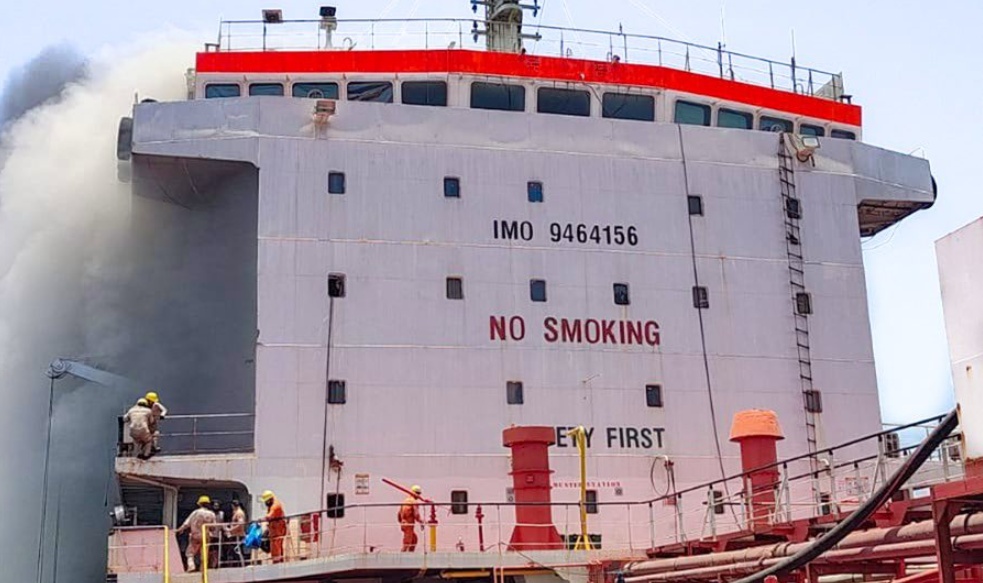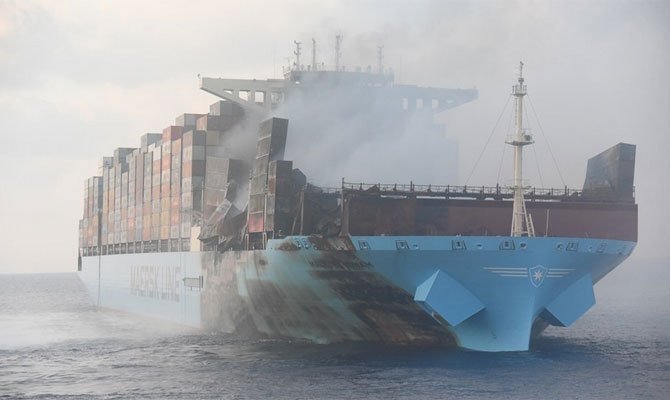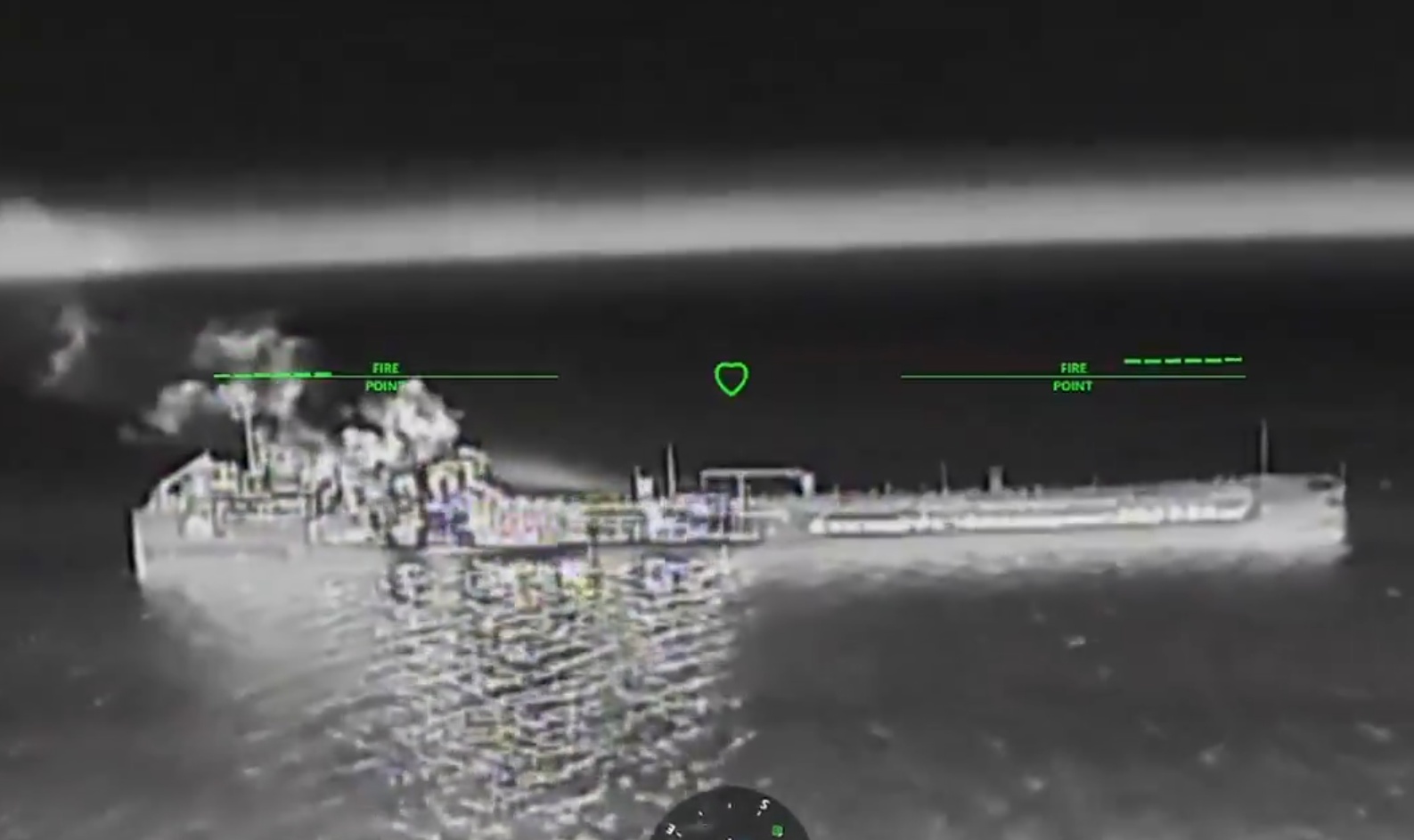
A Ukrainian long-range drone strike on an Iranian cargo vessel in the Caspian Sea over the weekend has shattered the assumption that the inland waterway was a safe haven for shipping, according to a report from Splash247. The attack—which killed one sailor and injured others—marks the most direct crossover yet between the war in Europe and conflict in the Middle East, and redraws the risk map for commercial shipping.
Until the weekend, the Caspian was considered the quiet leg, Splash247 reported. Landlocked, closed to non-littoral navies under the 2018 Aktau Convention, and accessible only through Russian-controlled canals, it was the artery of choice for the Iran–Russia stretch of the International North–South Transport Corridor precisely because nothing could reach it. The route from Bandar Anzali and Amirabad to Astrakhan and Makhachkala was chosen for immunity, not efficiency. That assumption is now gone.
Tehran condemned the assault as an “act of aggression” and warned it “cannot go unanswered,” while Kyiv defended the strike as a legitimate hit on shadow networks transporting Iranian military hardware to Russia via the inland sea, Splash247 noted. The maritime theatre of war expanded significantly after the attack.
Risk Watchlist Expanded
Shipping analysts at SEB, a Scandinavian bank, commented: “The incident highlights the growing exposure of commercial shipping linked to Russian and Iranian supply chains.” The Caspian now joins the Turkish Straits, Suez and Bab el-Mandeb, the eastern Mediterranean, and Hormuz on insurers’ watchlist, according to the report.
| Contested Basin | Status Before Strike | Current Risk Level |
|---|---|---|
| Caspian Sea | Assumed safe (Aktau Convention) | High – now targeted |
| Black Sea | Active war zone | High |
| Red Sea / Bab el-Mandeb | Houthi attacks | High |
| Strait of Hormuz | Geopolitical tension | Elevated |
| Turkish Straits | Controlled passage | Elevated |
| Eastern Mediterranean | Hezbollah/Iran threats | Elevated |
The Caspian has no maritime substitute at all, Splash247 reported. The alternatives are trans-Caspian rail through Azerbaijan and Kazakhstan or the Caucasus land route, both crossing states with limited appetite for facilitating Russian military logistics.
Rerouting Options Narrow
Rerouting has been shipping’s answer to everything since 2022, the source noted. The Cape of Good Hope absorbed Suez within weeks; Ukraine reopened its Black Sea corridor unilaterally and restored volumes close to pre-war levels until recently. But diversion only works while another route is open, and each contested basin narrows the option set. Direct Western exposure to Caspian tonnage is thin — the fleet is largely Russian, Iranian and Azerbaijani.
The Cheap Offence Constant
Cheap offence remains the structural constant in 2020s warfare, according to Splash247. Ukraine displaced Russia’s Black Sea Fleet with unmanned surface vessels (USVs) costing perhaps $250,000 apiece. The Houthis emptied a trade route using weapons a fraction of the cost of the interceptors fired at them. The Caspian now demonstrates that reach, too, is cheaper than anyone budgeted for. Recent attacks across the Red Sea, Strait of Hormuz and Black Sea show how relatively inexpensive unmanned systems can threaten merchant ships hundreds of miles from a conventional front line. Their small radar signature, low operating cost and ability to arrive in swarms force defenders to expend multimillion-dollar interceptors, while merchant ships remain unable to protect themselves.
Sources: