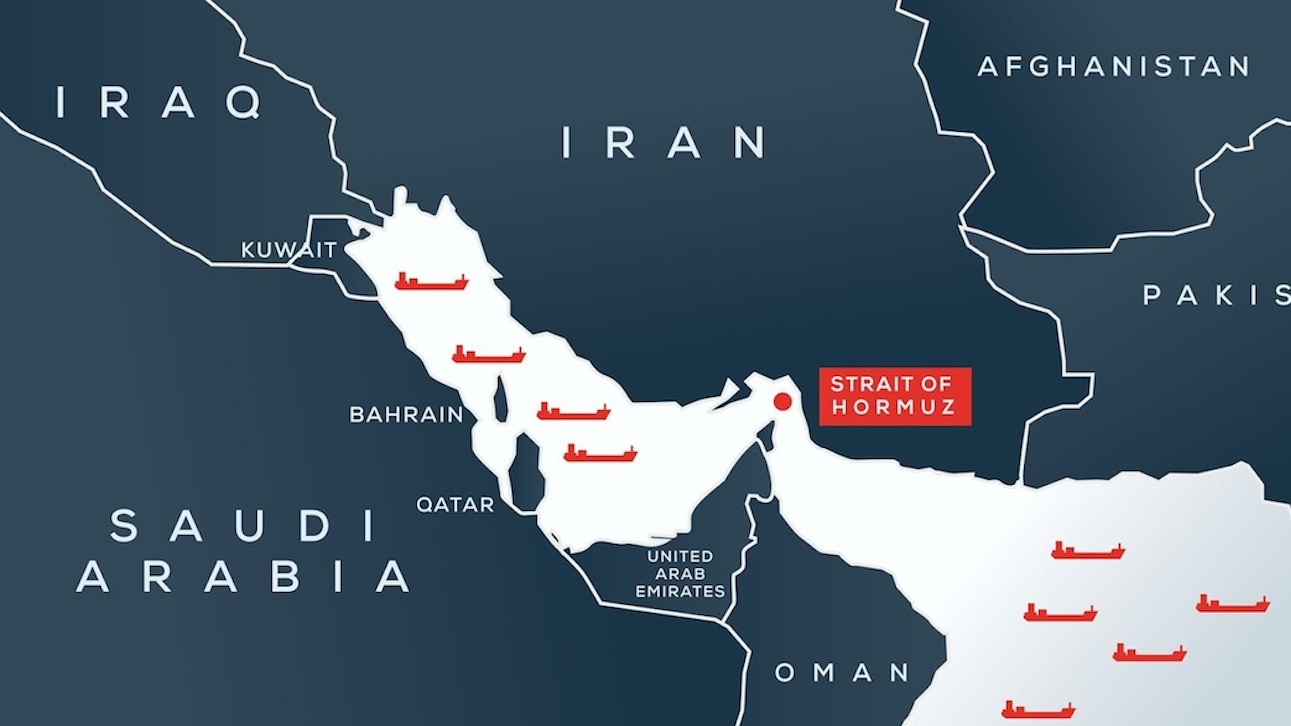
The Strait of Hormuz — through which about one-fifth of global oil supply transits — remains effectively closed to commercial shipping, according to Iranian military sources, even as Qatar and Pakistan announced a new US-Iran hotline aimed at preventing incidents and securing a temporary safe-passage agreement.
The diplomatic channel was established on Monday following the first round of high-level talks under a 14-point Memorandum of Understanding (MOU) at the Lake Lucerne Summit in Burgenstock, Switzerland, according to Splash247. The joint statement described the talks as having a “positive and constructive atmosphere” and produced “encouraging progress,” including a roadmap toward a final agreement within 60 days. Paragraph five of the MOU commits Iran to facilitating safe passage for commercial vessels without transit fees for the 60-day negotiation period, and requires Iran to begin demining operations within 30 days. Looking beyond the temporary arrangement, the MOU envisions Iran entering dialogue with Oman to define future administration and maritime services in the strait in line with international law.
Operational reality on the water
Despite the diplomatic progress, Iran’s Fars News Agency, citing military sources, reported that the strait remained closed and that the IRGC Navy was not issuing transit permits, describing the move as a response to Israel’s continued attacks in Lebanon and the US failure to implement the ceasefire agreement fully.
HSBC cautioned clients this week that “shipping normalisation will lag pending a durable settlement, mine clearance and lower insurance costs,” according to Splash247. The bank said inventory rebuilding should provide medium-term support, adding that any easing of Iranian sanctions would boost demand for compliant tonnage, drawing a parallel with Venezuelan crude flows.
BRS, in its weekly tanker newsletter, described the situation as a “false start”. The broker noted that once the strait was declared open last week, traffic rose steadily to its highest level since the closure at end-February, with outbound tanker traffic exceeding inbound as vessels stranded in the Middle East Gulf rushed to leave.
| Traffic Metric | Value |
|---|---|
| Tankers >34,000 dwt exited over weekend | 19 |
| Tankers >34,000 dwt entered over weekend | 5 |
| Traffic after Tehran’s closure announcement | Slowed to a trickle |
BRS said the weekend’s events were viewed as a blip given the apparent success of Monday’s talks and Washington’s stiff rebuking of Israel, and anticipated that traffic would swiftly return to end-of-last-week levels once the status of Hormuz was clarified.
Vessel diversions and owner behaviour
On ballasters, BRS said last week’s events had encouraged a significant diversion of tonnage toward the region. Many very large crude carriers (VLCCs) voyaging in the southern Indian Ocean abruptly changed course northward, and ship tracking data suggested these units were now amassing off the Omani coast awaiting clearance. A higher proportion of VLCCs exiting the Strait of Malacca after discharging in Asia were also signalling for the Middle East rather than the Atlantic. Western owners, however, with the notable exception of Greek operators, were largely still directing ships to lifting zones outside the region.
Shipper and operator implications
For freight forwarders, logistics managers, and ocean carriers, the immediate operational impact is clear: the Strait of Hormuz remains a high-risk zone. Even with a hotline open, the IRGC Navy’s refusal to issue permits means vessels cannot rely on safe passage. The 60-day negotiation window provides a timeline, but as HSBC notes, normalisation will lag any settlement — mine clearance and lower insurance costs are prerequisites.
Tanker operators should expect continued volatility in spot rates and higher war-risk insurance premiums for voyages through the strait. The diversion of VLCCs toward the Omani coast and the clustering of tonnage outside the region suggests that capacity may tighten suddenly if the strait does reopen. Conversely, if talks fail, prolonged closure could force further rerouting around the Cape of Good Hope, adding 10–15 days to voyages and sharply increasing freight costs for crude and refined products.
Watch list
- 60-day negotiation period: The MOU roadmap targets a final agreement within 60 days from Monday. Any breakdown in talks could trigger renewed escalation.
- Demining operations: Iran must begin demining within 30 days. Progress (or lack thereof) will signal commitment to reopening.
- Oman dialogue: The MOU foresees Iran entering talks with Oman on strait administration and maritime services. Outcomes will shape long-term governance.
- Insurance market response: War-risk premiums and underwriters' willingness to cover Hormuz transits will be a real-time indicator of perceived safety.
- US-Israel-Lebanon dynamics: The IRGC cited Israel’s Lebanon operations and US ceasefire failures as reasons for continued closure; any changes here could alter Iran’s stance.
Sources: