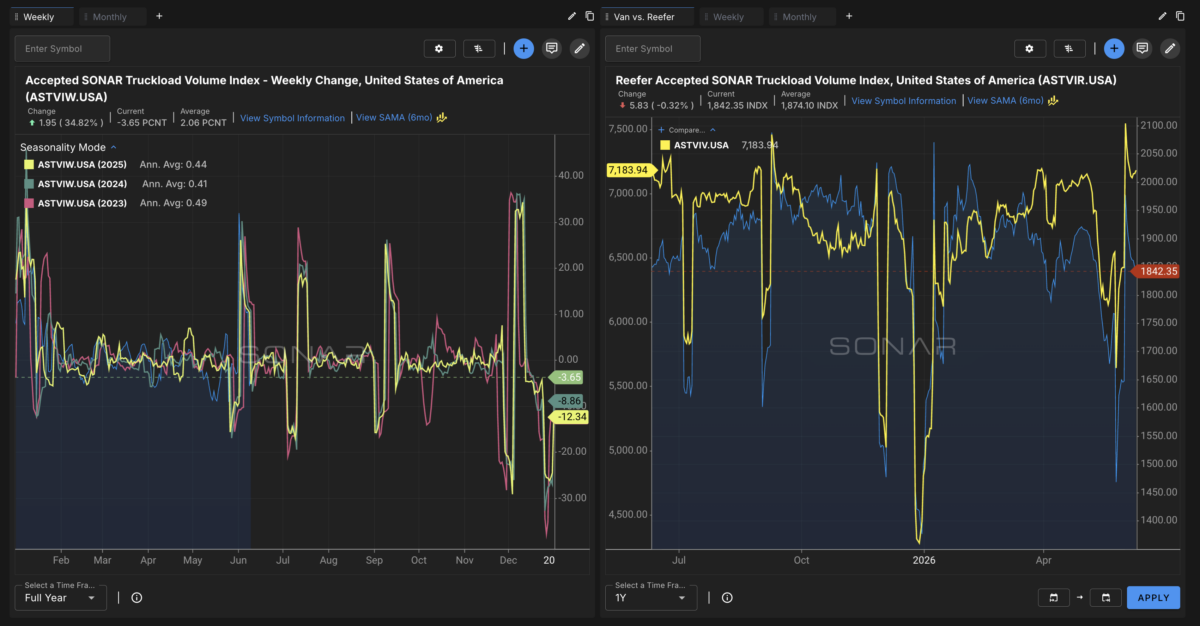
SONAR has launched the Accepted Truckload Volume Index (ASTVI), providing a new tool for logistics professionals to track the volume of freight that is actually accepted and moved, rather than just tendered. This development is crucial for understanding market dynamics, especially in soft market conditions.
Understanding ASTVI
The ASTVI isolates accepted truckload demand by removing rejection activity, offering a clearer picture of market flows. This index is available at national, regional, and market levels, updating daily to reflect changes in total accepted volume, van, and reefer categories. It provides week-over-week, month-over-month, and year-over-year change metrics, making it a comprehensive tool for freight analysis.
Market Impact
In soft market conditions, the distinction between tendered and accepted freight becomes significant. Routing guide compliance often deteriorates, widening the gap between offered and accepted loads. The ASTVI allows brokers, carriers, shippers, and analysts to directly view this spread without relying on multiple indices.
Implications for Logistics Professionals
For logistics managers and freight forwarders, the ASTVI offers actionable insights into market conditions. By understanding the spread between tendered and accepted freight, professionals can better manage capacity and optimize routing decisions. This index also aids in strategic planning and operational adjustments in response to market fluctuations.
Watch List
- Market Conditions: Continued monitoring of soft market conditions and their impact on freight acceptance rates.
- Technological Integration: Potential for further integration of ASTVI data into logistics management systems.
- Industry Events: Upcoming events like the Supply Chain AI Symposium and F3: Future of Freight Festival may provide additional insights into the use of AI and technology in logistics.
The introduction of the ASTVI by SONAR represents a significant advancement in freight tracking, offering logistics professionals a more precise tool for managing their operations in a dynamic market environment.
Sources: