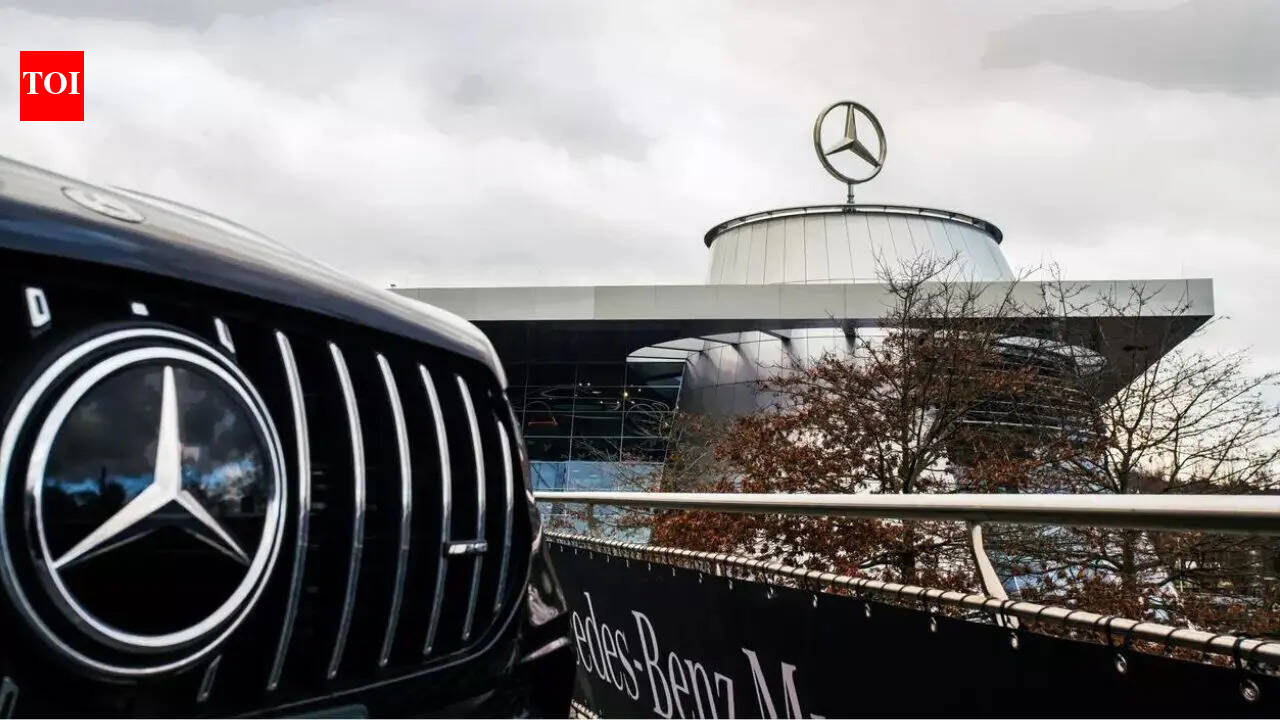
Mercedes-Benz India has for the first time entered the company's top 15 markets globally, according to board member Mathias Geisen. The milestone was announced during Geisen's visit to India for the launch of the new S-Class plug-in hybrid.
India's Market Position and Local Production
"India is now for the first time among Mercedes-Benz's Top 15 markets globally," Geisen said. Globally, India already ranks in the top five for the ultra-luxury Mercedes-Maybach brand. The company has close to 20 products in India, with 11 models produced locally at its Chakan plant near Pune, which was established more than 30 years ago.
| Metric | Detail |
|---|---|
| India rank in global markets | Top 15 (first time) |
| India rank for Maybach | Top 5 |
| Locally produced models | 11 of ~20 |
| Local factory location | Chakan, Pune (operating 30+ years) |
Geisen emphasized the company's long-term view: "We always say investing in India is not a sprint—it’s a marathon." He confirmed that most of the upcoming 40-plus new models will make their way to India, depending on relevance, and that Mercedes intends to invest further in the market.
Global Sales and Production Strategy
Globally, Mercedes-Benz sold around 1.8 million vehicles last year. While overall sales declined, the drop was largely driven by China, where electric-vehicle competition is intense. Excluding China, sales grew about 5%. The company experienced significant volume declines in both China and the United States, while other markets remained relatively stable.
"Last year—and even more so this year—is a transition period for us. We are phasing out older models and will launch more than 40 new models by the end of next year," Geisen explained. He reported a strong first quarter this year, with European sales up about 7% and battery-electric vehicle sales rising 34%. Order intake for EVs nearly doubled, driven by models such as the CLA (Car of the Year 2026) and the GLC, which is sold out until the end of the year.
| Global Sales Snapshot (last year) | Value |
|---|---|
| Total vehicles sold | ~1.8 million |
| China sales trend | Declining (strong EV competition) |
| Ex-China sales growth | ~5% |
| European sales change (Q1 this year) | +7% |
| EV sales growth | +34% |
| Order intake (EVs) | Nearly doubled |
The company's new product offensive includes launches of the electric GLC, updated GLA and GLB, and the new CLA. Many models will be offered with both combustion and electric powertrains, providing strategic flexibility across markets.
Free Trade Agreement and Manufacturing Outlook
On the potential free trade agreement, Geisen noted that Mercedes is "very happy that we started investing in India more than 30 years ago, when we set up our factory here." For the last 11 years, Mercedes has been the market leader in the Indian luxury segment. The company will continue to evaluate local manufacturing versus imports based on market needs, but the clear signal is for further local investment.
Implications for Manufacturing Executives
For OEM sourcing teams and plant managers, Mercedes-Benz's deepening commitment to India signals stable local supply chain opportunities. The expansion of locally produced models (now 11) and the influx of new models (including EVs) will require increased component and automation support. The company's long manufacturing horizon in India—over three decades—provides a reliable anchor for tier-1 and tier-2 suppliers. With India now among the top 15 markets globally, the scale of production is likely to grow, reinforcing the need for factory capacity planning and advanced manufacturing technologies.
Sources: