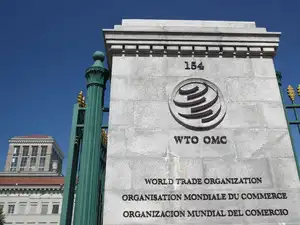
According to an article in The Hindu BusinessLine by Parashram Patil, the contemporary landscape of multilateral agricultural trade economics relies heavily on structural abstractions. Conventional trade theory forming the core of the World Trade Organization's (WTO) Agreement on Agriculture (AoA) evaluates labour as a homogenous, static production block. In highly labour-intensive cash-crop economies across the Global South, this macro-level indifference overlooks a critical microeconomic phenomenon: the rapid, unchecked depreciation of the workforce's biological assets under intensive cultivation cycles. When value chains maximise output without pricing the economic cost of biological recovery into farm-gate calculations, it results in an unsustainable depletion of human capabilities.
Evidence from Indian Cash-Crop Belts
The article presents empirical micro-data from major commercial crop belts in India to illustrate the quantitative scale of the issue. The composite Farmer Health Capital (FHC) Index—which models physical, mental, and social health metrics as economic infrastructure within an augmented production function—frequently sits at suboptimal levels. Musculoskeletal disorders and occupational physical strain are widespread, with manual harvesters routinely tracking high personal discomfort scores. Due to immediate working capital constraints and cash flow mismatches, a vast majority of smallholder households systematically delay necessary preventative healthcare. This unmanaged physical degradation results in field-level operational downtime, structural inefficiencies, and forces vulnerable families to rely on high-interest informal credit networks to absorb sudden health shocks.
Market Distortion and Cost Externalisation
From an agricultural trade perspective, this dynamic is not merely an isolated rural welfare problem; it introduces a structural distortion into global markets. The article explains that exporting sectors that do not internalise the real depletion of human biological resources effectively externalise these production outlays onto regional public health infrastructure and overextended state medical budgets. This cost externalisation permits agricultural commodities to enter global supply chains at artificially low export prices, creating an uneven playing field in international trade architecture.
The FHC Solution: Upfront Health Investments
Importantly, FHC theory proves that embedding human asset maintenance into agricultural economics does not create an inflationary burden on food value chains. Parametric production modelling indicates that targeted upfront investments in farm-gate wellness infrastructure—such as:
- Localised field hydration networks
- Ergonomic harvesting equipment
- Preventative outpatient clinics
...significantly stabilise long-term labour efficiency. This efficiency gain expands total factor productivity, effectively optimising crop yield margins relative to total production costs. The resulting productivity gains expand the output volume sufficiently to offset initial capital investments, lowering overall unit production costs while reducing downstream financial pressure on public health infrastructure.
Policy Recommendation: WTO Green Box Reclassification
To create a resilient, equitable global agricultural economy, multilateral trade policy must move past rigid binary classifications of agrarian support. Currently, public spending aimed at reinforcing frontline rural infrastructure is often vulnerable to classification as a market-distorting subsidy. The article urges that trade technocrats and member nations should collaborate to ensure that state-backed farm-gate health investments, occupational health infrastructure, and structured social security nets are explicitly recognised under the WTO Green Box. This reclassification would appropriately treat public health investments as essential economic infrastructure that protects long-term GDP and stabilises global supply chains.
The table below summarises the proposed shift:
| Aspect | Current Treatment | Proposed Reclassification |
|---|---|---|
| Farm-gate health investments | Vulnerable to classification as market-distorting subsidy | Explicitly recognised under WTO Green Box |
| Occupational health infrastructure | Not accounted for in trade cost | Treated as essential economic infrastructure |
| Social security nets for farmers | Not linked to trade policy | Recognised as protecting long-term GDP and supply chain stability |
Implications for Trade Compliance
Additionally, the article notes that modern processing units and market intermediaries should integrate standardised agricultural settlement timelines, ensuring that farm-gate revenues clear rapidly through formal channels to ease the acute financial anxiety that restricts health investments. For trade compliance professionals, the FHC framework suggests that importing countries may need to adjust their non-tariff measure assessments to account for hidden health costs in source countries. While no immediate rule changes are in effect, the analysis signals a potential shift in how WTO members might argue subsidy classification and market access commitments. Monitoring upcoming WTO committee discussions on agricultural domestic support will be critical for companies sourcing from labour-intensive cash-crop regions.
Sources: