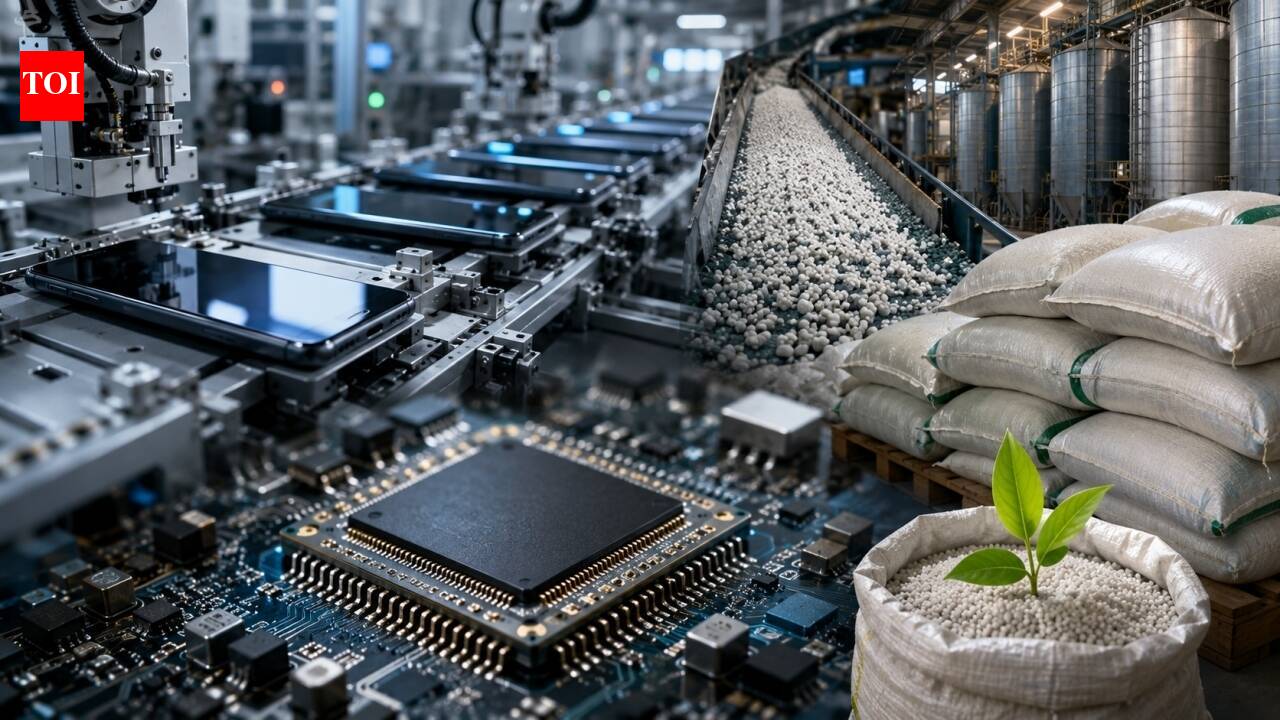
Building a deep manufacturing base across multiple sectors is emerging as India's strategy to future-proof its supply chains against disruptions caused by geopolitical conflicts, according to a Business Today report. The move comes as the US-Iran conflict has impacted industries and highlighted India's imports-driven supply chain vulnerabilities, with the aim to reduce the trade deficit, conserve foreign exchange reserves, and position India as an alternative global manufacturing hub to China.
Government Targets and Product List
The government is examining a range of measures including subsidies and other incentives to encourage local production, the report states. The Ministry of Commerce and Industry is reportedly preparing a list of more than 100 products that could see increased domestic manufacturing. The list spans sectors such as electronics, chemicals, essential pharmaceuticals, fertilisers, semiconductors, automobiles, and machinery. Key ministries have been asked to identify products where India is still heavily dependent on imports and examine whether import substitution via domestic manufacturing is a viable alternative. However, there is acknowledgement that gold, oil, and critical minerals cannot be easily substituted.
Financial Outlays and Schemes
Earlier this month, the Cabinet cleared two schemes worth Rs 1.9 lakh crore for chips and mobile phones, per the report. Semicon 2.0 with an outlay of Rs 1,27,500 crore was cleared, and the Mobile Phone Manufacturing Scheme (MPMS) with a budget of Rs 62,500 crore also got a nod. These aim to take India's electronics manufacturing ambitions beyond assembly lines into semiconductor fabrication, advanced packaging, materials, and homegrown mobile phone brands.
Taskforce and Policy Changes
A Bloomberg report cited in the article says a Shaktikanta Das-led taskforce is working on the import substitution roadmap. Once products are identified, incentives for private and foreign investors as well as capacity expansion by state-owned enterprises through joint ventures will be rolled out. Plans are also under consideration including reducing imports of pulses, edible oils, and fertilisers through domestic production. Officials are also examining policy changes to encourage exporters to use more domestically produced capital goods and intermediate products by relaxing certain export obligations and value-addition norms.
Industry Contingency Planning
Meanwhile, consumer goods and electronics companies have stepped up contingency planning ahead of the festive season, the report notes. Renewed US-Iran tensions and a weaker rupee are threatening their supply chains. Manufacturers are advancing imports from China, increasing buffer stocks of raw materials and components, and leasing additional warehouse space to guard against delays, rising freight costs, and higher input prices following fresh disruptions around the Strait of Hormuz.
Expert View and Targets
Experts call for a nuanced manufacturing strategy that deals with both immediate supply chain bottlenecks and focuses on strategic items for the long term. India targets raising the share of manufacturing in GDP to 25% by 2035; currently the share is around 17%. Steps are being planned to focus on sectors where reducing import dependence will help. Plans to reduce imports of pulses, edible oils, and fertilisers through domestic production are also under consideration.
What This Means for Your Procurement Team
For procurement leaders, this signals a significant shift in supply base dynamics. The government's import substitution drive could create new domestic sourcing opportunities, especially in electronics, chemicals, pharmaceuticals, and machinery. However, the transition will take time — the report acknowledges that critical commodities like gold and oil cannot be quickly substituted. Companies should monitor the evolving product list and incentive schemes to align sourcing strategies with upcoming local capacity. The contingency actions by consumer goods firms — advancing imports, building buffer stocks, and leasing extra warehouse space — offer a model for mitigating near-term risks from geopolitical flashpoints like the Strait of Hormuz. Procurement teams should also track the Shaktikanta Das taskforce's recommendations, as they may signal tariff or non-tariff barriers on imported goods that could affect cost and lead times.
Sources: