The theft of $111 million in semiconductors — with escort vehicles cut off and truck drivers rerouted to an unauthorized warehouse — signals that organized cargo crime has moved beyond opportunistic theft into coordinated, corporate-style operations, according to FreightWaves. For chief supply chain officers and procurement directors, the breach underscores that counterparty vetting is no longer just a compliance exercise but a core financial control.
The $111M semiconductor heist
FreightWaves reported that the incident involved truck drivers receiving rerouting instructions without necessarily knowing they were participating in a theft, as escort vehicles were cut off and loads were delivered to an unauthorized warehouse. The case highlights a shift in how criminal networks are targeting high-value freight, according to the report.
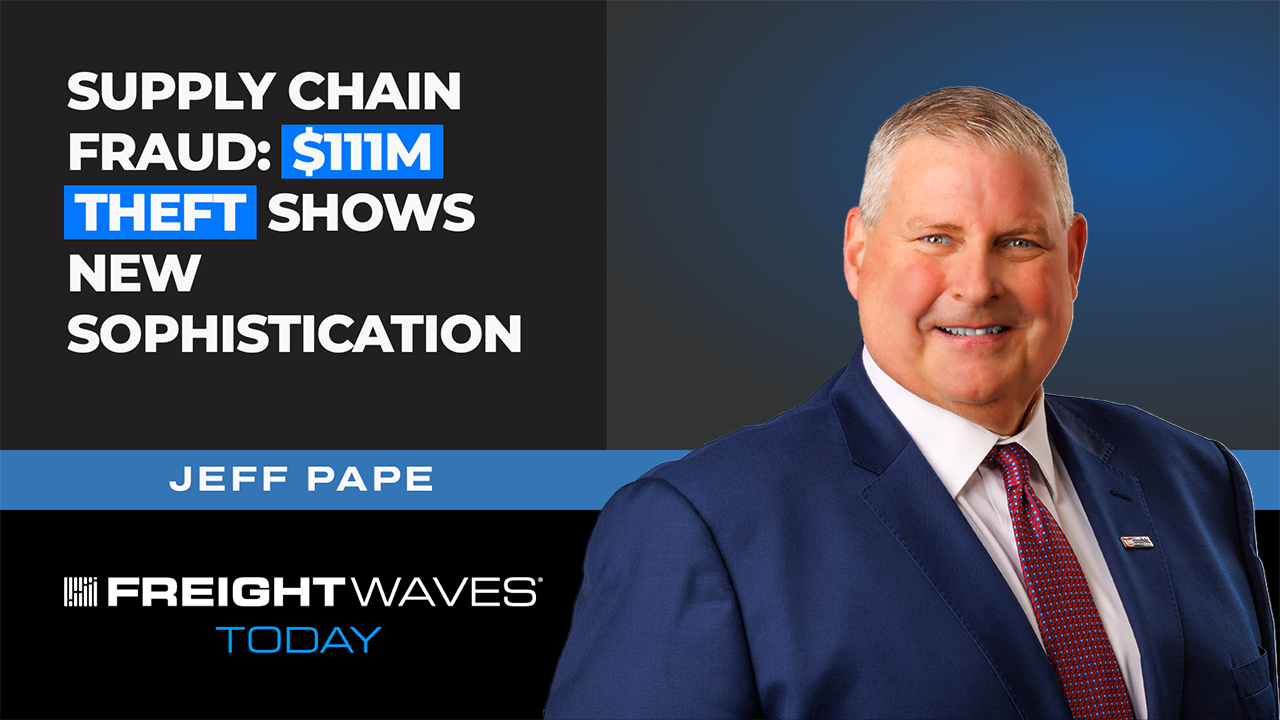
Jeff Pape, who oversees transportation at US Bank Corporate Payment Systems, said the tactics are unlike anything the industry has previously encountered. He told FreightWaves:
"Just the brazenness of these thieves and the network they have to move these goods once they get control of them — frankly, the sophistication is something we haven't seen before."
Carrier impersonation and DOT credential theft
Pape identified identity theft of Department of Transportation (DOT) credentials as a core enabler of cargo crime. "There's this whole network of buying and frankly, identity theft of DOT credentials that nefarious companies start to, or nefarious carriers start to use to really steal and take control of these goods," he said.
To counter this, Pape said US Bank is increasingly advising customers to screen for red flags including:
- Newly established carrier addresses
- Recently formed companies
- Suspicious email domains
He noted that financial fraud detection protocols are now migrating into supply chain risk management as the two disciplines converge around similar threat patterns.
Industry response: due diligence and trusted collaboration
In response to the rising threat, shippers are conducting more rigorous upfront due diligence on carrier and broker partners, according to Pape. He described the current environment as one where "trusted collaboration" between shippers and carriers has never been more critical, with companies building out formal validation processes to vet counterparties before tendering freight.
Market outlook and what to watch
Beyond fraud, Pape shared a market outlook based on US Bank's Freight Payment Index and customer feedback, as reported by FreightWaves:
| Indicator | Outlook according to US Bank's Jeff Pape |
|---|---|
| Freight rates | Holding steady or rising as capacity tightens |
| Regional strength | Northeast remaining particularly strong |
| Construction sector | Structural headwinds tied to interest rates and changing consumer behavior |
| Food and beverage sector | Headwinds from changing consumer behavior and product recalls |
| Carrier and shipper credit quality | No meaningful weakness; fuel cost pressures are squeezing carriers |
| Peak season | No typical October–November surge; "more consistency" expected |
Pape said current market conditions — including fuel price volatility and economic uncertainty — are expected to persist at minimum through mid-2025 and potentially through the end of next year.
AI adoption timeline
AI adoption among logistics customers is moving from experimental curiosity toward practical applications, according to Pape. He expects use cases around reducing manual work and accelerating decision-making to expand over the next 12 to 18 months.
What this means for your procurement team
The freight fraud and market signals point to concrete actions for procurement and logistics leaders. Build formal validation processes that verify DOT credentials and carrier identities before tendering freight. Screen for the red flags Pape outlined: newly established carrier addresses, recently formed companies, and suspicious email domains. Use rate and capacity forecasts — such as the steady-to-rising rate environment in the Northeast — as planning inputs, and budget for fuel-related cost pressure in carrier contracts. The convergence of financial fraud protocols and supply chain risk management means procurement teams should anticipate tighter coordination with treasury and risk functions, per Pape. And with a steadier peak season predicted, plan inventory and transportation capacity for consistency rather than a volume surge.
Sources: