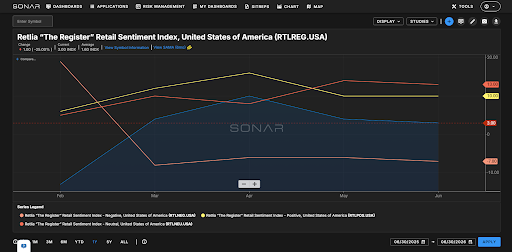
The U.S. Department of Transportation (USDOT) is now a subscriber to FreightWaves SONAR's high-frequency freight market data, signaling a shift toward real-time, market-driven intelligence in federal transportation oversight. According to SONAR's announcement Wednesday, the contract will support the Department's Office of the Assistant Secretary for Research and Technology, providing timely insights to monitor freight market health, inform regulatory enforcement, and strengthen the resilience of the nation's freight networks.
Government Access to Real-Time Freight Intelligence
The USDOT has made strengthening oversight of transportation and supply chain networks a top priority, with a renewed focus on safety, security, and resilience of freight movement nationwide, according to the announcement. The Office of the Assistant Secretary for Research and Technology works at the intersection of emerging technologies, transportation data, policy, and research across all modes. Through this contract, USDOT will incorporate SONAR's aggregated and anonymized freight market data—covering truckload, intermodal, ocean, and air cargo activity—to improve visibility into freight activity, market dynamics, and supply chain conditions across the United States.
"As we continue to modernize our processes in the Bureau of Transportation Statistics, it is vital that the USDOT have access to the most robust and current data sources," said Lee White, Deputy Assistant Secretary for Research and Technology at USDOT, in a prepared statement. "Our agreement with SONAR is another step we are taking on our journey to modernize our systems here at the USDOT."
The collaboration reflects a growing recognition of the value that real-time, market-based freight signals can add alongside traditional datasets. SONAR's platform captures daily freight market activity at the point of booking and procurement, providing earlier visibility into shifts in transportation demand, network utilization, and capacity conditions across the freight ecosystem.
Data Coverage and Capabilities
SONAR's data encompasses major freight modes, enabling a comprehensive view of U.S. logistics. The platform includes:
- Truckload: Spot and contract rates, tender volumes, and capacity indicators.
- Intermodal: Rail and drayage activity, container velocity.
- Ocean: Container throughput, rates, and vessel schedules.
- Air Cargo: Freight volumes and pricing trends.
In addition to market intelligence, SONAR has expanded its transportation risk and compliance capabilities with tools that centralize publicly available carrier safety, inspection, and operational data. These enhancements help carriers, brokers, and shippers evaluate operational risk, streamline compliance workflows, and improve decision-making across transportation networks.
Strategic Implications for Supply Chain Stakeholders
For Chief Supply Chain Officers and procurement directors, the USDOT's adoption of SONAR signals that government agencies are prioritizing the same real-time data streams that private companies use for planning. The contract also underscores the importance of high-frequency data in monitoring supply chain health and capacity trends. According to Craig Fuller, founder and CEO of FreightWaves, "Freight is the heartbeat of the U.S. economy, and policymakers shouldn't have to wait months to take its pulse." He noted that the Office of the Assistant Secretary for Research and Technology has long set the standard for transportation information, and SONAR's real-time data will strengthen that work.
The collaboration comes as transportation stakeholders in both public and private sectors continue to prioritize enhanced visibility into freight market conditions, data-informed roadway safety and compliance, improved freight network resiliency, and efficient goods movement. While no specific financial terms or contract duration were disclosed, the engagement demonstrates the growing relevance of private-sector data analytics in public sector decision-making.
What This Means for Your Procurement Team
For supply chain professionals, the USDOT's contract with SONAR may lead to more timely policy interventions and regulatory actions based on real-time market data. Companies should monitor how federal agencies use these data streams, as they could influence enforcement priorities, infrastructure investments, and future data-sharing requirements. The contract also validates the value of high-frequency freight data as a strategic asset—encouraging procurement teams to consider integrating similar platforms into their own vendor risk assessment and supply chain visibility tools.
Sources: