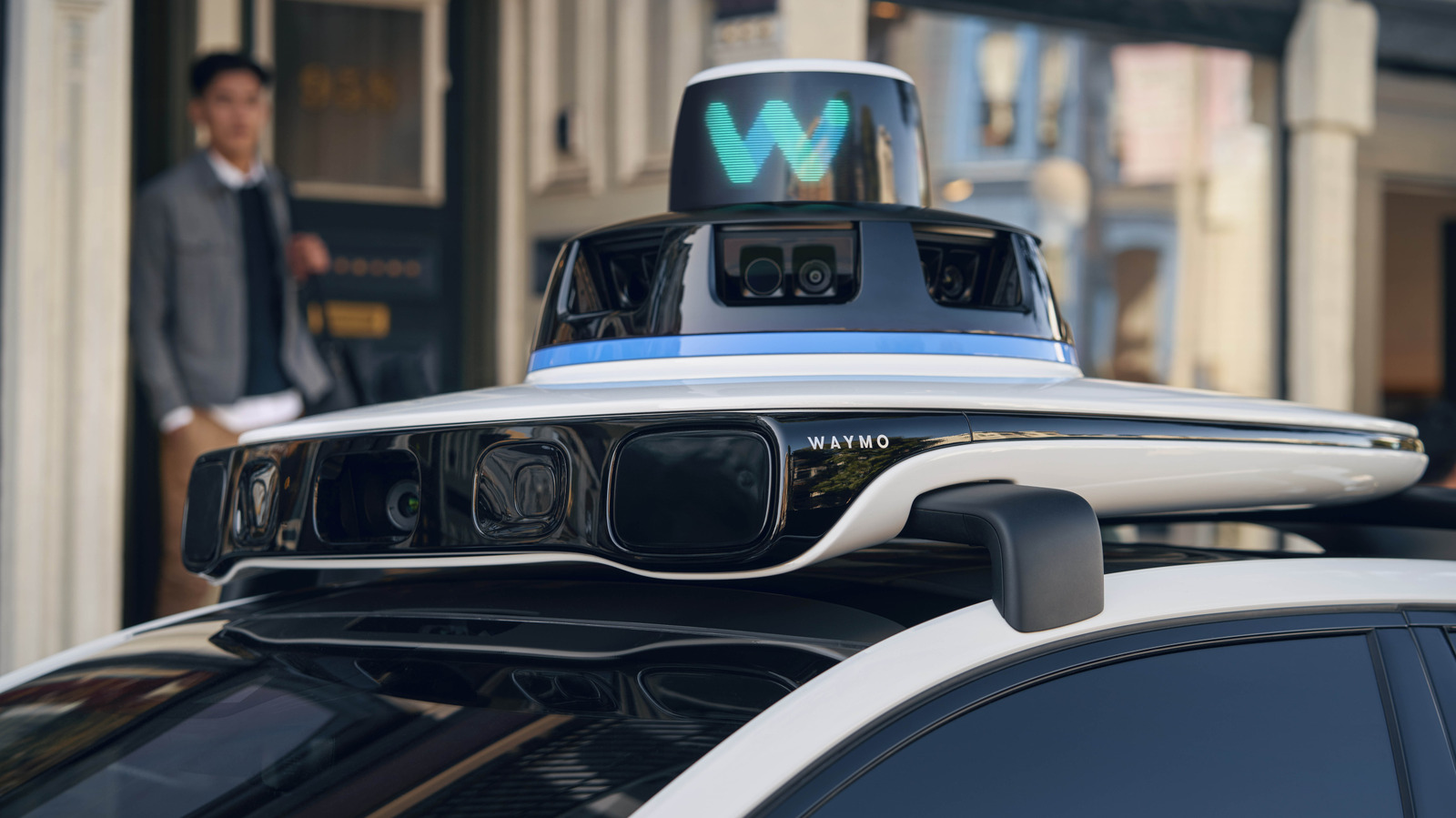
Self-driving cars increasingly rely on deep neural networks to achieve human-like driving. However, the opacity of such black-box planners makes it challenging to accurately anticipate when they will fail, with potentially catastrophic consequences, according to a study published on arXiv. While research into interpreting these systems has surged, most of it is confined to simulations or toy setups, leaving the practical utility of such techniques unknown.
Now, researchers have introduced the Concept-Wrapper Network (CW-Net), a method for faithfully explaining the behavior of machine-learning-based planners that causally grounds their reasoning in human-interpretable concepts without sacrificing performance, as reported in the paper. The team deployed CW-Net on a real self-driving car and showed that the resulting explanations improve the human driver's mental model of the vehicle, allowing them to better predict its behavior, particularly in surprising situations.
How CW-Net Works
The approach uses a neural network architecture that wraps around an existing planner, mapping its internal representations to human-interpretable concepts. According to the study, this does not degrade the planner's original performance while providing causal explanations for its decisions. The method was tested in realistic deployment, demonstrating that explainable deep learning integrated into self-driving cars can be both understandable and useful.
Real-World Deployment and Results
The paper reports that deploying CW-Net on a real self-driving car improved the human driver's mental model of the vehicle. Participants were better able to predict the car's actions, especially in edge cases where the planner might behave unexpectedly. This addresses a critical safety concern: if humans cannot anticipate when an autonomous system will fail, they cannot intervene appropriately.
Implications Beyond Self-Driving Cars
The authors anticipate that CW-Net could be applied to other safety-critical systems, such as autonomous drones and robotic surgeons, as well as to other architectures, including end-to-end learning systems and vision-language-action models. The study establishes a deployment-validated pathway to interpretability for autonomous agents, which could help make them more transparent and safe.
Why This Matters for Enterprise Technology Leaders
For CTOs and technology leaders overseeing autonomous systems in logistics, manufacturing, or safety-critical environments, the ability to explain complex AI decisions is becoming a regulatory and trust imperative. The CW-Net approach shows that interpretability need not come at the cost of performance, offering a template for building transparent AI systems in real-world deployments. As autonomous vehicles and robots enter supply chains, the need for explainable AI will only grow.
The research was conducted by Eoin M. Kenny, Akshay Dharmavaram, Sang Uk Lee, Tung Phan-Minh, Shreyas Rajesh, Yunqing Hu, Laura Major, Momchil S. Tomov, and Julie A. Shah. The full paper is available on arXiv under arxiv.org/abs/2411.18714.