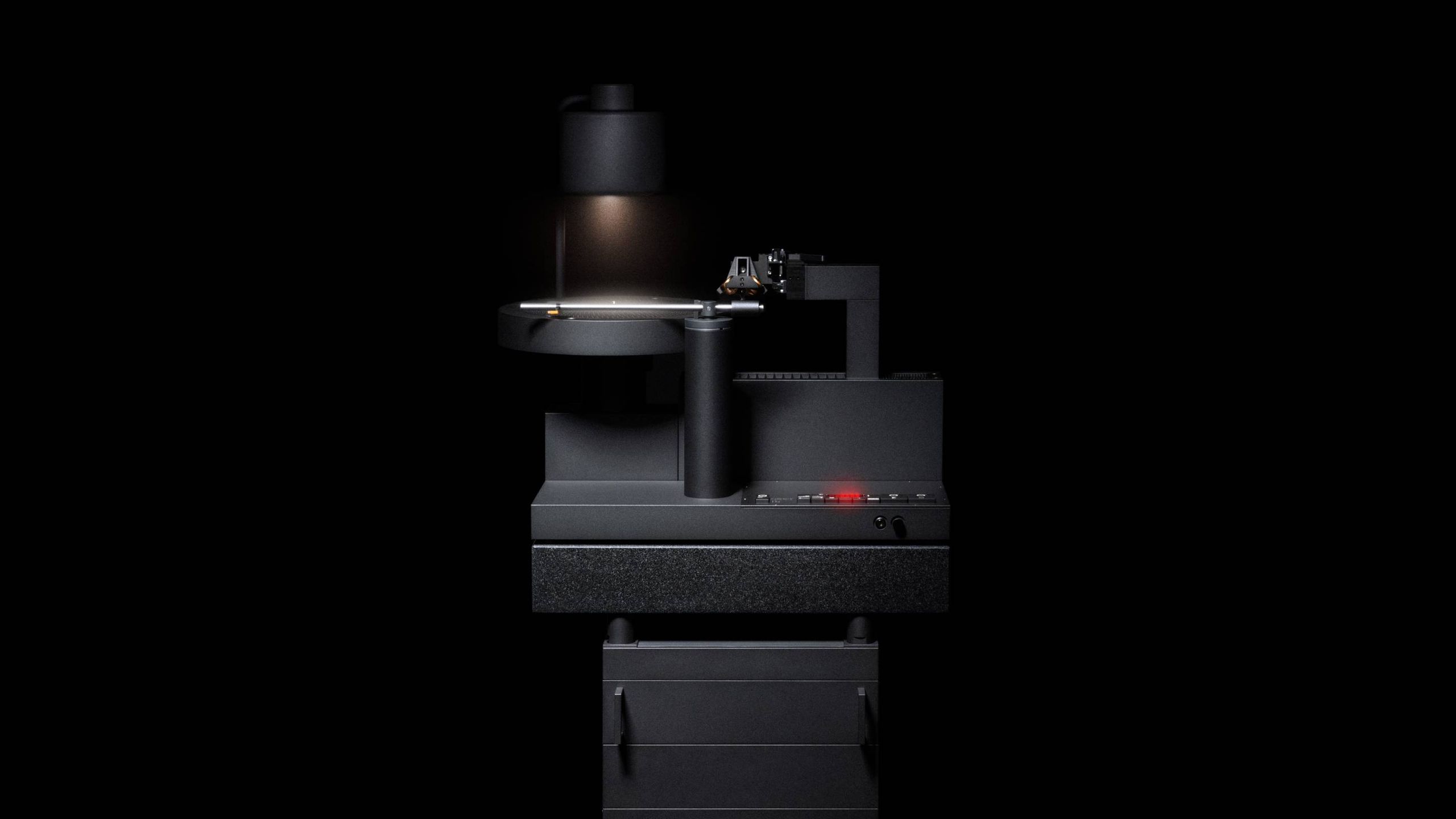
Boston-based Teradar recently announced a paid technical evaluation program with a top German automaker for its terahertz vision technology, according to FreightWaves. The milestone represents a key step forward for Teradar’s flagship Summit sensor, which will be tested against edge cases that continue to expose the limitations of cameras, lidar and radar. These include detecting a fallen motorcyclist at a distance or identifying stopped vehicles ahead in dense fog.
“Moving into this next phase is the ultimate market validation for us and will provide valuable data as we help solve the real-world problems facing the progression of safe or autonomous driving,” said Matthew Carey, CEO and co-founder of Teradar. “We look forward to the opportunity to show our strong edge-case performance and believe that this will unlock additional engagements as more automakers evaluate Summit for their next-generation platforms.”
Path to Serialized Production
The paid evaluation follows track testing in Germany earlier this year that validated Summit’s range and performance fit to the requirements of today’s sensing stacks, FreightWaves reported. Those tests demonstrated proper vehicle navigation through adverse-weather simulations and complex multi-object scenes.
The progression follows a familiar automotive industry pipeline: development work and paid evaluations lead naturally toward requests for information (RFIs), which open the door to formal requests for proposals (RFPs) for serialized vehicle production. Teradar’s mass-producible, low-cost B1 sensor is scheduled to be ready for demonstration at CES 2027.
Defense Applications Gain Traction
The automotive opportunity is only part of Teradar’s strategy, according to the report. The company has secured multiple Army contracts focused on perception for military vehicles. For the military, autonomy applications include detecting obstacles such as barbed wire and determining whether a vehicle stays on the road.
The battlefield angle is where terahertz technology’s stealth advantage becomes particularly compelling. Ukraine’s drone warfare evolution has created urgent demand for sensors that can locate slow-moving or low-cost drones with millimeter-level precision without emitting a detectable signature.
“The actual taking down of the drone isn’t that hard. It’s knowing where it is at a millimeter level and the velocity of it — that’s really hard,” Carey said. “And so that’s what we’re able to provide.”
Lidar’s weakness on the battlefield is its signature. An eight-watt laser broadcast into the sky acts like a beacon. “It will solve picking out that one particular drone, but you’ve just let all 95 drones around know exactly where you are because it’s a piece of cake to trace it back,” Carey said.
Layered Sensing: The Multi-Spectrum Future
Terahertz technology does have trade-offs. Atmospheric absorption limits its effective range to roughly 500 meters, while radar can detect targets miles away. Carey is clear-eyed about those boundaries.
“I don’t wanna be like, we’re the sensor that replaces everything for all time,” he said. “But what our niche is — both in automotive and in defense — is that gap.”
The future lies in multi-spectrum, layered approaches that combine short-, mid- and long-range sensors with edge AI. Ships already deploy X-band and C-band radar arrays for this reason, switching between ranges as threats materialize. “You build it in as a layered defense using the best of all the sensors together,” Carey said.
With more than $100 million in backing secured last November and multiple OEMs expressing interest, Teradar’s next objective is straightforward: Win a vehicle program.
Sensor Comparison: Terahertz vs. Lidar vs. Radar
| Feature | Terahertz (Summit) | Lidar | Radar |
|---|---|---|---|
| Range | ~500 meters (atmospheric absorption) | Typically up to 200-300 meters | Miles |
| Stealth | Passive / low signature | Active laser — detectable beacon | Active radio — detectable |
| Edge-case performance | Excellent in fog, dust; detects small objects | Degraded in rain/fog | Limited resolution |
| Primary weakness | Range limited | Signature on battlefield | Cannot identify small objects |
For enterprise technology decision-makers and CTOs in supply chain and logistics, the Teradar sensor's ability to operate in adverse conditions and detect small, slow-moving objects could eventually find applications beyond automotive — such as in warehouse automation, port security, or autonomous yard trucks. However, the current source focuses on automotive and defense. The company’s reliance on a familiar automotive pipeline (RFI → RFP) indicates a methodical go-to-market strategy that de-risks adoption for industrial partners.
Sources: