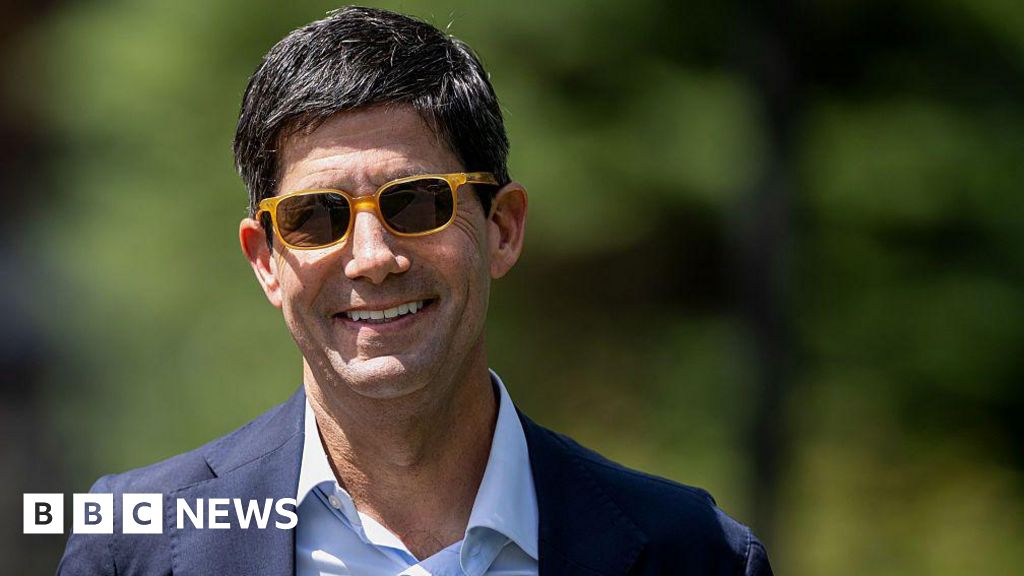
The Federal Reserve held US interest rates steady at its June meeting, citing elevated uncertainty from the Middle East conflict and above-target inflation. The unanimous decision, announced on Wednesday, keeps the federal funds rate unchanged as the central bank navigates the economic fallout from the US-Israel war in Iran and the subsequent closure of the key Strait of Hormuz shipping lane.
Unanimous Decision Amid Internal Divergence
According to BBC News, Fed governors were split on whether to hold rates or hike in a bid to tame inflation. However, the Federal Open Market Committee (FOMC) ultimately voted unanimously to keep rates steady. The committee's 12 members backed a statement noting: "Economic activity is expanding at a solid pace despite elevated uncertainty that owes, in part, to the conflict in the Middle East. Productivity growth and capital investment are strong. Job gains have kept pace with the workforce, and the unemployment rate has changed little."
Inflation and the Iran Conflict
Inflation, measured by the year-over-year change in consumer prices, ran at 3.8% in April, well above the Fed's 2% target. BBC News reported that Trump's decision to launch strikes on Iran, which led to retaliation including the closure of the Strait of Hormuz, has been largely blamed for the price increases. The US Bureau of Labor Statistics (BLS) identified energy costs as a key driver. Asked about rising prices, President Trump in June said, "I love the inflation."
When inflation is high, central banks typically raise interest rates to restrict money supply. The Fed's decision to hold steady contrasts with Trump's public calls for rate cuts, which are believed to spur the economy by lowering borrowing costs.
A Shift in Communication Style
Fed Chair Kevin Warsh, a long-time critic of the Fed's previous communication approach, made good on a key promise. BBC News noted that the Fed's April statement was almost 350 words, while Wednesday's update was just 132 words. The new statement concluded simply: "The Committee will deliver price stability." It also removed language hinting at a future inclination to lower rates, marking a significant departure from past practice.
At a press conference after the decision, Warsh said the change in Fed leadership was "a natural and timely opportunity to reaffirm its mission, to review current practices." He argued that forward-looking guidance was unhelpful to rate discussions and monetary policy decisions. His slimmed-down statement, he said, "just gives you the facts as best we can judge it."
Dot-plot Projections: Split Expectations
The Fed also released its quarterly "dot-plot" — a grid of individual policymakers' rate expectations. According to BBC News, nine of the 18 FOMC participants predicted an interest rate hike this year, while only one expected a cut. The remaining eight forecast no change. Warsh did not offer a projection of his own, as he opposes the dot-plot, but said he encouraged colleagues to proceed with it.
| Rate Expectation for 2026 | Number of FOMC Participants |
|---|---|
| Hike | 9 |
| No change | 8 |
| Cut | 1 |
The split suggests that while the committee held steady now, a majority sees the next move as either a hike or no change — reinforcing a hawkish tilt under Warsh's leadership.
Implications for Executives and Investors
For corporate leaders and investors, the Fed's hold signals continued uncertainty. The elevated inflation rate, driven by geopolitical disruptions, means borrowing costs remain high while the path forward is unclear. The removal of forward guidance adds to the challenge: with the Fed saying less, markets must rely on the dot-plot and economic data. Companies exposed to energy costs or Middle East supply chains should monitor the Iran situation closely — a resolution could ease inflation and shift the rate outlook, while further escalation might force the Fed to hike. The next milestone is the July FOMC meeting, where updated economic projections and any clarity on the Iran deal will be pivotal.
Sources: