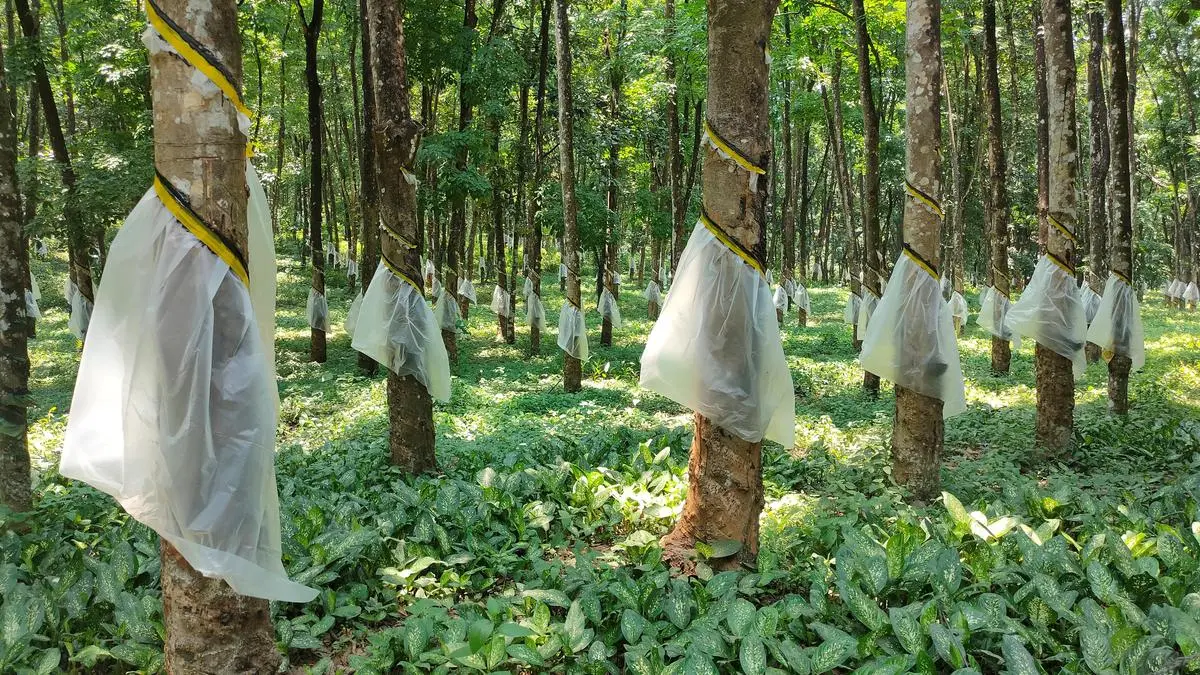
India's natural rubber production has seen a 3.4% growth in FY26, with volumes reaching 9.05 lakh tonnes compared to 8.75 lakh tonnes in the previous year. This increase is attributed to favorable climatic conditions and strategic initiatives by the Rubber Board.
Production and Climatic Conditions
The growth in production was primarily driven by favorable weather across major rubber-producing regions, which increased tapping days and productivity. The Rubber Board's efforts, including rain guarding and scientific agronomic practices, further supported this growth.
Domestic Market Dynamics
The domestic market showed a 1.2% increase in consumption, reaching 14.27 lakh tonnes. The Rubber Production Incentive Scheme (RPIS) by the Kerala Government provided a guaranteed price, encouraging growers to maintain tapping activities.
"The assurance of guaranteed price under the RPIS has renewed interest among rubber growers," noted the Rubber Board Statistics Consultative Panel.
Import and Export Trends
Imports of natural rubber declined by 16.7% to 4.59 lakh tonnes, while the import of compounded rubber under HS Code 4005 increased significantly. This shift indicates a changing landscape in rubber trade dynamics.
| Metric | FY25 | FY26 | Change |
|---|---|---|---|
| Production (lakh tonnes) | 8.75 | 9.05 | +3.4% |
| Consumption (lakh tonnes) | 14.10 | 14.27 | +1.2% |
| Imports (lakh tonnes) | 5.51 | 4.59 | -16.7% |
Price Stability and Outlook
Domestic prices, which had risen sharply in 2024-25, stabilized in 2025-26, with the RSS-4 price peaking at ₹262 per kg in May 2026. This stability suggests a narrowing gap between domestic and international prices, potentially influencing future market trends.
Looking ahead, the market will closely watch the 29th meeting of the Rubber Board Statistics Consultative Panel for further insights into production and consumption trends.