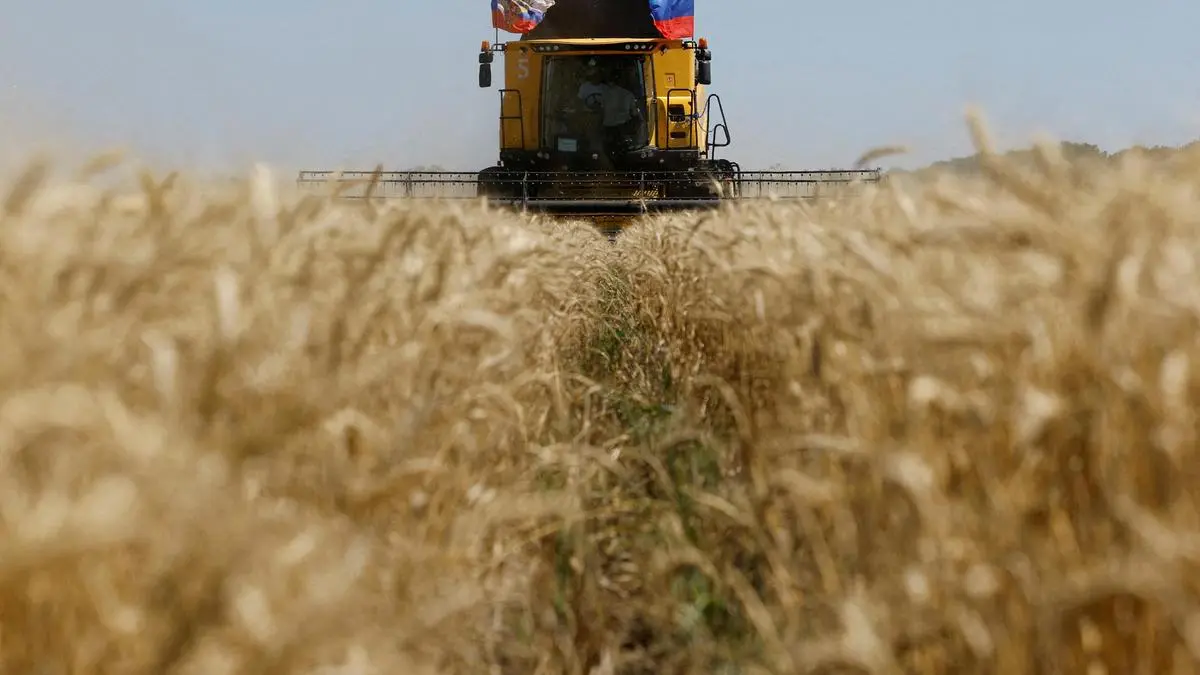
Wheat production is likely to be affected by climate this year, as El Nino begins to impact weather patterns, according to experts speaking at the Wheat Products Promotion Society (WPPS) CEO Conclave in Varanasi, Uttar Pradesh. Gaurav Anand, General Manager and Head of Grains Business at ITC Limited Agri Business Division, said: "Delayed harvest of kharif crops is on the cards. This could delay sowing of wheat, and the climate may come into play."
El Nino and Monsoon Concerns
Jatin Singh, founder and managing director of Skymet, warned that the situation is bad for the south-west monsoon and that by September, enough damage would have been done. He noted that this year may be one of drought, though the India Meteorological Department (IMD) has stopped declaring drought since 2016. However, a positive Indian Ocean Dipole could bring good rains during September-October, though Singh did not rule out crop damage as the monsoon could be affected by the time the IOD emerges. Gaurav Jain, co-founder and director of Agpulse Analytics, echoed these concerns, stating that the current El Nino weather is a worry and could impact winter crop production this year, putting rabi crops at risk.
Global Supply and Price Outlook
Despite the weather risks, the global wheat market remains well supplied, experts said. Rory Deverell, owner and principal consultant at Black Silo Commodity Consulting, Ireland, noted that growth in market supply is the story of the season. He pointed out that the futures market is not showing any rise in prices for the July-September period. "There is plenty of wheat in the Black Sea region, which is anchoring supplies. There is no chance of any significant rise in wheat prices," Deverell said. This abundant supply from the Black Sea region, particularly Russia, keeps a lid on global prices.
| Region / Factor | Wheat Supply & Price Impact |
|---|---|
| Black Sea region | Abundant supplies, anchoring global market |
| India | Cannot compete on price with Russian/Black Sea wheat |
| Global futures (Jul-Sep) | No expected price rise |
Somnath Chatterjee, executive vice-president and head of procurement and logistics at ITC Food Division, noted that the wheat market is facing a volatile scenario due to the geopolitical crisis in West Asia and fears over El Nino. Gaurav Jain added that nations are increasing food production during war, though production is down in some countries in the Middle East and North Africa (MENA) region.
India's Production and Export Challenges
Jain highlighted that nations including India and China, which have witnessed good demand for wheat, have increased wheat production from 150 million tonnes (mt) to 170 mt currently. However, Cesar Soares, global strategic development lead at McDonald Pelz, stated that India cannot compete with Russian or Black Sea region wheat on price and should focus on value addition. In another session, Major Rajiv Yadav, Director and CEO of Rajshubh Agri LLP, questioned why Indian wheat is being exported as feed wheat. He called for payment of the minimum support price (MSP) based on wheat's protein content and for hedging options to facilitate price discovery, as well as increased funding for agricultural R&D. Ashish Bhatnagar, director and head of procurement at Bimboo Bakeries India Pvt Ltd, lamented the lack of hedging in wheat.
Logistics, Storage, and Market Dynamics
Khalid Khan, vice-president and head of procurement and supply chain at ITC Ltd Agri business division, called for transparency in wheat procurement. Anand Chandra, co-founder and COO of Arya.ag, observed that wheat prices now tend to rule low during off-season while rising during peak arrivals, due to a rush from all stakeholders to procure wheat. Sahil Sethi, trader, Grain-India, Louis Dreyfus Company, noted that logistics has become key to trade, particularly for wheat.
For commodity traders and agribusiness executives, the key takeaway is that while weather risks persist, the ample Black Sea supply likely caps significant price spikes in the near term, though geopolitical and climate factors warrant close monitoring of production and export flows.
Sources: