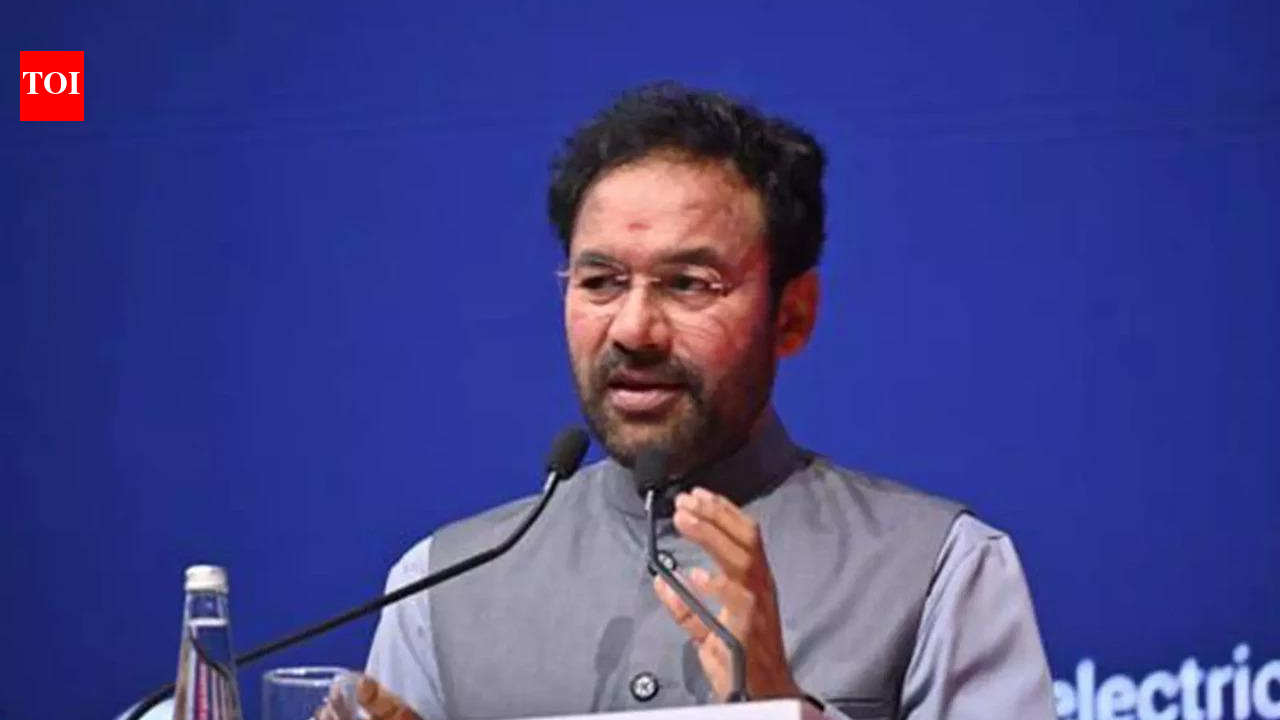
India's coal gasification push is a cornerstone of the country's strategy for energy security and import reduction, according to Union Coal and Mines Minister G Kishan Reddy. Speaking at a roadshow on the central government's scheme for promotion of surface coal/lignite gasification projects in the financial capital, the minister said that investments in gasification projects would enable domestic production of syngas, methanol, hydrogen, ethanol, urea, and sustainable aviation fuel — products currently imported in significant quantities.
Government Vision and Targets
The Union minister outlined the government's commitment under the National Coal Gasification Mission, which has set an ambitious target of gasifying 100 million tonnes of coal by 2030. According to Reddy, the government's incentive scheme is designed to catalyse large-scale investments, accelerate technology adoption, and establish India as a global leader in coal gasification. He further noted that the draft Request for Proposal (RFP) has been placed in the public domain for stakeholder consultations and feedback to strengthen the implementation framework.
Coal gasification is crucial for India's long-term energy security and helps reduce dependence on imports, the minister stated at the event.
Supply Side: India's Coal Endowment
India possesses the world's fifth-largest coal reserves, exceeding 400 billion tonnes, Reddy highlighted. The country is the second-largest producer and consumer of coal globally, and Coal India Limited is the largest coal-producing company worldwide. The Gevra mine in Chhattisgarh is one of the largest coal mines in the world. Coal currently meets 70 per cent of India's electricity demand and contributes nearly 55 per cent of the country's energy mix. The government remains firmly committed to achieving the net-zero target by 2070 through cleaner and more efficient utilisation of domestic coal resources.
Demand Side: Import Substitution and End-Products
The minister emphasised that the products derived from coal gasification — syngas, methanol, hydrogen, ethanol, urea, and sustainable aviation fuel — are currently imported in substantial quantities. Domestic production through coal gasification would result in substantial foreign exchange savings, reduced import dependence, and creation of new industrial value chains across sectors including fertilisers, steel, chemicals, transport, and clean energy. The following table summarises these products and their targeted end-use sectors:
| Product | End-Use Sector | Import Status (per minister) |
|---|---|---|
| Syngas | Industrial fuel, chemicals | Currently imported |
| Methanol | Transport, chemicals | Currently imported |
| Hydrogen | Clean energy, refining | Currently imported |
| Ethanol | Blending fuel, chemicals | Currently imported |
| Urea | Fertiliser | Currently imported |
| Sustainable Aviation Fuel | Aviation | Currently imported |
Industry and State Participation
The roadshow in the financial capital was attended by Maharashtra Chief Minister Devendra Fadnavis, Minister of State for Coal and Mines Satish Chandra Dubey, Ministry of Coal Secretary Vikram Dev Dutt, along with senior ministry officers, representatives of Coal sector public sector enterprises, industry leaders, technology providers, and investors. Fadnavis stated that excessive dependence on imports makes the country vulnerable to global geopolitical developments and supply chain disruptions. He invited investors and industry leaders to Maharashtra, emphasising that energy security is fundamental to India's growth and resilience and that Atmanirbhar Bharat (self-reliant India) is the pathway to Viksit Bharat (developed India).
Outlook
With the National Coal Gasification Mission targeting 100 million tonnes of coal gasification by 2030, the government expects the incentive scheme to unlock large-scale investments and accelerate technology adoption. The draft RFP currently in public domain will be refined based on stakeholder feedback. For commodity traders and analysts, the policy signals a sustained domestic demand for coal beyond power generation, alongside a phased reduction in imports of downstream chemical and fuel products. Successful implementation could reshape India's energy import profile and create new pricing benchmarks for coal-derived commodities.
Sources: