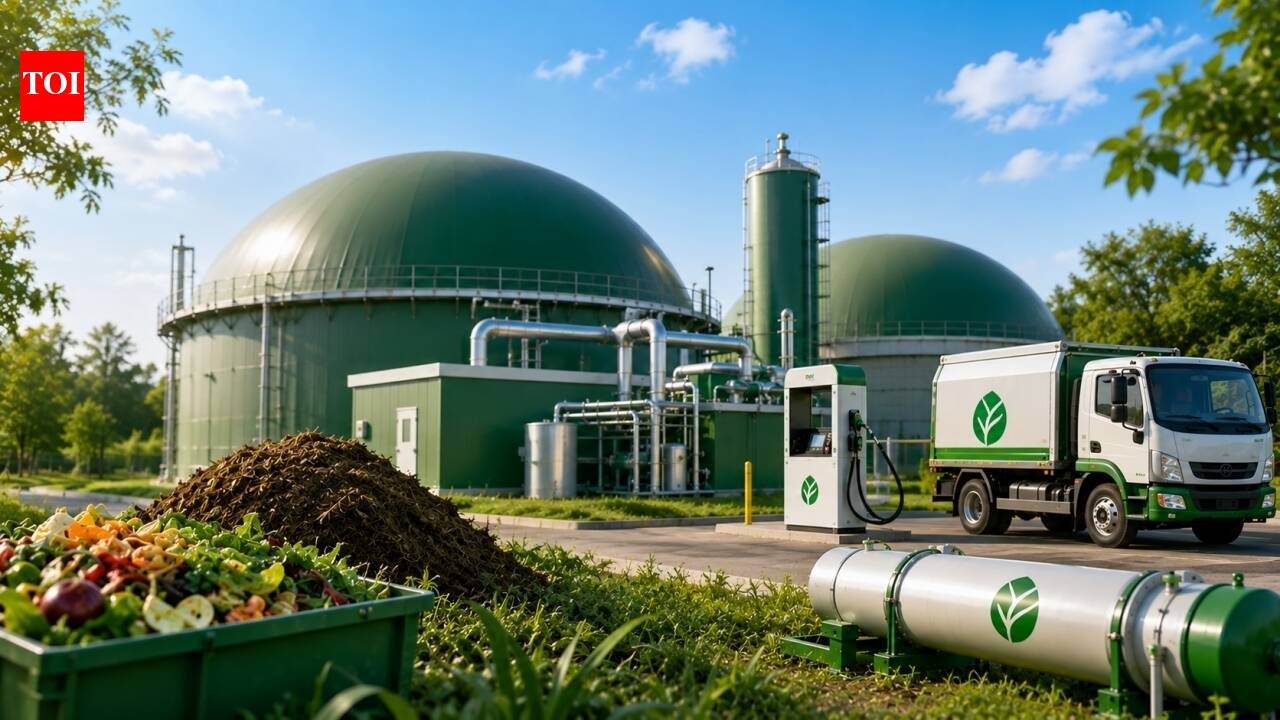
The Union Cabinet approved on Thursday a Rs 23,731 crore GOBARdhan scheme to expand compressed bio-gas (CBG) production in India, marking a policy push to reduce the country's dependence on imported liquefied natural gas (LNG), Business-Today reported. The approval comes against the backdrop of the ongoing Middle East crisis, which has exposed India's vulnerability to natural gas imports: India currently imports around 50% of its natural gas consumption, and the Strait of Hormuz disruption impacted 55–60% of India's LNG imports, the report said.
The GOBARdhan scheme at a glance
GOBARdhan, or the Galvanizing Organic Bio-Agro Resources Dhan scheme, aims to push for the production of compressed bio-gas, the report said. The government views CBG as a domestic solution to imported gas, and the scheme is structured around six pillars, each addressing a different part of the CBG value chain.
| Pillar | Support detail (as per Business-Today) |
|---|---|
| Assured offtake | Guaranteed market for CBG producers |
| Price stability | Government-backed administered CBG price |
| Capex support | Up to Rs 2 crore per tonne per day (TPD) for plant, feedstock systems and organic manure processing machinery |
| Pipeline infrastructure | CBG plants connected to trunk and City Gas networks |
| Credit guarantee | Up to 85% cover on eligible loans for MSME-led projects |
| Challenge fund | District-level implementation, feedstock development, research and innovation, technology adoption, by-product value addition and stakeholder awareness |
LNG import exposure and supply-side rationale
The scheme's significance is tied directly to India's gas import profile. Business-Today reported that India imports around 50% of its natural gas consumption, and the Strait of Hormuz disruption impacted 55–60% of India's LNG imports. With the Middle East crisis exposing this reliance, the government sees compressed bio-gas as a domestic solution. Over a decade, the scheme expects CBG production to grow by 10 times, attracting private investment, while clean, home-grown gas displaces 10 million metric tonnes (MMT) of fossil fuel, the report said.
Price stability and procurement impact
A central pillar is price stability: a government-backed administered CBG price aims to insulate buyers from global fuel price volatility, according to the Business-Today report. For gas procurement teams, this creates a domestic pricing arrangement that does not depend directly on international LNG benchmarks. The scheme also assures offtake for producers and provides pipeline infrastructure support so CBG plants can connect to trunk and City Gas networks, strengthening the distribution chain for the fuel.
Government-backed administered CBG (Compressed Bio-Gas) price aims to insulate buyers from global fuel price volatility.
Expected benefits over a decade
Business-Today listed the expected benefits of the scheme over a decade. These include saving more than Rs 40,000 crore in forex through reduced energy import dependence; adding more than Rs 75,000 crore to national GDP; generating over 1.5 lakh jobs; cutting more than 40 million tonnes of CO₂ emissions by diverting waste from landfills into fuel; and producing 250 MMT of organic fertilizer. The financial outlay also covers capital support of up to Rs 2 crore per TPD for plant and feedstock systems, an 85% credit guarantee on eligible loans for MSME-led projects, and a challenge fund supporting district-level implementation, research and technology adoption.
Market implications
The Cabinet approval adds a new supply-side dimension to India's gas market, with fiscal outlays for capital support, credit guarantees, and innovation challenge funds, the report said. The scheme's implementation will be tracked through its six pillars, with pipeline connectivity and assured offtake as key building blocks for the emerging compressed bio-gas industry, according to Business-Today.
Sources: