India’s natural gas demand is expected to fall roughly 8% year-on-year in 2026, according to the International Energy Agency’s (IEA) latest Q3 2026 gas market report, as the West Asia conflict and the closure of the Strait of Hormuz (SoH) have choked off nearly half of liquefied natural gas (LNG) imports from the Middle East and Gulf (MEG) region.
Demand softening across key sectors
Between January and April 2026, India’s natural gas demand declined 4% year-on-year, reflecting strong price sensitivity across consuming sectors, the IEA reported. Demand trends diverged sharply by end use.
| Sector | Year-on-year change | Details |
|---|---|---|
| Fertilizer | -7% (more than 0.4 bcm drop) | Largest absolute decline despite being designated critical under the Natural Gas (Supply Regulation) Order 2026 |
| Petrochemical | -21% | Sharp contraction |
| Residential & commercial (CGD, CNG, PNG) | +12% | Increased use in transport and households |
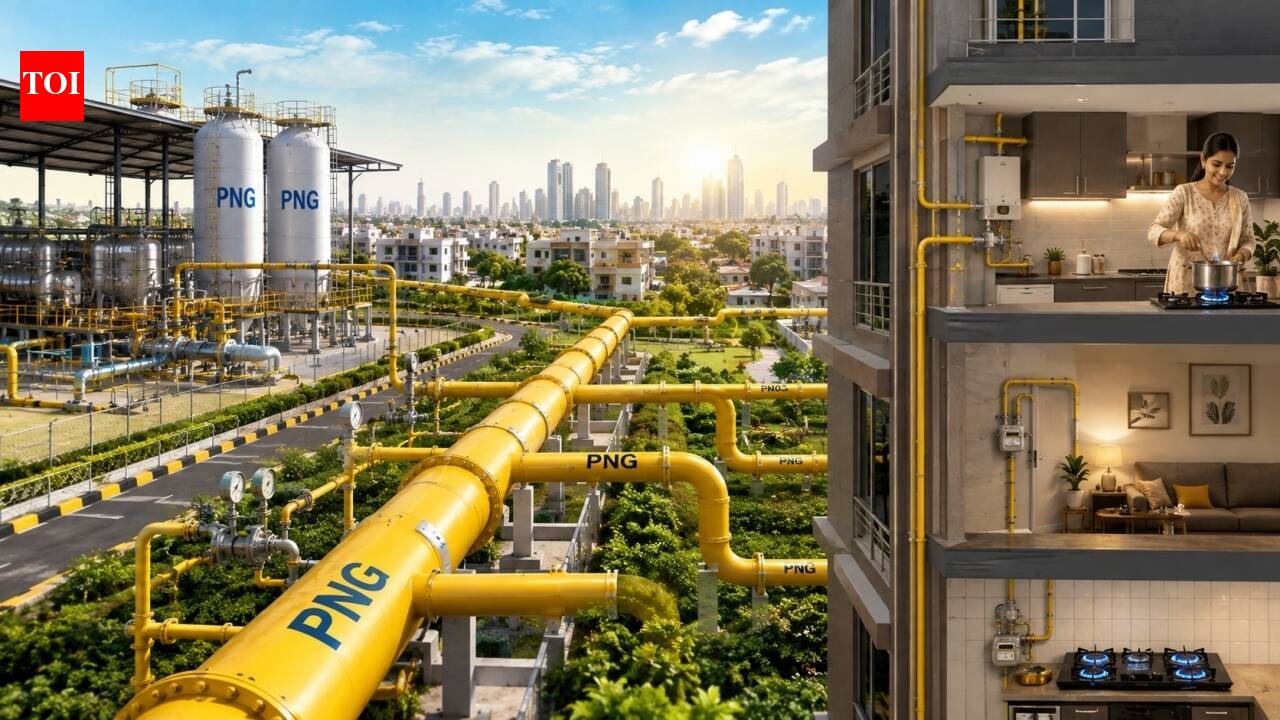
Fertilizer production recorded the steepest absolute decline, falling more than 0.4 billion cubic meters (bcm), or 7% year-on-year, according to the IEA. This occurred even though the sector was designated critical to agricultural productivity and food security under the Natural Gas (Supply Regulation) Order 2026, issued by the government in early March 2026, shortly after the de facto closure of the Strait of Hormuz. Petrochemical output also contracted sharply, down 21% year-on-year. In contrast, gas use in the residential and commercial sectors — mainly city gas distribution (CGD) for compressed natural gas (CNG) in transport and piped natural gas (PNG) for households and small industry — increased around 12% year-on-year.
Domestic production continues to contract
India’s domestic gas production remains on a declining trend, recording 22 consecutive months of year-on-year contraction since July 2024 and falling 4% year-on-year in 2026, the IEA noted. Despite the West Asia supply disruption, LNG imports totalled around 11 bcm over January–April 2026, up 1% year-on-year, as weak domestic output sustained import demand.
Supply sources shift dramatically
The West Asia conflict has significantly altered, albeit temporarily, India’s LNG supply composition. Imports from Africa almost tripled compared with the same period in 2025, while deliveries from North America increased 70% year-on-year, more than offsetting the 40% decline in imports from the West Asia, the IEA pointed out.
Monthly inflows were volatile: strong deliveries in January were followed by declines in March (down 16% year-on-year) and April (down 7% year-on-year) amid the onset of the Middle East supply disruption, before rebounding in May (up 7% year-on-year).
Broader Asian context
The IEA projected that Asia’s natural gas demand is expected to decline by 0.5% in 2026 as higher LNG prices spur gas-to-coal switching in the power sector and lead to lower operating rates across gas- and energy-intensive industries. For India, the earlier IEA projection in February 2026 had estimated total natural gas consumption to hit 103 bcm/yr by 2030, representing a nearly 7% annual average growth rate between 2023 and 2030, far exceeding the previous five years’ CAGR of less than 2%.
“This represents a nearly 7 per cent annual average growth rate between 2023 and 2030, far in excess of the previous five years’ CAGR of less than 2 per cent.” — IEA, February 2026
The current 8% demand contraction for 2026 underscores the severe impact of the West Asia conflict on India’s energy trajectory. For commodity traders and procurement teams, the shift in supply sources — with Africa and North America playing a larger role — and the persistent decline in domestic production will remain key factors to monitor. The monthly volatility in LNG inflows and the government’s prioritization of fertilizer gas supply under the Natural Gas (Supply Regulation) Order 2026 add further complexity to short-term procurement planning. The IEA’s next quarterly gas market update will provide critical data on whether demand stabilises or continues to slide as the geopolitical situation evolves.
Sources: