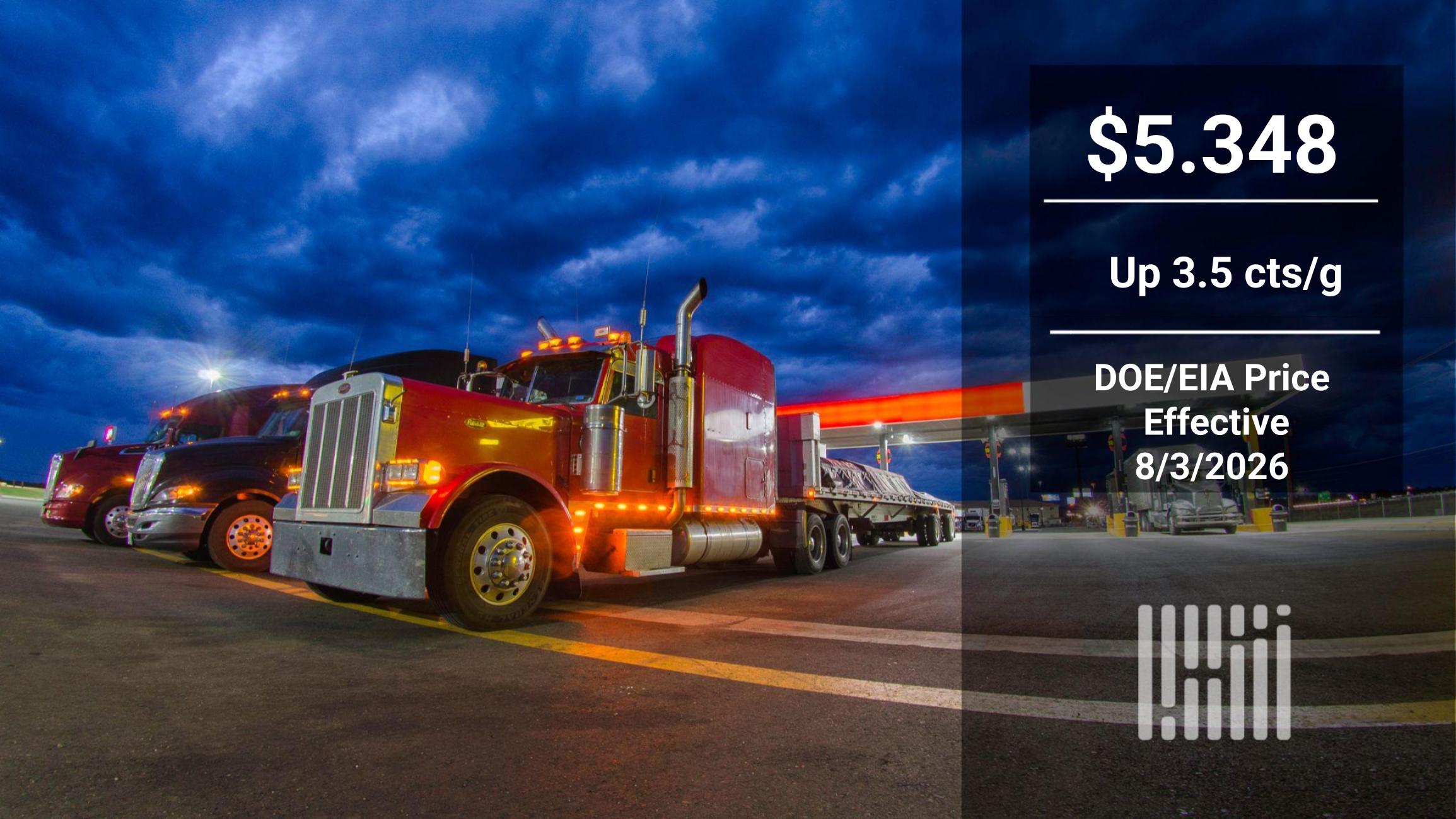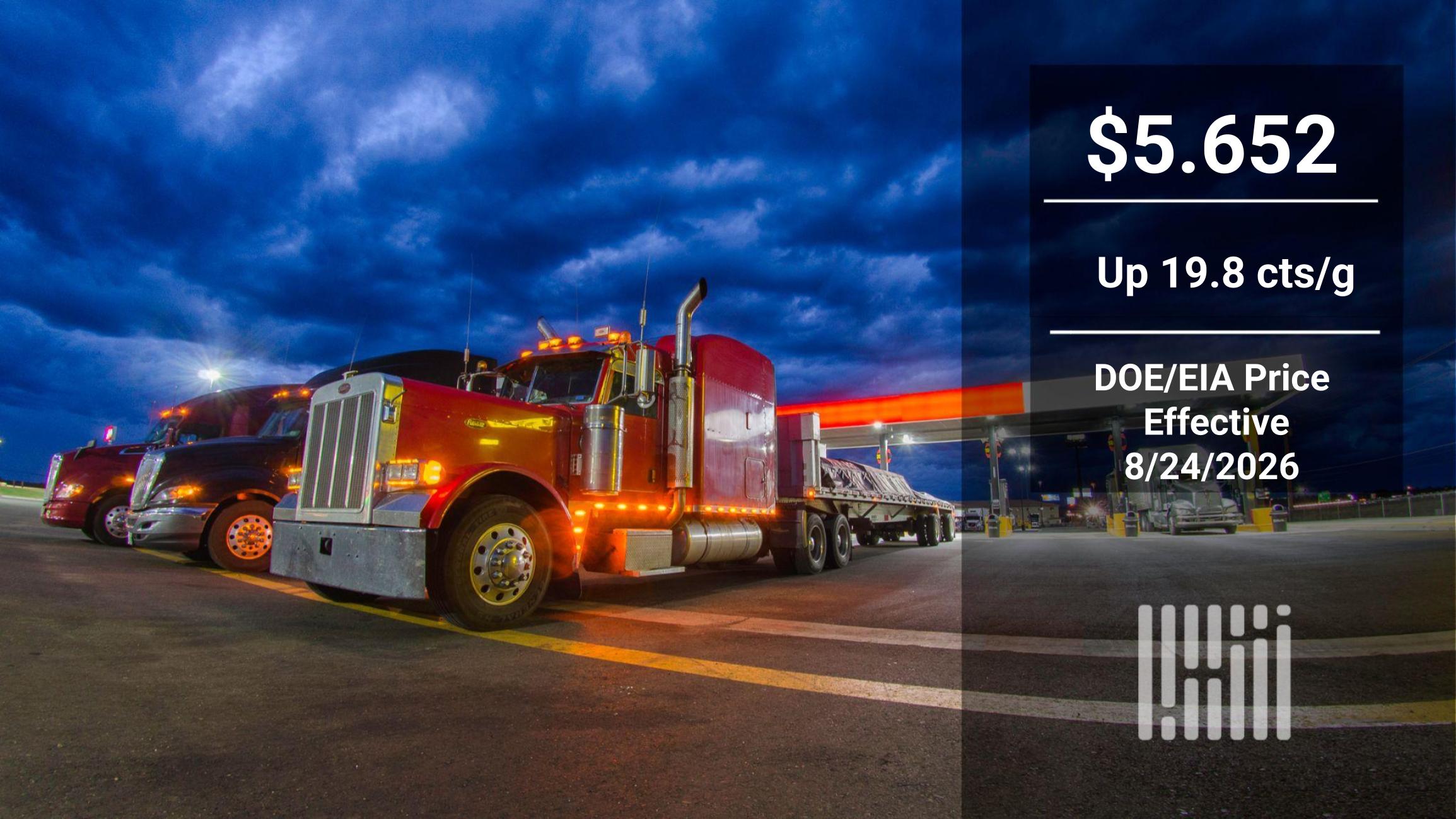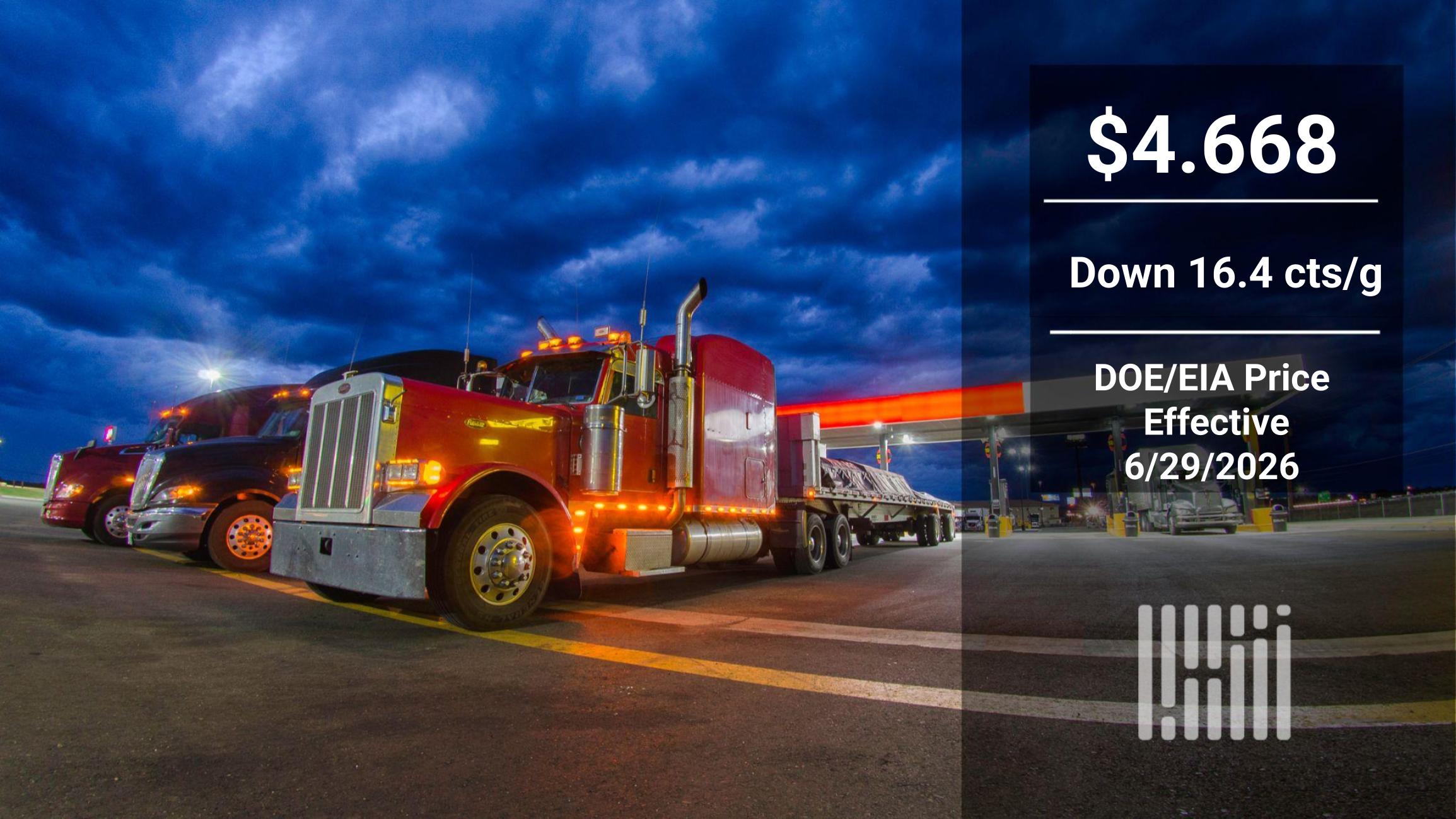
Retail diesel prices continue their steep decline even as refined product futures rally relative to crude, creating a market divergence that has commodity traders watching closely. The Department of Energy/Energy Information Administration (DOE/EIA) average retail diesel price fell 16.4 cents per gallon to $4.668/g, marking the eighth consecutive weekly decline and a total drop of 97.2 cents from the $5.64/g peak on May 4, according to FreightWaves.
Diverging retail benchmarks
While the DOE/EIA number is the basis for most fuel surcharges, other indicators paint a different picture. The AAA national average retail diesel price stood at $4.853/g, and the DTS.USA average was $4.91/g, both higher than the DOE figure, reflecting the volatile nature of the market. The FUELS.USA spread in SONAR, which tracks the gap between wholesale and retail, came in at $1.59/g, down from over $1.85/g early last week but still elevated compared to the pre-Iran-war level of about 75 cents/g.
| Indicator | Price (per gallon) | Source |
|---|---|---|
| DOE/EIA retail average | $4.668 | DOE/EIA, effective June 28 |
| AAA national average | $4.853 | AAA, June 29 |
| DTS.USA average retail | $4.91 | DTS.USA, June 29 |
| CME ULSD July futures | $3.3168 (settled June 29) | CME |
Crack spread signals tight product market
In the ultra low sulfur diesel (ULSD) futures market on the CME, prices have edged up from a recent low of $3.0931/g on June 22 to settle at $3.3168/g on June 29, the final day for the July contract. The 3:2:1 crack spread — measuring the margin between three barrels of crude and two barrels of gasoline plus one barrel of diesel — is near record territory. Based on front-month settlements on the CME, the crack spread for global benchmark Brent crude was almost $60 per barrel, compared to about $22/b just before the Iran war began.
Supply and demand dynamics
Jeffrey Currie, former head of commodity research at Goldman Sachs and now co-chair of Abaxx Markets, told CNBC that the crude market is currently in surplus due to the sudden outflow of oil from the Strait of Hormuz, including previously sanctioned Iranian oil now moving freely after the peace deal with the U.S. "We have surplus crude that's hitting the market, but we have a shortage in products, so that shortage of the products is ultimately going to have refineries kick up their runs, chasing the good margins," Currie said. "So I would view this as being temporary."
Helima Croft, Managing Director and Head of Global Commodity Strategy and Middle East and North Africa Research at RBC Capital Markets, cautioned that the influx of oil from the Strait may be short-lived. She noted that focusing solely on how much oil is getting out of the Strait is only half the equation. The other part, she said, is "whether companies feel comfortable going back the other way through the Strait." If they are not, the "sugar high" of backed-up oil will be temporary.
Outlook for traders and procurement
For commodity traders and procurement teams, the immediate takeaway is that while retail diesel prices are falling, the futures market is signaling tight product supply that could eventually feed back into retail prices. The elevated crack spread suggests refineries have strong incentive to maximize runs, which could absorb the surplus crude and tighten crude markets over time. Key data to watch include weekly DOE/EIA inventory reports for distillates and refinery utilization rates, as well as any developments regarding shipping through the Strait of Hormuz.
Sources: