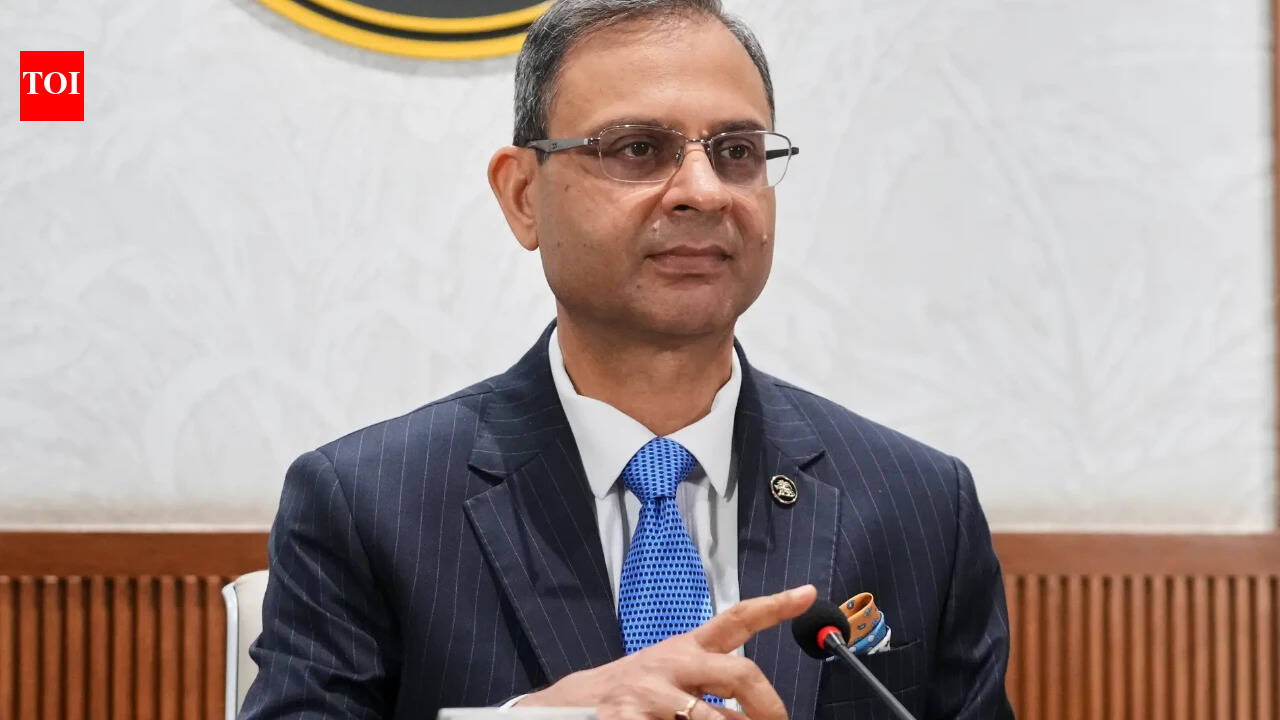
According to Business Today, RBI governor Sanjay Malhotra said consumers already bear the cost of UPI transactions indirectly even when merchant fees are not explicitly charged. Responding to questions on enabling merchant fees on UPI, Malhotra said it was too early to take a view, with the central bank's focus remaining on strengthening the payments infrastructure. His comments follow government proposals to amend the law that barred any form of merchant fees on UPI transactions.
RBI governor: merchant-fee decision is premature
Malhotra addressed questions on enabling merchant fees on UPI and said the regulator is not ready to decide. According to Business Today, he said:
It is very premature right now. Now, costs have to be paid by someone — it's a public [good]; we all want this particular infrastructure to continue to strengthen, become more efficient. That's our focus as of now — let's watch how developments proceed.
He added that the goal is to scale up UPI usage significantly, and any fee decision must consider its impact on adoption. The RBI's stated priority, according to the report, is sustained investment in UPI and the availability of revenue streams to support its growth.
Government amendments and the reported Rs 2,000 threshold
The government has proposed amendments to the law that barred any form of merchant fees on UPI transactions. There have also been reports, according to Business Today, that the government plans to allow merchant fees to be charged on UPI transactions with value of over Rs 2,000.
- Current position: the law bars any form of merchant fee on UPI.
- Reported proposal: merchant fees would be allowed on UPI transactions above Rs 2,000.
- Regulatory status: the RBI governor calls a fee decision premature.
Fintech duopoly in payments-as-a-service
The absence of fees has resulted in banks ceding the payments-as-a-service space to fintechs, according to Business Today. PhonePe and Google Pay have become an almost duopoly, using UPI transactions to draw more users to their platforms, where they seek to earn revenue through distribution of other services. For marketplace operators, this means the largest UPI rails are operated by private fintech platforms rather than banks, a structure the RBI governor did not propose to change in his remarks.
Adoption goal: 800 million transactions a day
Malhotra said the objective is to scale up UPI usage significantly. Business Today quoted the goal as having 800 million transactions a day or so. He said imposing a fee is premature, while reminding stakeholders that the consumer is already paying:
The goal is to have 800 million transactions a day or so. So, imposing a fee ... let's wait, it's premature right now. But please keep in mind that ultimately it is the consumer, in some way or the other, who is already paying it — it may not be the same consumer, it may be the general economy, and you don't get to see it directly, but it's already happening in some form.
Policy snapshot
| Element | Current position | Reported proposal |
|---|---|---|
| Merchant fees on UPI | Barred by law | Allowed on transactions above Rs 2,000, per reports |
| RBI stance | Premature to take a view | Watch how developments proceed |
| UPI daily adoption target | 800 million transactions a day | — |
| Payments-as-a-service market | Banks ceded space; PhonePe and Google Pay near duopoly | — |
What sellers and platform operators need to do
For cross-border e-commerce sellers, marketplace operators and B2B platforms that accept UPI, the immediate situation is that the RBI governor has said a decision on merchant fees is premature. According to Business Today, Malhotra's priority is ensuring sustained investment in UPI and revenue streams that support growth.
- Track the proposed amendments to the law barring merchant fees on UPI; the government has already proposed changes.
- Watch for official RBI announcements on merchant fees; the governor said the regulator will watch how developments proceed.
- Monitor the reported Rs 2,000 threshold, which would apply to UPI transactions over Rs 2,000 if adopted.
- Assume UPI costs may already be embedded in the broader economy even where no explicit merchant fee is visible on a transaction.
Since the RBI governor explicitly said consumers are already bearing UPI costs indirectly through the general economy, sellers should treat payment infrastructure pricing as a cost that can be recovered through the broader economy rather than a line item that will necessarily appear on a merchant statement, according to Business Today.
Sources: