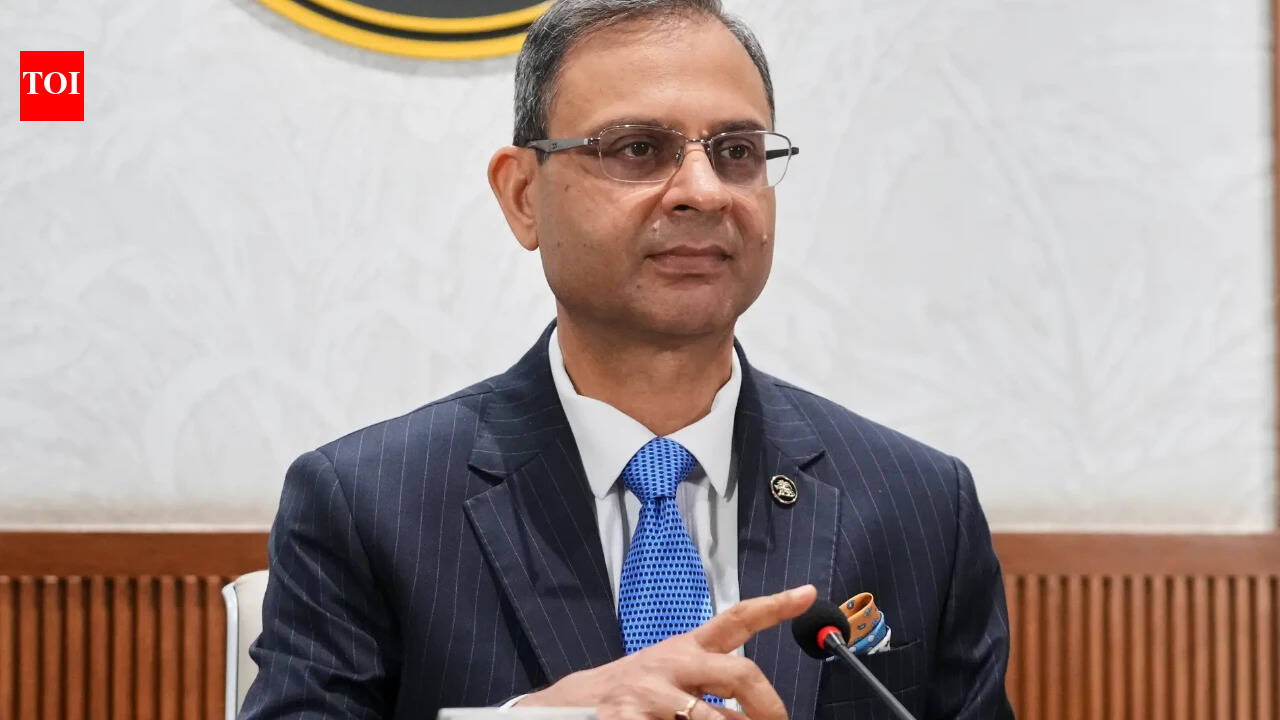
Reserve Bank of India (RBI) Governor Sanjay Malhotra said consumers already bear the cost of UPI transactions through the broader economy even when merchant fees are not explicitly charged, according to a Business-Today report. Speaking at a press conference on enabling merchant fees on UPI, Malhotra said it was too early to take a view, and the central bank's focus remains on strengthening payments infrastructure.
Governor: UPI fee decision is premature
Malhotra told reporters that costs have to be paid by someone. "It is very premature right now. Now, costs have to be paid by someone — it’s a public [good]; we all want this particular infrastructure to continue to strengthen, become more efficient. That’s our focus as of now — let’s watch how developments proceed," the report quoted him as saying.
He added that the objective is to scale up UPI usage significantly, with a goal of 800 million transactions a day. Imposing a fee could impact adoption.
"The goal is to have 800 million transactions a day or so. So, imposing a fee... let’s wait, it’s premature right now. But please keep in mind that ultimately it is the consumer, in some way or the other, who is already paying it — it may not be the same consumer; it may be the general economy, and you don’t get to see it directly, but it’s already happening in some form," Malhotra said.
He stressed that the priority is sustained investment in UPI and the availability of revenue streams to support its growth.
Government moves to amend the merchant-fee ban
According to the report, the government has proposed amendments to the law that barred any form of merchant fees on UPI transactions. There have also been reports that the government plans to allow merchant fees to be charged on UPI transactions with a value of over Rs 2,000.
The report noted that in the past, RBI officials have supported fees at least for large transactions. This suggests a potential shift toward charging merchants on higher-value UPI payments, which would directly affect B2B and cross-border sellers who process large-ticket transactions.
The fintech duopoly at stake
The absence of fees has resulted in banks ceding the payments-as-a-service space to fintechs, according to the report. PhonePe and Google Pay have become an almost duopoly, using UPI transactions to draw more users to their platforms, where they earn revenue through distribution of many other services. A change in the fee structure could reshape this competitive landscape.
| Aspect | Current position | Proposed change |
|---|---|---|
| Merchant fees on UPI | Barred by law | Government proposes amendments to allow fees |
| Fee threshold | No explicit merchant fees | Reports of fees on transactions above Rs 2,000 |
| Daily transaction goal | Not specified in report | 800 million transactions a day target |
| RBI stance on timeline | Fee decision premature | "Let’s wait, it’s premature right now" |
What sellers and marketplace operators need to do
- Monitor RBI and government announcements on UPI merchant fees, especially the reported Rs 2,000 transaction threshold.
- Assess how a potential fee on high-value UPI transactions would affect payment processing costs for B2B orders.
- Plan for possible pass-through of costs to end-customers, since Malhotra noted that consumers ultimately bear UPI costs indirectly through the general economy.
- Watch how banks and fintechs adjust pricing if the law is amended and the current zero-fee structure changes.
The report makes clear that while the fee decision is premature, the direction of travel points toward merchant fees on at least large UPI transactions. For marketplace operators and cross-border sellers relying on UPI for settlements, the immediate takeaway is to track the legislative process and prepare contingency pricing models. As Malhotra put it, the costs have to be paid by someone — and his remarks suggest that in any scenario, the cost will find its way to the wider economy.
Sources: