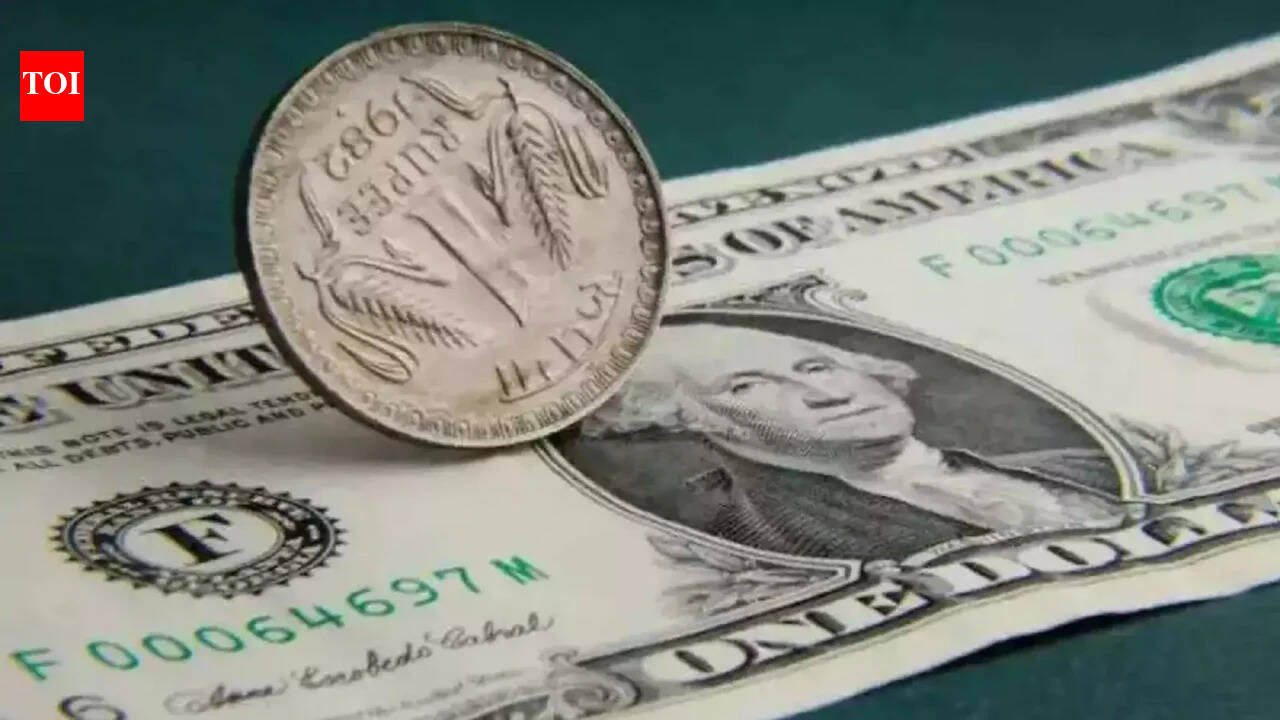
The Indian rupee began the week on a negative note, opening at 95.35 against the US dollar in the interbank foreign exchange market, slipping 17 paise from its previous close of 95.18, according to Business Today. The decline comes after the rupee posted its strongest single-day gain in nearly two months on Friday, when it appreciated 56 paise following the Reserve Bank of India's measures aimed at boosting foreign capital inflows and improving forex liquidity.
The currency has remained under pressure since the Middle East crisis began, hitting multiple record lows and even breaching the 96 per US dollar mark. Forex traders said that investors remained cautious due to tensions in the Middle East and strong US economic data, which could provide clues about the US Federal Reserve's future interest rate decisions.
Dollar Index and Crude Oil
The dollar index, which measures the greenback against a basket of six major currencies, was trading 0.42% higher at 95.33, according to the report. Crude oil prices also remained under focus, with Brent crude rising 3.43% to $96.28 per barrel in futures trade. The surge came as tensions in the Middle East continued to simmer more than 100 days into the conflict with Iran and Israel exchanging missile strikes.
Expert Commentary
"Although Israeli authorities reported that all missiles were intercepted and no casualties occurred, the episode served as a reminder that geopolitical risks remain elevated. US President Donald Trump has urged restraint from both sides and called for renewed negotiations with Iran, but markets remain cautious and so does rupee," Amit Pabari, Managing Director of CR Forex Advisors, told PTI. Pabari further added that the medium-term outlook for the USD/INR pair remains positive, with USD-INR likely to break below 94.50 and gradually move towards the 94.00-93.80 zone, but external factors will remain crucial. "Any escalation in US-Iran tensions, leading to a stronger dollar or higher oil prices, could temporarily push the pair back towards the 95.30-95.50 range," he said.
Equities and Capital Flows
| Index | Change | Level |
|---|---|---|
| BSE Sensex | -724.95 points | 73,518.39 |
| Nifty | -222.45 points | 23,138.60 |
According to exchange data, foreign institutional investors (FIIs) sold equities worth Rs 8,776.25 crore on a net basis on Friday. The weak sentiment was also reflected at Dalal Street in early trade, with the BSE Sensex falling 724.95 points to 73,518.39, while the Nifty declined 222.45 points to 23,138.60.
Trade Finance Implications
For CFOs and treasury professionals, the rupee's depreciation directly increases the cost of imports, particularly crude oil, which is priced in dollars. With Brent crude above $96 per barrel, Indian refiners and downstream companies face margin pressure. The stronger dollar also raises the cost of foreign currency debt servicing for companies with unhedged exposures. Treasury teams must consider hedging strategies, especially with the USD/INR pair showing volatility and the medium-term outlook from Pabari suggesting potential range moves. The RBI's recent measures to attract foreign capital, if successful, could ease some pressure, but geopolitical risks remain elevated.
Sources: