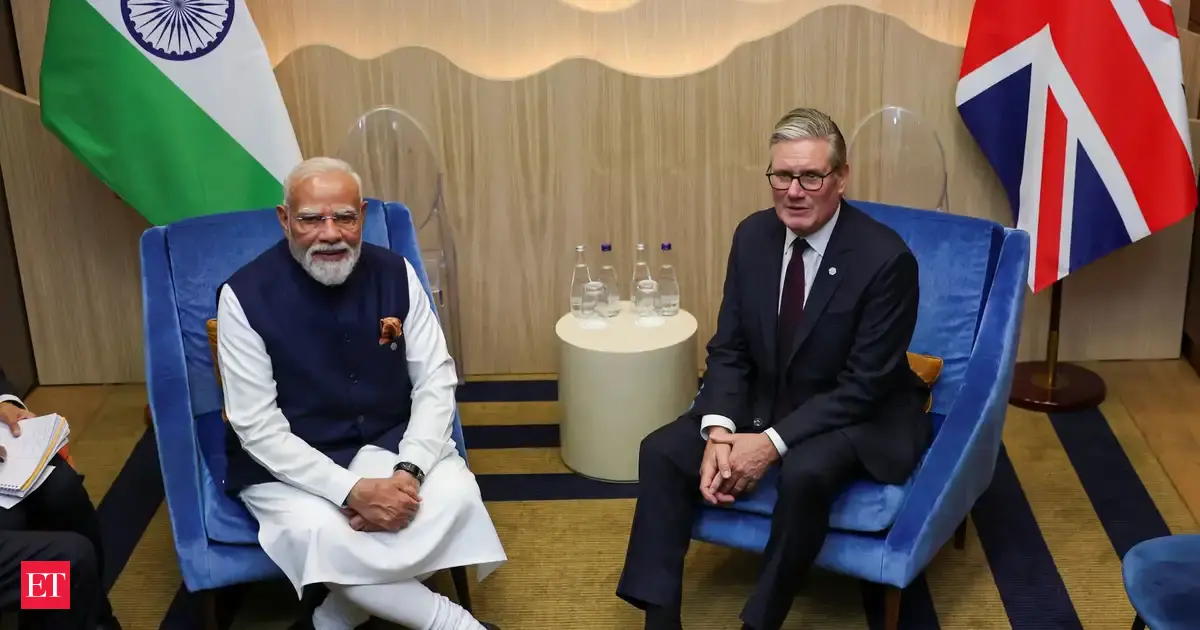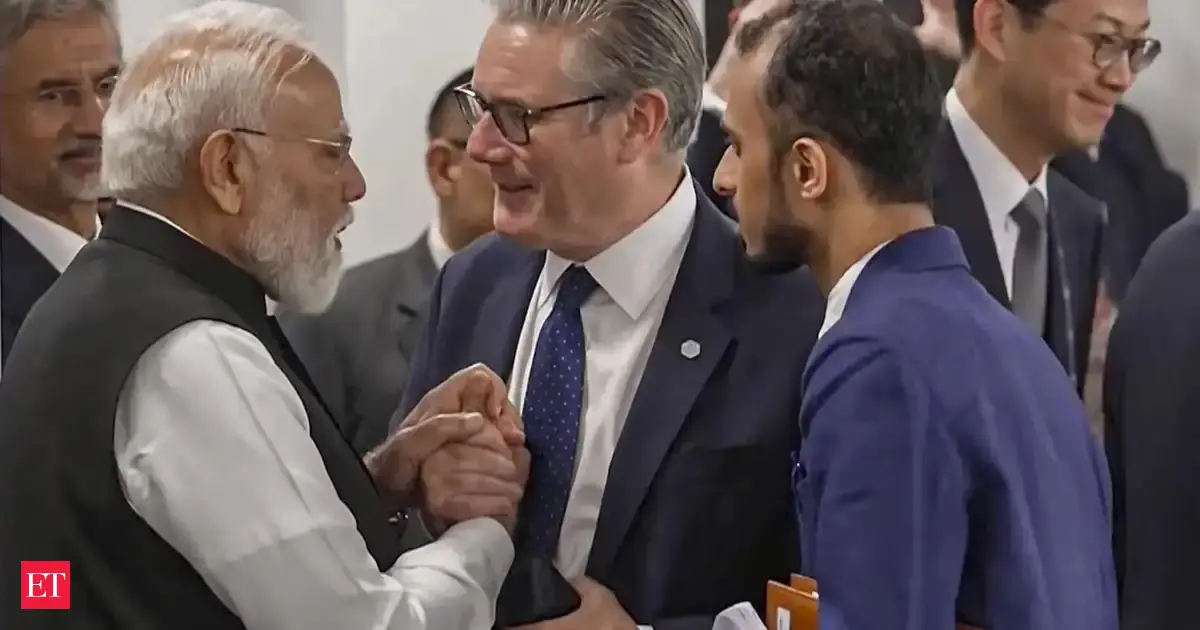
A candid exchange caught on microphone between Indian Prime Minister Narendra Modi and UK Prime Minister Keir Starmer at the G7 summit in France has raised expectations that the two countries may be close to implementing their free trade agreement, according to the Economic Times.
Hot Mic Moment at G7 Summit
As the two leaders met on the sidelines of the summit, Modi could be heard telling Starmer, 'We did it.' Starmer replied, 'We did it. Yes, yes, yes, I hear. We got it over the line. So this is good.' While neither leader explicitly mentioned the subject of their conversation, the exchange raised expectations that India and the UK may have resolved issues that have delayed the rollout of their free trade agreement signed last year, the Economic Times reported.
Delays and Sticking Points
The trade pact has faced hurdles in recent months. India initially attributed delays to Britain's parliamentary procedures. More recently, Indian officials indicated that disagreements over the UK's new steel safeguard measures had become a sticking point. However, the Indian government's statement said, 'The leaders looked forward to the early entry into force of the comprehensive economic and trade agreement.' The remarks suggest both sides may be closer to resolving outstanding issues and moving ahead with implementation.
India-UK Trade Deal Details
The India-UK free trade agreement, signed by both countries last year, is India's biggest trade pact in a decade and Britain's largest trade deal since leaving the European Union. The agreement was concluded in May after more than three years of negotiations covering issues such as tariffs, visas, and tax-related provisions.
Under the deal:
- India will reduce tariffs on about 90% of tariff lines for British exports. Around 85% of those products will become completely tariff-free within 10 years.
- Britain will lower duties on about 99% of tariff lines for goods exported from India, providing wider access for sectors including textiles, jewellery, agricultural products, and engineering goods.
Key Tariff Concessions
The agreement includes significant tariff reductions on key British exports:
| Product | Current Tariff | Initial Tariff After Deal | Tariff by Year 10 |
|---|---|---|---|
| Whisky and gin | - | 75% | 40% |
| Automobiles | >100% | - | 10% (subject to quotas) |
Note: Figures are as reported by the Economic Times. Current tariffs for whisky/gin were not provided.
Projected Trade Impact
According to both governments, the deal is expected to increase bilateral trade and investment flows. Two-way trade stood at $21.9 billion in 2024, and the agreement is projected to add £25.5 billion a year to bilateral trade over the long term.
Vision 2035 Partnership
Alongside the trade pact, India and the UK also unveiled a broader Vision 2035 partnership framework covering cooperation in defence, migration, technology, climate, education, and healthcare. The two countries said they would work together in areas including advanced manufacturing, electric propulsion, and jet engine technologies.
For importers and exporters, the impending implementation signals expanded market access: Indian textiles, jewellery, agricultural goods, and engineering products will gain preferential entry into the UK, while British whisky, gin, and automobiles will see phased tariff reductions in India. Customs brokers and trade policy professionals should prepare for revised tariff schedules and rules of origin once the agreement enters into force.
Sources: