iGEN
Visit IGEN World Explore IGEN Expo
EXPLORE UPGRADE PLANS
BREAKING
Werner Enterprises Posts Highest Revenue Per Truck Growth in One-Way Segment in a Decade CMA CGM and Stonepeak Launch United Ports LLC in $2.4 Billion Terminal Joint Venture UPS shift away from Amazon shows bigger payoff Lanesurf: 62% of Loads Get Vetted Carrier Offers Before Brokers Arrive India-China Border Trade Via Lipulekh Resumes Aug 1; China Permits 20 Traders Geopolitics Drives CMA CGM Q2 Profit Surge of 42% as Volumes and Rates Climb Benchmark Diesel Price Rises Third Week as Futures Plunge; Spread Hits Record Indian Government Limits Sugar Dealers to 400 Tonnes Stock Until November to Curb Hoarding Tenants signing longer leases for larger warehouses as 3PLs lock in capacity US stock market flat as S&P 500 and Dow barely move, Nasdaq slides over 1% on chip rout Werner Enterprises Posts Highest Revenue Per Truck Growth in One-Way Segment in a Decade CMA CGM and Stonepeak Launch United Ports LLC in $2.4 Billion Terminal Joint Venture UPS shift away from Amazon shows bigger payoff Lanesurf: 62% of Loads Get Vetted Carrier Offers Before Brokers Arrive India-China Border Trade Via Lipulekh Resumes Aug 1; China Permits 20 Traders Geopolitics Drives CMA CGM Q2 Profit Surge of 42% as Volumes and Rates Climb Benchmark Diesel Price Rises Third Week as Futures Plunge; Spread Hits Record Indian Government Limits Sugar Dealers to 400 Tonnes Stock Until November to Curb Hoarding Tenants signing longer leases for larger warehouses as 3PLs lock in capacity US stock market flat as S&P 500 and Dow barely move, Nasdaq slides over 1% on chip rout
Home ›› Intl Trade ›› Import Export ›› Export Docs ›› Washington and Tehran Issue Conflicting Messages on Strait of Hormuz Transits

Washington and Tehran Issue Conflicting Messages on Strait of Hormuz Transits

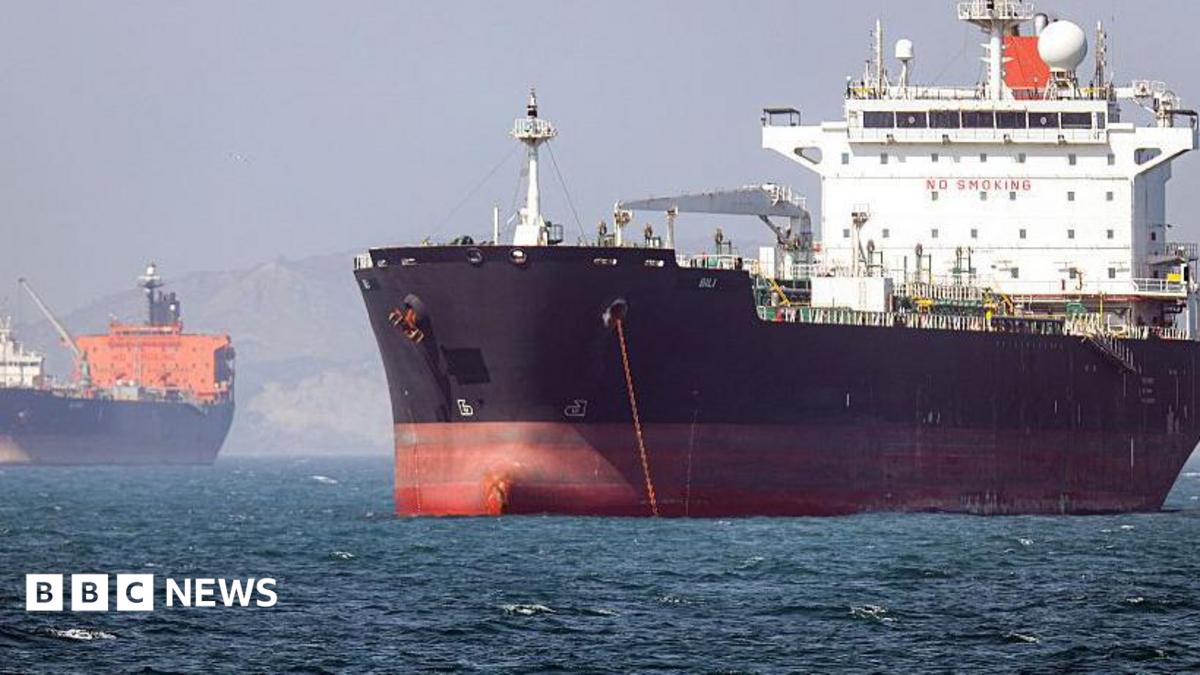
The United States and Iran issued contradictory statements over the weekend on the status of the Strait of Hormuz. US Central Command reported 55 merchant ships transited on Saturday, while Iran maintained the waterway was closed. Vessel-tracking data from Kpler showed only five ships passed on Sunday, down from 26 a day earlier, deepening confusion for shippers.

iG
iGEN Editorial
June 23, 2026
Washington and Tehran Issue Conflicting Messages on Strait of Hormuz Transits

Confusion over the status of the Strait of Hormuz deepened over the weekend as the United States and Iran issued contradictory statements on whether the crucial energy chokepoint is open to commercial shipping, according to Splash247. The uncertainty is creating a growing disconnect between political declarations and operational reality, with vessel movements remaining a fraction of normal levels despite claims from Washington that maritime traffic is flowing.

Conflicting Statements from Washington and Tehran

US Central Command said 55 merchant ships transited the strait on Saturday, carrying more than 17 million barrels of oil and other cargoes, Splash247 reported. Iran, meanwhile, maintained that the waterway had been closed again by the Islamic Revolutionary Guard Corps in response to what Tehran described as violations of the interim peace agreement by the United States and Israel.

For shipowners, the practical picture remains far murkier. Before hostilities erupted on February 28, between 130 and 160 vessels passed through Hormuz daily. Following Iran's initial closure declaration, traffic reportedly fell to around six ships a day. After last week's US-Iran memorandum of understanding and 60-day ceasefire, transits recovered modestly, reaching around 25 vessels on Thursday.

Traffic Data Shows Sharp Decline

However, vessel-tracking data from Kpler showed only five ships passed through the strait on Sunday, down sharply from 26 a day earlier, according to Splash247. The table below summarises the reported transit numbers:

Period Daily Vessel Transits Source
Before Feb 28 (normal) 130–160 Splash247
After initial Iran closure ~6 Splash247
After 60-day ceasefire (Thursday) ~25 Splash247
Saturday (US claim) 55 US Central Command via Splash247
Sunday (Kpler tracking) 5 Kpler via Splash247

Adding to the uncertainty, Iran's Persian Gulf Strait Authority has issued guidance requiring vessels to obtain passage permits before transiting. A memo from the authority stated that "no vessel is permitted to pass through the Strait of Hormuz without a valid passage permit", Splash247 reported.

Reports circulating among shipowners have also referred to warning shots being fired and continuing restrictions on vessel movements.

Mine Threat and Insurance Response

The mine threat remains a major concern, with any mine clearing operation expected to take up to two months to complete, according to the source.

In related news, on Friday Lloyd's welcomed the launch of a new marine war risk insurance consortium led by Chubb that will provide up to $400 million in cover for vessels and cargo transiting the Strait of Hormuz, Splash247 reported.

Implications for Trade and Shipping

The conflicting signals create significant operational risk for importers, exporters, and trade policy professionals. While US authorities assert the strait is open, the sharp drop in vessel numbers recorded by independent trackers and Iran's permit requirement suggest that insurers and shipowners are pricing in a high likelihood of disruption. The new war risk pool may offer some relief, but the ongoing mine threat and unclear enforcement of transit rules mean that normal traffic levels of over 130 ships per day remain distant. Trade policy analysts should monitor both military statements and commercial tracking data closely, as the gap between political messaging and on-water reality could widen.


Sources: Splash247 Maritime

Keep Reading

Recommended Stories

US revokes Iranian oil sanctions waiver after three tankers hit in Strait of Hormuz Trade

US revokes Iranian oil sanctions waiver after three tankers hit in Strait of Hormuz

The United States revoked a sanctions waiver allowing Iranian oil sales after three tankers were hit by projectiles in the Strait of Hormuz. The license, issued under an interim US-Iran agreement, was lifted due to Tehran's 'unacceptable' actions. Iran condemned the move as a breach of the deal.

July 8, 2026
U.S.-Iran Peace Deal Reopens Strait of Hormuz, Unleashing Global Oil Supply Commodities

U.S.-Iran Peace Deal Reopens Strait of Hormuz, Unleashing Global Oil Supply

The United States and Iran have reached a peace deal to end the war and lift restrictions on the Strait of Hormuz, through which 20% of the world's crude oil flows. The agreement suspends sanctions on Iranian oil, releases $24 billion in frozen assets, and provides a 60-day period to negotiate a permanent settlement. The U.S. will lift its blockade within 30 days, but analysts caution it will take two to three months for shipping to fully normalize due to mines and supply chain bottlenecks.

June 15, 2026
Oil Prices Surge as Iran Closes Strait of Hormuz Commodities

Oil Prices Surge as Iran Closes Strait of Hormuz

Oil prices jumped over 2% after Iran closed the Strait of Hormuz following US military strikes. Brent crude reached $95.40 a barrel, while WTI hit $92.63. The closure impacts global oil shipments, escalating geopolitical tensions.

June 11, 2026
Oil, LNG, Fertilisers and Diamonds at Risk from Iran's Wider Blockade Threat Beyond Strait of Hormuz Trade

Oil, LNG, Fertilisers and Diamonds at Risk from Iran's Wider Blockade Threat Beyond Strait of Hormuz

Iran's Islamic Revolutionary Guard Corps (IRGC) has warned it could expand efforts to disrupt regional trade beyond the Strait of Hormuz, threatening oil, LNG, fertilisers and diamond supply chains. The Strait carries nearly 20 million barrels per day of crude and petroleum products, and over 90% of Qatar and UAE's LNG exports. Diamonds routed through India and UAE for cutting and polishing face disruption, along with petrochemicals and food shipments.

July 15, 2026