The India-UK Comprehensive Economic and Trade Agreement (CETA) came into effect on Wednesday, July 16, 2026, triggering immediate price cuts on British luxury cars while Scotch whisky and gin consumers face a wait of at least a month due to state-level excise filing requirements, according to a report by Business Today.
British Car Prices Slashed
JLR India and McLaren have announced steep price reductions under the trade deal. JLR India reduced the UK-built Range Rover SV by ₹75 lakh to ₹3.5 crore, and the Range Rover Sport SV by ₹40 lakh to ₹2.4 crore. The company said revisions were made in anticipation of lower import duties under the FTA and were aimed at passing on part of expected savings to customers. McLaren is reportedly looking to significantly rework its India pricing, with industry estimates suggesting price cuts of nearly 38% across its portfolio.
| Model | Previous Price (₹) | New Price (₹) | Reduction (₹) |
|---|---|---|---|
| Range Rover SV | 4.25 crore | 3.5 crore | 75 lakh |
| Range Rover Sport SV | 2.8 crore | 2.4 crore | 40 lakh |
Note that Defender and Discovery models are unaffected as both are manufactured at JLR's Slovakia plant and do not qualify for tariff concessions.
Scotch and Gin Tariff Cuts Delayed by State Excise Filings
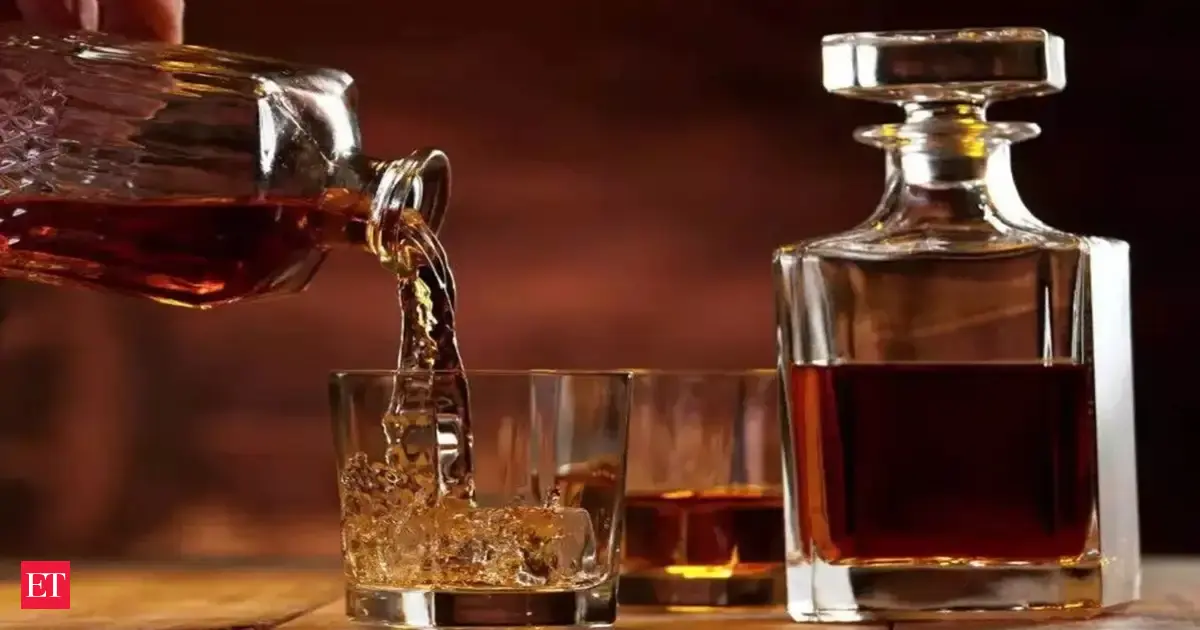
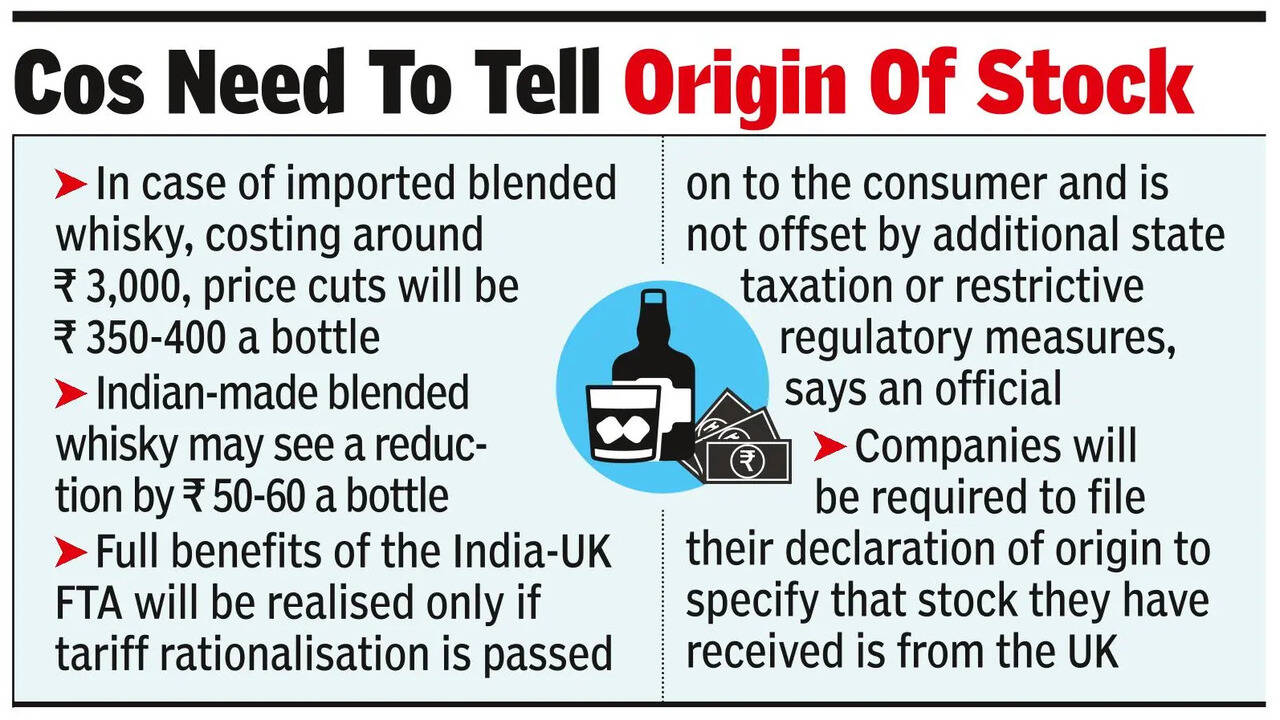
Unlike cars, the price benefits for Scotch whisky and gin will take time to reach consumers. The article states that "filing and clearances from state excise departments [are] expected to take at least a month." Each company must file revised cost and other details with state excise authorities, a process that may take 15 to 30 days. Tariff applicability is based on documentation of origin from the UK; for goods leaving Scotland on Wednesday, the benefit will automatically be available.
Under CETA, the current 150% import tariff on Scotch and Gin will be halved initially and then reduced to 40% over 10 years. However, alcohol remains among the most taxed commodities in India, with additional state-level levies on top of the central tariff.
Limited Price Reduction Expected for Whisky
According to ISWAI calculations, for bottled-in-origin imported whisky, taxes make up 60-61% of MRP in a state like Maharashtra, while it is 56% for Indian single malts. The industry body said "the tariff rationalisation (due to the FTA) is expected to result in a limited price reduction of around 12-13%, provided the benefits are passed on to consumers." For an imported blended whisky costing around ₹3,000, the price cut is estimated at ₹350-400 per bottle, while for Indian-made blended whisky (IMFL), the reduction may be ₹50-60 per bottle, unless companies decide to pocket the benefit.
"Full benefits of India-UK FTA will be realised only if tariff rationalisation is passed onto the consumer and is not offset by additional state taxation or restrictive regulatory measures." — Sanjit Padhi, CEO, ISWAI
Industry Reactions and Concerns
The Confederation of Indian Alcoholic Beverage Companies (CIABC) also weighed in. Director General Anant S Iyer noted: "It is for the individual companies to decide on whether prices will be reduced given the duty cut and benefit passed onto consumers. Pricing is a very complex mechanism as States control supply and consumer prices."
Close to 80% of India's whisky imports from the UK are used for blending locally-produced whisky, underscoring the FTA's importance for the industry. While car companies have immediately passed on gains, the liquor sector faces bureaucratic hurdles and state-level complexity that may dilute consumer savings. Enforcement of the tariff cuts will depend on proper documentation and cooperation from state excise authorities.
Sources: