
iGEN
Visit IGEN World Explore IGEN Expo
EXPLORE UPGRADE PLANS
BREAKING
Relay Q: London Startup's AI Microphone Puts Hands-Free Voice Dictation on the Desktop Google Pixel 10a Crowned Best Budget Pixel in WIRED's Updated 2026 Buying Guide Global Steel Wire seeks fresh Santander terminal concession Veritas Shipmanagement books fresh ultramax pair at COSCO yard, Splash247 reports Seanergy linked to fresh newcastlemax at Hengli as dry bulk orderbook grows Weaker rupee may push foreign assets over FAST-DS Rs 1 crore limit, raising tax bill 45 Indian power plants face critically low coal stocks as monsoon hits supply SFL Makes Fresh $363m Car Carrier Play With Four LNG Dual-Fuel Newbuilds Iran Blacklist Threatens Hormuz Shuttle Tanker Lifeline for Gulf Crude Keyfield International Enters Dredging Market with $24.7m Vessel Acquisition Relay Q: London Startup's AI Microphone Puts Hands-Free Voice Dictation on the Desktop Google Pixel 10a Crowned Best Budget Pixel in WIRED's Updated 2026 Buying Guide Global Steel Wire seeks fresh Santander terminal concession Veritas Shipmanagement books fresh ultramax pair at COSCO yard, Splash247 reports Seanergy linked to fresh newcastlemax at Hengli as dry bulk orderbook grows Weaker rupee may push foreign assets over FAST-DS Rs 1 crore limit, raising tax bill 45 Indian power plants face critically low coal stocks as monsoon hits supply SFL Makes Fresh $363m Car Carrier Play With Four LNG Dual-Fuel Newbuilds Iran Blacklist Threatens Hormuz Shuttle Tanker Lifeline for Gulf Crude Keyfield International Enters Dredging Market with $24.7m Vessel Acquisition
Home ›› Intl Trade ›› Import Export ›› Pakistan Faces $35B Trade Deficit Amid PKR Pressure

Pakistan Faces $35B Trade Deficit Amid PKR Pressure

Pakistan's trade deficit has reached $35 billion, raising concerns over economic stability as the PKR faces depreciation pressure. Despite a forex reserve increase to $17.2 billion, the trade imbalance and external debt obligations pose significant challenges.

iG
iGEN Editorial
June 6, 2026
Pakistan Faces $35B Trade Deficit Amid PKR Pressure

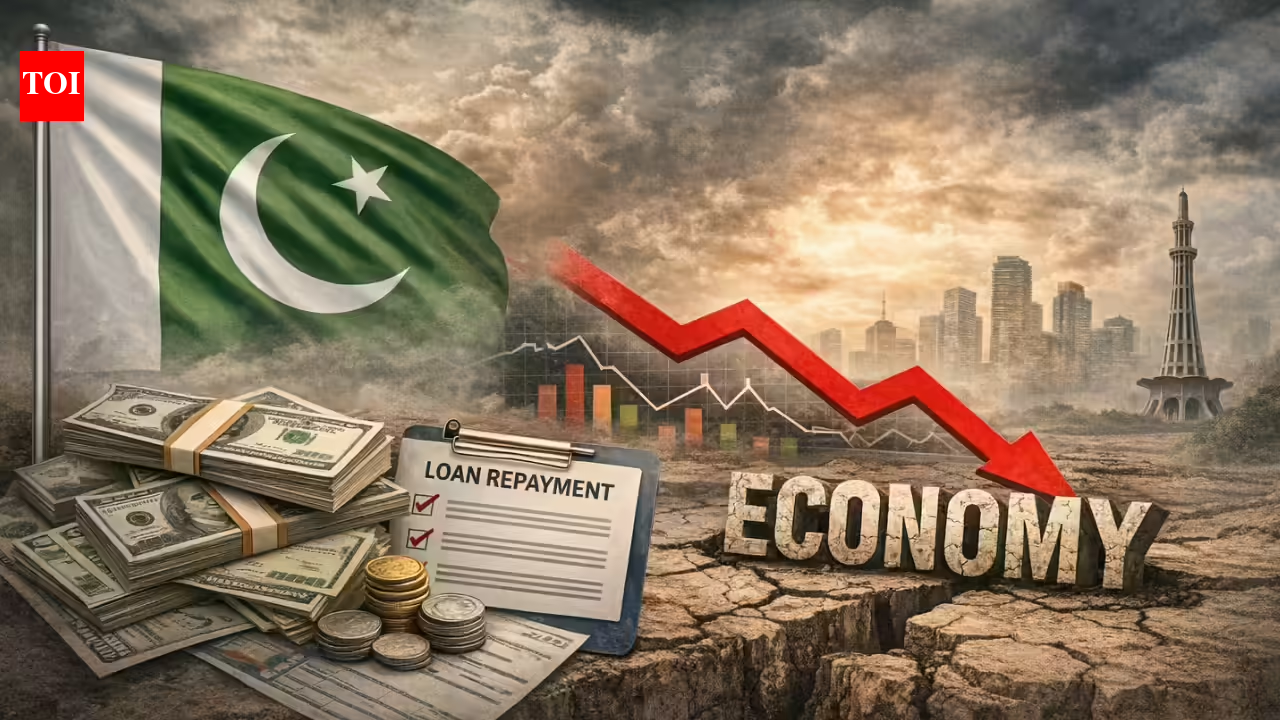
Pakistan's trade deficit has soared to $35 billion for the first 11 months of FY26, alarming economic managers and putting pressure on the Pakistani Rupee (PKR). Despite an increase in foreign exchange reserves to $17.2 billion, the country's economic stability remains at risk due to mounting external payment obligations and a depreciating currency.

Forex Reserves and External Debt

The State Bank of Pakistan (SBP) reported a $43 million increase in reserves, nearing the government's $18 billion target for FY26. However, foreign debt repayments due in June and a managed exchange rate policy are causing concern. Atif Ahmed, a currency expert, noted that the PKR could face further depreciation after large payments are made by June 30.

"The managed exchange rate may burst after June, after large payments are made," said Ahmed.

Trade Deficit and Import Surge

Economists highlight the trade deficit as a significant threat to Pakistan's economic outlook. The import bill reached $62.66 billion, driven by luxury goods and foodgrains. This surge is expected to reverse the current account surplus of $1.8 billion recorded in FY25.

Fiscal Year Trade Deficit Import Bill
FY25 Surplus $1.8B N/A
FY26 (11M) Deficit $35B $62.66B

Remittance Concerns

Remittance inflows, crucial for Pakistan's economy, are under pressure. The FY26 target of $41 billion may be challenging to achieve, with over 50% of remittances coming from West Asia. Economic managers face a tough FY27 if the trade deficit remains high and the current account moves back into deficit.

Economic Outlook

The combination of a widening trade deficit, external debt obligations, and remittance challenges paints a concerning picture for Pakistan's economic future. The SBP's efforts to stabilize the PKR through dollar purchases have limited impact, as the exchange rate is centrally determined.

Pakistan's economic managers must address these vulnerabilities to prevent further depreciation of the PKR and ensure economic stability.

Keep Reading

Recommended Stories

Trade gap seen as by-product of India's development stage, investment needs, energy dependence: Govt to Parliament Trade

Trade gap seen as by-product of India's development stage, investment needs, energy dependence: Govt to Parliament

India's merchandise trade deficit is a natural by-product of its development stage, investment needs, and energy dependence, according to Minister of State for Commerce and Industry Jitin Prasada. The statement to Parliament also highlighted shrimp export rejections totaling Rs 14 crore, rising FDI inflows, and progress under PLI schemes and the National Industrial Corridor Development Programme.

July 28, 2026
US Imposes 10% Tariffs on India, Pakistan, Bangladesh, UK Over Forced Labour Investigation Trade

US Imposes 10% Tariffs on India, Pakistan, Bangladesh, UK Over Forced Labour Investigation

The U.S. Trade Representative imposed 10% tariffs on India, Pakistan, Bangladesh, the UK, and other nations following a Section 301 investigation into forced labour practices. The move comes as India and the US progress on a bilateral trade agreement.

July 24, 2026
Afghanistan likely to boost direct Basmati rice imports from India amid Pakistan tensions Trade

Afghanistan likely to boost direct Basmati rice imports from India amid Pakistan tensions

Indian and Afghan traders will meet next month to expand direct Basmati rice trade after preliminary discussions facilitated by the PHD Chamber of Commerce. Afghanistan, which consumes 0.5 million tonnes of Basmati annually, is diversifying away from traditional Pakistani supplies due to bilateral tensions. Direct imports from India via Iran's Bandar Abbas port are under consideration, though diplomatic recognition issues remain a hurdle.

July 8, 2026
Pakistan Duty Drawback Extension Threatens India's Basmati Rice Export Competitiveness Trade

Pakistan Duty Drawback Extension Threatens India's Basmati Rice Export Competitiveness

Pakistan's Ministry of Commerce issued a duty drawback order for Basmati exporters in January 2026, offering up to 9% of f.o.b. value for exports at $750/tonne or more. The benefit, set to expire June 30, may be extended, worrying Indian exporters about lower global realisations. Despite India's higher average realisation of $920/tonne in April 2026, Pakistan's lower benchmark could pressure Indian Basmati prices.

June 17, 2026