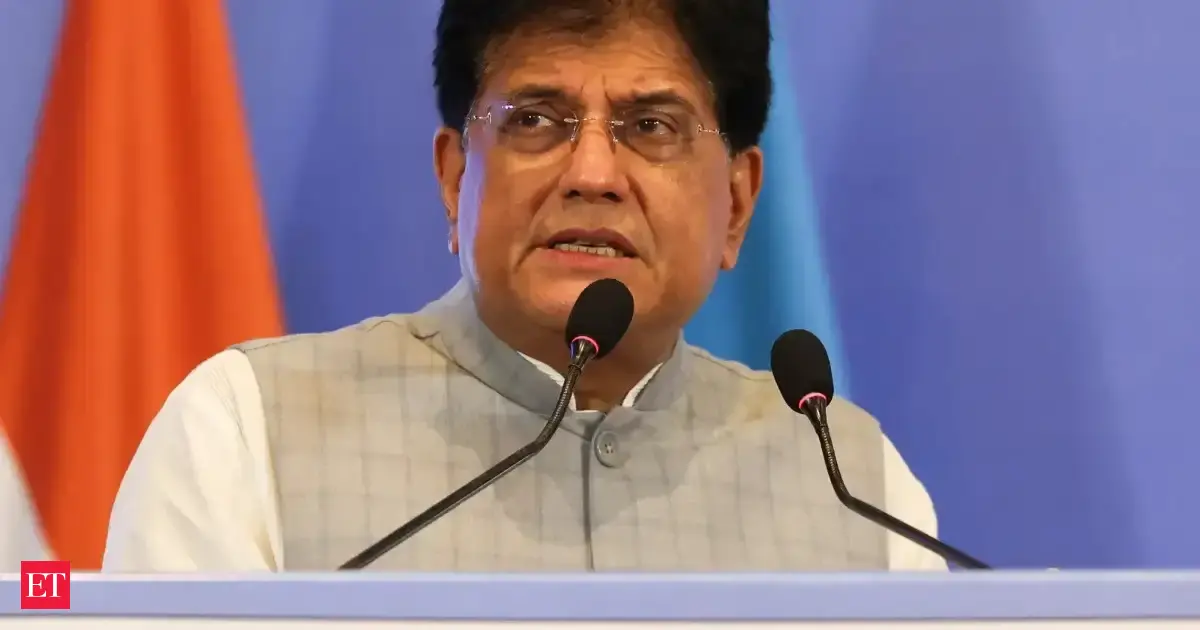
Commerce and industry minister Piyush Goyal has urged states to identify imported products that can be competitively manufactured in India, according to a statement from the Board of Trade meeting in New Delhi. The initiative aims to reduce import dependence, conserve foreign exchange, and bolster domestic supply chains.
Board of Trade Meeting
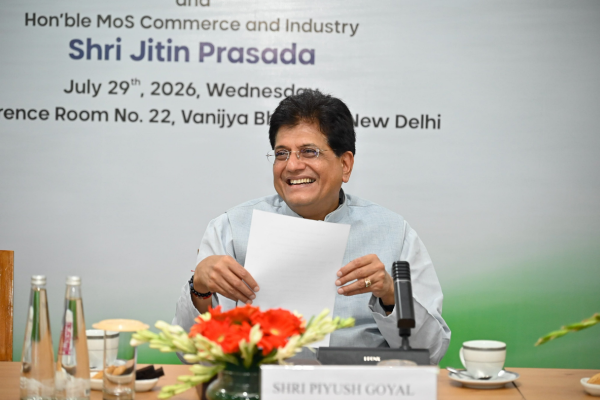
The suggestion was made during the Board of Trade meeting, which saw participation from Minister of State for Commerce and Industry Jitin Prasada, newly inducted board members, ministers and representatives from states and Union territories, export promotion councils, apex industry chambers, and non-official members. Goyal urged states, line ministries, export promotion councils (EPCs), and industry associations to establish export committees, hold regular engagements with exporters, and conduct monthly review meetings.
Focus on Import Substitution
According to Minister Piyush Goyal, such efforts would not only reduce import dependence and save foreign exchange but also strengthen domestic supply chains and reduce vulnerabilities arising from excessive dependence on foreign suppliers.
The minister emphasized the need for a coordinated approach to identify products with high import volumes that could be produced locally at competitive costs. This aligns with the government's broader Atmanirbhar Bharat (Self-Reliant India) push, though the source does not explicitly mention that policy by name.
DGTR and Trade Remedies
Goyal encouraged industries affected by unfair trade practices to approach the Directorate General of Trade Remedies (DGTR). He stated that DGTR would support domestic industries facing injury due to dumping or predatory pricing by foreign producers and could provide remedies through anti-dumping measures and safeguard duties. This mechanism is designed to protect Indian manufacturers from artificially cheap imports.
Districts as Export Hubs Initiative
The minister announced a time-bound 90-day drive under the Districts as Export Hubs initiative, covering 120 priority districts across 27 states and Union territories. The drive will be supported by 24 DGFT Regional Authorities and 11 partner agencies.
| Key Metric | Details |
|---|---|
| Duration | 90 days |
| Priority Districts | 120 |
| States/UTs Covered | 27 |
| DGFT Regional Authorities | 24 |
| Partner Agencies | 11 |
The drive will focus on measurable outcomes, including new exporter registrations and export value growth, while converging with the One District One Product initiative, GI products, and MSME clusters. This is expected to accelerate export-led growth at the grassroots level.
The combined measures—import substitution, trade remedy mechanisms, and targeted export promotion—signal a comprehensive approach to strengthening India's trade ecosystem. Stakeholders are advised to align their strategies with these policy directions to leverage emerging opportunities.
Sources: