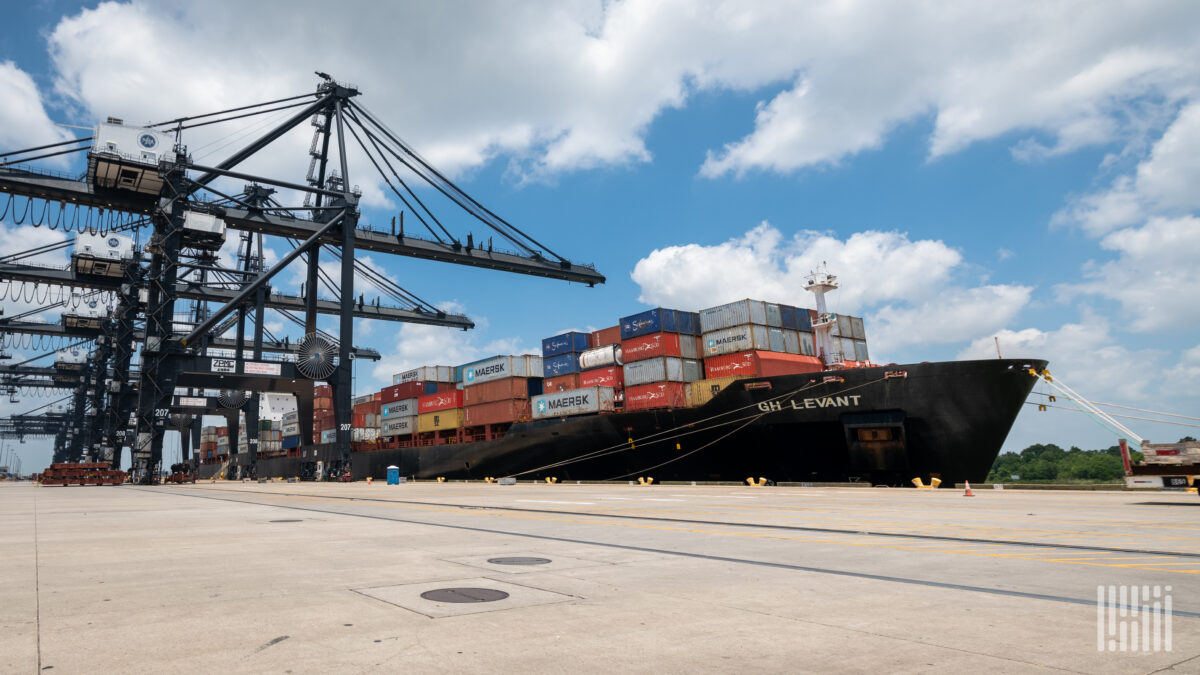
Ocean container rates have surged by $1,000 per forty-foot equivalent unit (FEU) on major east-west trade lanes, driven by early peak season demand and geopolitical tensions. The closure of the Strait of Hormuz by Iran has exacerbated the situation, leading to elevated fuel costs and tight space availability.
Context and Causes
The ongoing geopolitical conflict in the Persian Gulf, particularly the closure of the Strait of Hormuz, has kept container rates elevated. According to Freightos, the addition of early peak season demand is now pushing rates up sharply from an already elevated baseline.
"The container market has seen upward pressure on freight rates due to carriers passing on war-elevated fuel costs," said Judah Levine, a Freightos analyst.
Affected Trade Lanes and Rates
- Trans-Pacific Eastbound: Rates have climbed approximately 15% across ex-Asia lanes through mid-May, with current levels around 20% higher than a year ago.
- Asia-Europe: Rates have surpassed peak season highs from last June-July.
- Current Rates: $3,200 per FEU to the West Coast, $5,000 to the East Coast, $3,000 to North Europe, and $4,400 to the Mediterranean.
| Trade Lane | Current Rate (per FEU) | Increase |
|---|---|---|
| West Coast | $3,200 | $1,000 |
| East Coast | $5,000 | $1,000 |
| North Europe | $3,000 | $1,000 |
| Mediterranean | $4,400 | $1,000 |
Implications for Shippers
Shippers are facing premium charges and reduced space allocations for contracted shipments. CMA CGM, Maersk, and other carriers have announced additional rate increases planned for mid-month. Shippers should consider securing capacity early and exploring alternative routes to mitigate costs.
Watch List
- Geopolitical Developments: Any changes in the Persian Gulf conflict could impact rates and capacity.
- Carrier Announcements: Further rate increases or capacity changes by major carriers.
- Regulatory Changes: Potential adjustments in trucking regulations affecting inland logistics.
Shippers and logistics managers should stay informed on these developments to adjust their strategies accordingly.