iGEN
Visit IGEN World Explore IGEN Expo
EXPLORE UPGRADE PLANS
BREAKING
India must boost oilseed yields to cut edible oil imports, SEA chief says India Air Freights 5 Tonnes of Medical Aid to Afghanistan Under Humanitarian Assistance Tsakos Joins Greek Capesize Ordering Wave at Hengli Heavy Industries How US quietly kept Gulf crude moving despite Iran's Hormuz blockade Rupee Rebounds 31 Paise to 94.29 as Easing Oil, Dollar Index Boost Sentiment Shipping Braces for Monster El Niño as NOAA Warns of Record-Intensity Event Threatening Global Trade Lanes India May Require Refiners to Triple Crude Oil Inventories After Lessons From China Fleets Reposition for Hormuz Reopening Ahead of US-Iran Peace Deal Signing Gold price prediction today: Central bank buying, US-Iran peace deal support gold above $4,300/oz Middle East crude slips into discounts as US-Iran deal lifts global supply outlook India must boost oilseed yields to cut edible oil imports, SEA chief says India Air Freights 5 Tonnes of Medical Aid to Afghanistan Under Humanitarian Assistance Tsakos Joins Greek Capesize Ordering Wave at Hengli Heavy Industries How US quietly kept Gulf crude moving despite Iran's Hormuz blockade Rupee Rebounds 31 Paise to 94.29 as Easing Oil, Dollar Index Boost Sentiment Shipping Braces for Monster El Niño as NOAA Warns of Record-Intensity Event Threatening Global Trade Lanes India May Require Refiners to Triple Crude Oil Inventories After Lessons From China Fleets Reposition for Hormuz Reopening Ahead of US-Iran Peace Deal Signing Gold price prediction today: Central bank buying, US-Iran peace deal support gold above $4,300/oz Middle East crude slips into discounts as US-Iran deal lifts global supply outlook
Home ›› Logistics ›› Shipping Freight ›› Shipping Industry Struggles with ESG Despite Governance Gains

Shipping Industry Struggles with ESG Despite Governance Gains

The shipping industry is facing challenges in executing environmental, social, and governance (ESG) strategies despite progress in governance structures. A report by Lloyd’s Register highlights a gap between ESG strategy and operational delivery, with container shipping leading in ESG maturity.

iG
iGEN Editorial
June 4, 2026
Shipping Industry Struggles with ESG Despite Governance Gains

The shipping industry is currently grappling with significant challenges in translating established environmental, social, and governance (ESG) frameworks into operational performance. Despite progress in governance structures, the industry falls short in environmental execution and supply chain transparency.

Governance vs. Environmental Execution

According to Lloyd’s Register’s Maritime ESG Benchmarking Report, the shipping industry scores an average of 56 out of 100 on the Maritime ESG Maturity Index (MEMI). This places it in the lower 'advanced' category, with a notable imbalance between governance and environmental performance. 27 out of 48 companies assessed score significantly higher on governance than on environmental execution.

"This landmark report provides organisations with an objective view of industry progress, helping them assess their position, identify opportunities, and make more informed strategic decisions," said Ambrish Bansal, SVP for business advisory and consultancy at LR Advisory.

Regional Performance and Sector Leaders

The report highlights regional differences, with Americas-headquartered companies achieving the highest mean score of 62.7, driven by NYSE and NASDAQ-listed operators. Europe and Asia Pacific score close to the industry mean, at 55.3 and 55.7 respectively. Container shipping leads with a mean score of 74.7, while dry bulk lags at 49.5.

Region Mean Score
Americas 62.7
Europe 55.3
Asia Pacific 55.7

Implications for Shippers and Operators

Companies with stronger ESG capabilities are better positioned to secure financing on favorable terms, meet charterer requirements, and reduce long-term operating costs. However, maritime-specific environmental issues, such as biodiversity impacts and underwater noise, remain largely unaddressed.

Shippers and operators should focus on enhancing their environmental performance to align with governance structures. Investing in sustainable technologies and improving supply chain transparency can bridge the gap between strategy and execution.

Watch List

  • Upcoming Regulatory Changes: Potential new regulations on maritime emissions could impact operational strategies.
  • Technological Advancements: Innovations in sustainable shipping technologies may offer new opportunities for ESG improvement.
  • Market Dynamics: Shifts in global trade patterns could influence ESG priorities and performance metrics.

Keep Reading

Recommended Stories

ICS Endorses Onboard Carbon Capture for Shipping Emissions Logistics

ICS Endorses Onboard Carbon Capture for Shipping Emissions

The International Chamber of Shipping (ICS) endorses onboard carbon capture and storage (OCCS) as a viable near-term solution for reducing vessel emissions. The ICS report highlights OCCS's potential amidst limited availability of green fuels.

June 10, 2026
Europe needs 65 CO2 carriers and 33 ports by 2050 to meet carbon storage goals, Xodus report says Logistics

Europe needs 65 CO2 carriers and 33 ports by 2050 to meet carbon storage goals, Xodus report says

A new report by energy consultancy Xodus finds that Europe's carbon capture and storage ambitions will require a dedicated fleet of around 65 CO2 carriers and 33 ports by 2050. Captured emissions are forecast to rise from 70 mtpa in 2030 to 320 mtpa by 2050, with shipping volumes more than doubling to 79 mtpa. Logistics operators need to prepare for a new market in CO2 transport, including vessel construction, port infrastructure, and multimodal connections.

June 16, 2026
Sea Cargo Charter Signatories Hold Emissions Line Amid 2025 Shipping Turmoil Logistics

Sea Cargo Charter Signatories Hold Emissions Line Amid 2025 Shipping Turmoil

The Sea Cargo Charter’s 2025 annual report shows signatories maintained climate performance, averaging 11.6% behind IMO’s minimum decarbonisation trajectory, an improvement from 12.2% in 2024. Despite geopolitical turmoil and shifting trade patterns, 20 of 29 reporting companies lowered carbon intensity. Operational optimizations remain the primary tool, with growing interest in low-carbon fuels and wind propulsion.

June 12, 2026
Exmar's Ammonia-Powered Vessel Marks New Era in Shipping Logistics

Exmar's Ammonia-Powered Vessel Marks New Era in Shipping

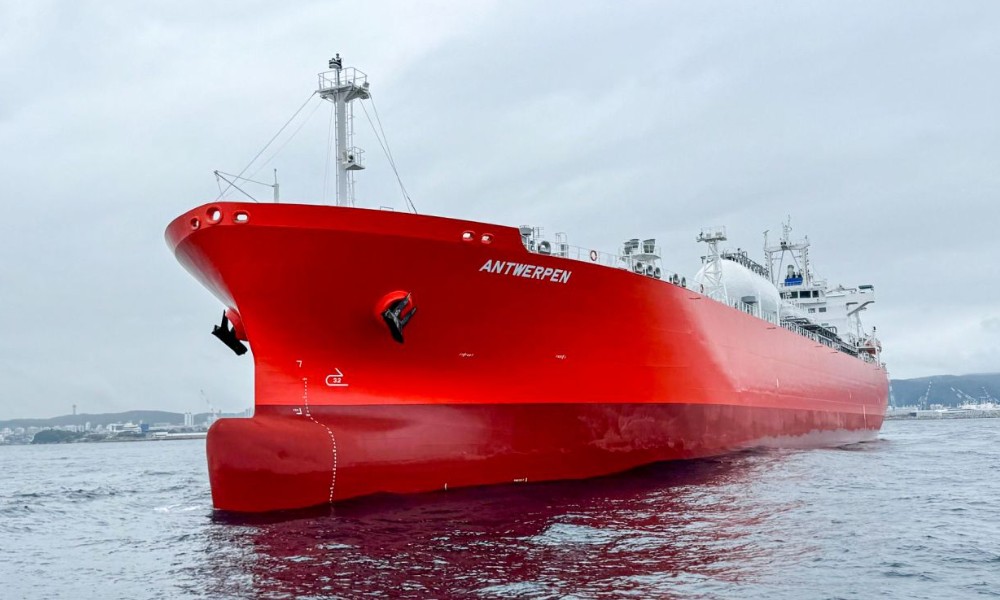
Exmar has launched the world's first oceangoing vessel powered by a dual-fuel ammonia engine, marking a significant milestone in sustainable shipping. The vessel, named Antwerpen, is part of a series of four ships designed to operate with low emissions.

June 10, 2026