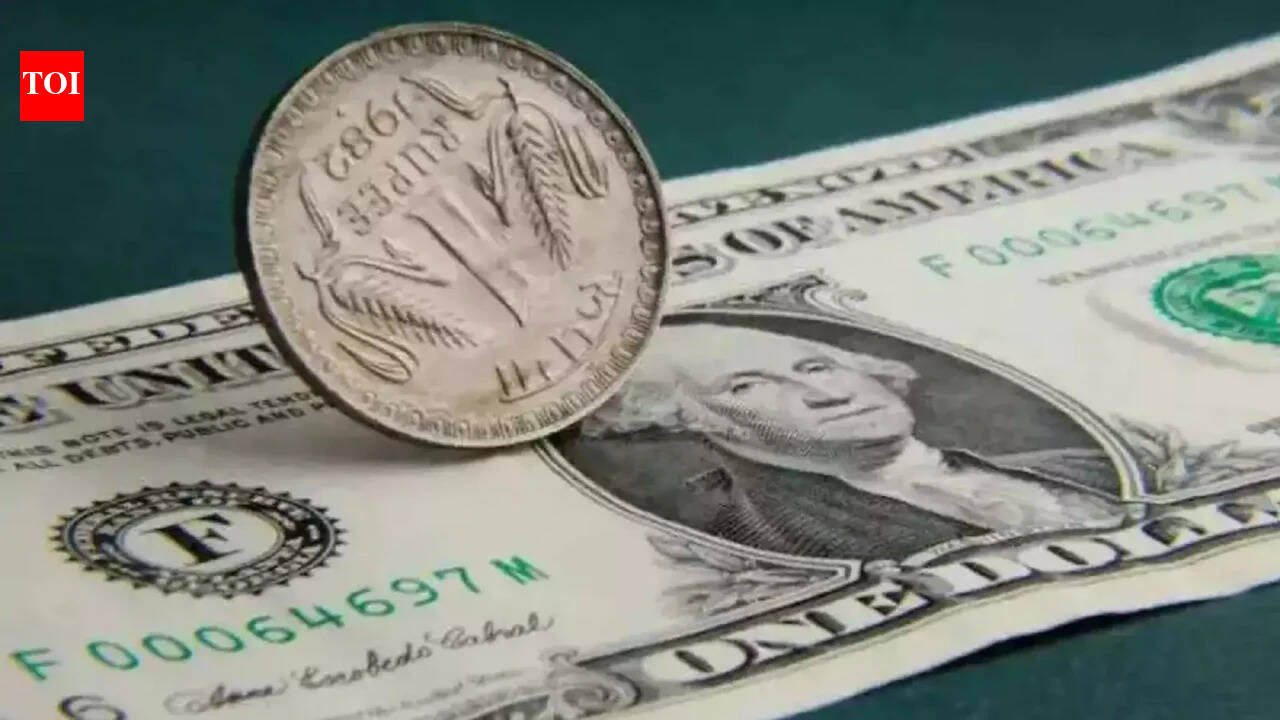
The Indian rupee opened strongly on Wednesday, rising 31 paise to touch 94.29 against the US dollar at the interbank foreign exchange market, according to a Business Today report. The currency opened at 94.46 and climbed to 94.29, compared with its previous close of 94.60 recorded on Tuesday. The move extends a rebound that has seen the rupee recover 130 paise over the past three trading sessions since the US-Iran framework agreement came into focus.
Factors Driving the Rally
Forex traders attributed the rupee’s firm footing to easing crude oil prices and a softer dollar index, as reported by the Business Today source. Brent crude futures slipped 0.37% to $78.67 per barrel, their lowest level in three months. Markets have been factoring in the reopening of the Strait of Hormuz following the emergence of the US-Iran framework agreement, traders said.
The dollar index, which measures the greenback against a basket of six major currencies, was trading 0.01% lower at 99.52, according to the same report.
| Key Data Point | Value |
|---|---|
| Rupee vs USD (close June 17) | 94.29 |
| Previous close (June 16) | 94.60 |
| Intraday gain | 31 paise |
| Recovery over 3 sessions | 130 paise |
| Brent crude | $78.67/barrel (-0.37%) |
| Dollar index | 99.52 (-0.01%) |
| Sensex (early trade) | 77,080.09 (+271.61 pts) |
| Nifty (early trade) | 24,044.50 (+55.35 pts) |
| FII net outflow (June 16) | ₹749.18 crore |
Expert Commentary
Amit Pabari, Managing Director of CR Forex Advisors, commented on the rupee’s technical positioning. “The rupee's bias has shifted. On the upside, 95.00-95.30 is now a strong resistance zone for USDINR,” Pabari was quoted as saying. He added that with expectations of strong foreign capital inflows and USDINR having decisively broken below the 94.80 level, “the pair could gradually move towards the 94.00–93.80 zone in the coming days.”
Pabari also flagged the signing of the US-Iran agreement in Geneva on June 19 as the key event to watch. “Until then, the recovery is real but the ground is not yet firm,” he said.
Domestic Equity and Capital Flows
Domestic equity markets opened higher, with the Sensex advancing 271.61 points to 77,080.09 and the Nifty rising 55.35 points to 24,044.50 in early trade, the source reported. Despite the rupee’s rally, foreign institutional investors remained net sellers on Tuesday, offloading equities worth ₹749.18 crore, according to exchange data.
Geopolitical Context
The report also noted developments related to the Middle East peace deal. US President Donald Trump said that JD Vance would head the American delegation for the in-person signing of the peace deal with Iran in Switzerland on Friday. A senior US official quoted by The New York Times confirmed that both Trump and Vance have electronically signed the framework agreement with Iran's lead negotiator Mohammad Bagher Ghalibaf.
Implications for Trade Finance and Business
For CFOs and treasury professionals, the rupee’s 31-paise appreciation against the dollar directly impacts import costs. A stronger rupee lowers the landed cost of imported raw materials, particularly crude oil, which is a key input for Indian refiners and petrochemical companies. This improves margins for import-heavy sectors such as chemicals, plastics, and edible oils.
Conversely, exporters — especially in IT services, textiles, and pharmaceuticals — face a headwind as their dollar-denominated revenues translate into fewer rupees. For firms with unhedged foreign exchange exposure, the recent volatility (130 paise swing in three sessions) underscores the need for active hedging strategies. The cost of hedging via forward contracts may have moderated as implied volatility receded on the deal optimism.
On the trade finance front, the combination of lower crude prices and a stronger rupee reduces India’s import bill, narrowing the current account deficit and potentially supporting the rupee further. However, the persistent net selling by foreign institutional investors (₹749.18 crore outflow on Tuesday) signals that capital flows remain mixed. Treasury teams should monitor the Geneva signing on June 19 for confirmation of the deal, which could trigger additional foreign inflows and push USDINR towards the 94.00-93.80 zone, as suggested by CR Forex Advisors.
Ultimately, while the near-term bias is positive for the rupee, businesses should avoid assumptions of a sustained rally until the US-Iran framework is formally signed and implementation details emerge. The ground is not yet firm, as Amit Pabari noted, and prudent risk management remains essential.
Sources: