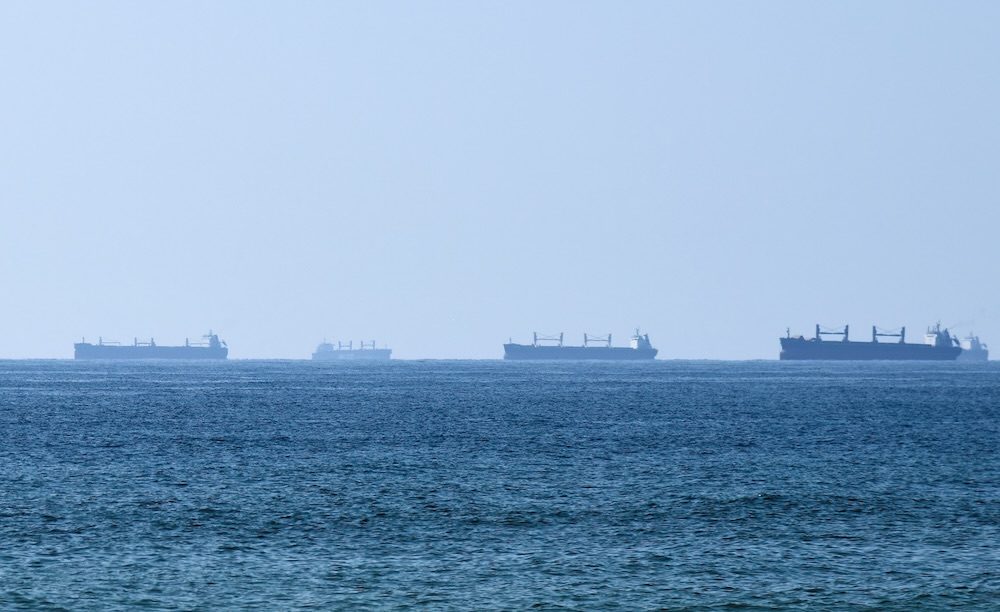
Plans to restart commercial shipping through the Strait of Hormuz have been thrown into doubt after an Evergreen containership was hit shortly after completing a transit through the waterway, according to Splash247. The incident prompted the International Maritime Organization (IMO) to pause its evacuation operation for vessels trapped in the Gulf.
Attack Details and Immediate Impact
The 9,532 TEU Ever Lovely was struck by a drone yesterday after using the southern route through the strait, close to the Omani side. It was transiting with two other Evergreen vessels: the 8,500 TEU Ever Lotus and the 5,600 TEU Ever Unicorn. Evergreen confirmed that no crew were injured and damage to the Ever Lovely was minimal, with the ship remaining seaworthy. AIS data shows the vessel has exited the area and is now heading for Singapore.
Setback for IMO Evacuation Plan
The attack came just as traffic through Hormuz was beginning to recover following the IMO evacuation corridor announcement and Oman’s publication of six authorised eastbound waypoints—the first formal safe-passage routing since the strait’s closure. IMO secretary-general Arsenio Dominguez said the evacuation plan would be temporarily paused while the organisation reconfirmed that safety guarantees remained in place.
"Following the launch of the IMO’s evacuation plan, through which several vessels have already been successfully evacuated, I have decided to temporarily pause its implementation," Dominguez stated. The IMO evacuation plan had been designed to move more than 11,000 seafarers out of the region after months of disruption. Earlier this week, the IMO said the operation would be carried out with Iran, Oman, other coastal states, the US and industry, and that it had secured the necessary safety guarantees to support safe navigation. Those guarantees are now being retested.
Carrier and Shipper Implications
Shipping organisation BIMCO said it was "deeply concerned" by the attack, describing it as a setback for efforts to evacuate ships and resume transits. "The attack is a setback in the plans to evacuate ships and resume transits through the Strait of Hormuz," BIMCO said, adding that some transits could still be expected. The association said the incident underlined the need for clearer agreements between Washington and Tehran, warning that the wording of the US-Iran memorandum of understanding remains "not sufficiently clear."
That ambiguity is now the central problem for shipowners. Iran’s Persian Gulf Strait Authority has warned that vessels using routes not designated by Tehran will not benefit from safe-passage guarantees, while the Oman/IMO corridor was designed precisely to give stranded ships an alternative route out of the Gulf. Maritime analytics firm Windward said Iran ordered vessels using the southern corridor to turn back yesterday, tracking five ships reversing course and a sixth going dark.
Watch List
- IMO safety guarantees reassessment: The IMO is reconfirming whether security commitments from all parties are still valid. Any failure to secure renewed guarantees could prolong the evacuation pause.
- Further attacks or escalations: The drone strike on the Ever Lovely shows that even vessels using agreed routes are at risk. Additional incidents could deter shipowners from attempting future transits.
- US-Iran MoU clarity: BIMCO's call for clearer wording highlights that the current MoU may not be sufficient to assure safe passage. Any progress or failure in negotiations will directly impact shipping lanes.
Key Data at a Glance
| Vessel | TEU | Status |
|---|---|---|
| Ever Lovely | 9,532 | Hit by drone; minimal damage; heading to Singapore |
| Ever Lotus | 8,500 | Transited safely |
| Ever Unicorn | 5,600 | Transited safely |
Shippers and 3PL operators should prepare for continued uncertainty in the Gulf region. The attack underscores that even formal safe-passage corridors may not guarantee security, and the pause in the IMO evacuation plan could extend the stranding of over 11,000 seafarers. Carriers may reroute vessels away from Hormuz, increasing voyage lengths and costs on the Asia-Europe and Asia-Middle East lanes.
Sources: