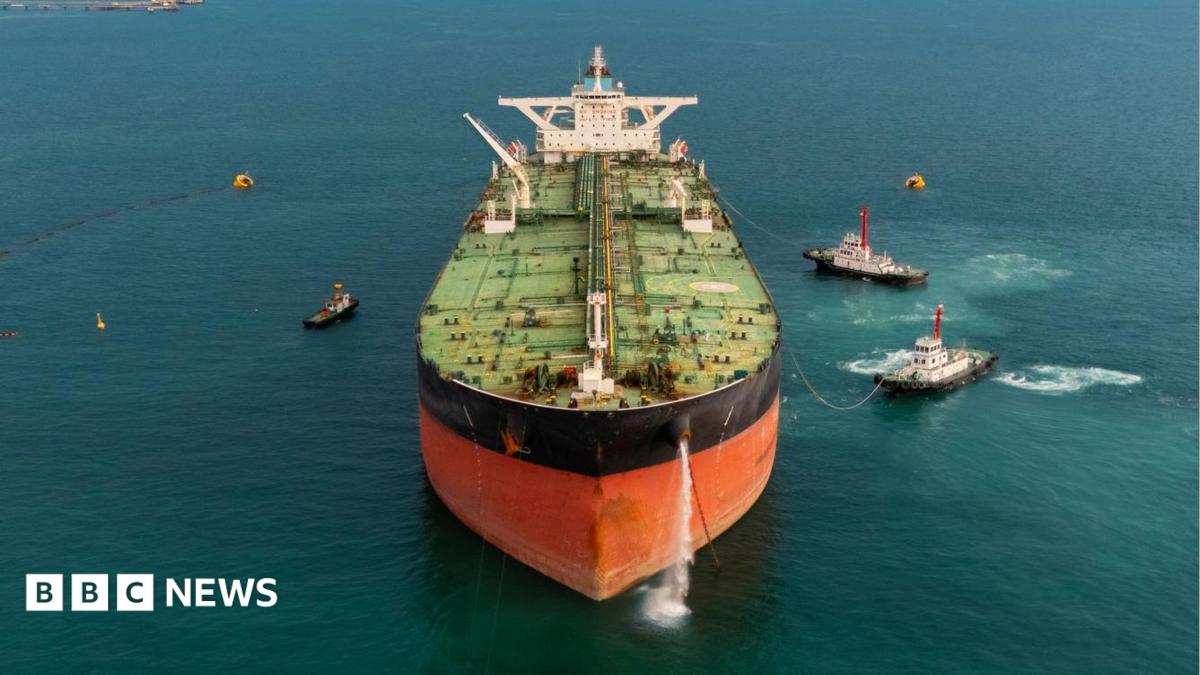
DP World's new terminals on the UAE's east coast will give cargo owners a direct route to the Indian Ocean, bypassing the war-disrupted Strait of Hormuz. The Dubai-based operator has reached an agreement in principle with Fujairah Ports Authority for a 50-year concession covering the Al Rugaylat container and multipurpose terminal and the Dibba general cargo terminal, both located on the Gulf of Oman, according to Splash247.
New terminals add 2.5M TEU outside Hormuz
The Al Rugaylat terminal will be developed as a deepwater gateway capable of handling the latest ultra-large containerships. Its designed annual capacity is 2.5 million TEU, 1.7 million tonnes of general cargo and 190,000 car equivalent units. The Dibba terminal will add a further 3.6 million tonnes of annual general cargo capacity. Once operational, the terminals will lift DP World's UAE container capacity from 19.4 million TEU to almost 22 million TEU. Construction is expected to take 24 to 30 months and will be completed in phases.
The facilities will be connected to Jebel Ali and the Jebel Ali Free Zone through DP World's inland logistics network, allowing cargo to move between the UAE's Gulf and Indian Ocean-facing coasts.
Gulftainer expands Khorfakkan capacity
Sharjah-based rival Gulftainer is pursuing a similar strategy through Khorfakkan Commercial Terminal, another UAE port outside Hormuz. The operator plans to increase capacity from 3.5 million TEU to 5 million TEU, with a longer-term target of more than 10 million TEU. The port will be connected with Al Dhaid and Sajaa logistics parks, which are expected to provide 2.3 million TEU of inland capacity. Gulftainer is reorganising its operations around four platforms covering ports, logistics parks, maritime services and shipping, supported by artificial intelligence-powered supply-chain and payment systems.
| Terminal / Pipeline | Operator | Current Capacity | Future Capacity | Timeline |
|---|---|---|---|---|
| Al Rugaylat (container) | DP World | – | 2.5M TEU | 24–30 months |
| Dibba (general cargo) | DP World | – | 3.6M tonnes | 24–30 months |
| Khorfakkan Commercial Terminal | Gulftainer | 3.5M TEU | 5M TEU (target >10M TEU) | Not specified |
| Abu Dhabi Crude Oil Pipeline (parallel) | UAE | 1.8M bpd | 3.6M bpd | Mid-2027 |
| Saudi East-West pipeline (expansion) | Saudi Arabia | 7M bpd | 8–9M bpd | Not specified |
Pipelines bypass Hormuz for crude, but refined products remain at risk
Shipbroker Poten & Partners said the effective closure of Hormuz had exposed around 20 million barrels per day of crude oil and product flows to disruption, prompting governments to revive or accelerate pipelines bypassing the waterway. Saudi Arabia is considering expanding its 7 million bpd East-West pipeline by between 1 and 2 million bpd, although additional export capacity would require upgrades at Yanbu, a port that has suffered a huge reversal in fortunes as the Houthis renewed their military campaign against Saudi ships in the Red Sea.
The UAE is moving faster. Its existing Abu Dhabi Crude Oil Pipeline carries up to 1.8 million bpd from Habshan to Fujairah. Poten said the country plans to double that capacity to 3.6 million bpd through a parallel pipeline, with completion potentially possible by mid-2027.
Iraq is examining routes to Turkey's Ceyhan, Syria's Baniyas and Jordan's Aqaba, while Kuwait has discussed accessing Saudi Arabia's westward pipeline network. Most of the projects focus on crude oil, leaving around 5 million bpd of refined products produced inside the Gulf exposed to any future Hormuz closure.
Shipper and operator implications
“With Jebel Ali operating at high utilisation, this development provides the additional capacity to support long-term growth,” said Yuvraj Narayan, DP World group chief executive. “For cargo owners, it means greater flexibility, more choice and stronger supply chain resilience.”
The new terminals give DP World a physical hedge against prolonged instability in Hormuz, where much of the Gulf’s containerised, energy and industrial trade has traditionally been concentrated. Shippers moving goods to and from the UAE now have a route that avoids the strait entirely, reducing transit risk and potential delays. The inland connectivity to Jebel Ali ensures cargo can be distributed across the country or re-exported.
Watch list
- Construction timeline for Al Rugaylat and Dibba terminals: early works expected to take 24–30 months, phased completion.
- Houthi attacks on Saudi vessels in the Red Sea and their impact on Yanbu export capacity.
- Progress of the UAE's parallel crude pipeline, targeting mid-2027.
- Decisions by Iraq and Kuwait on alternative pipeline routes for crude and refined products.
Sources: