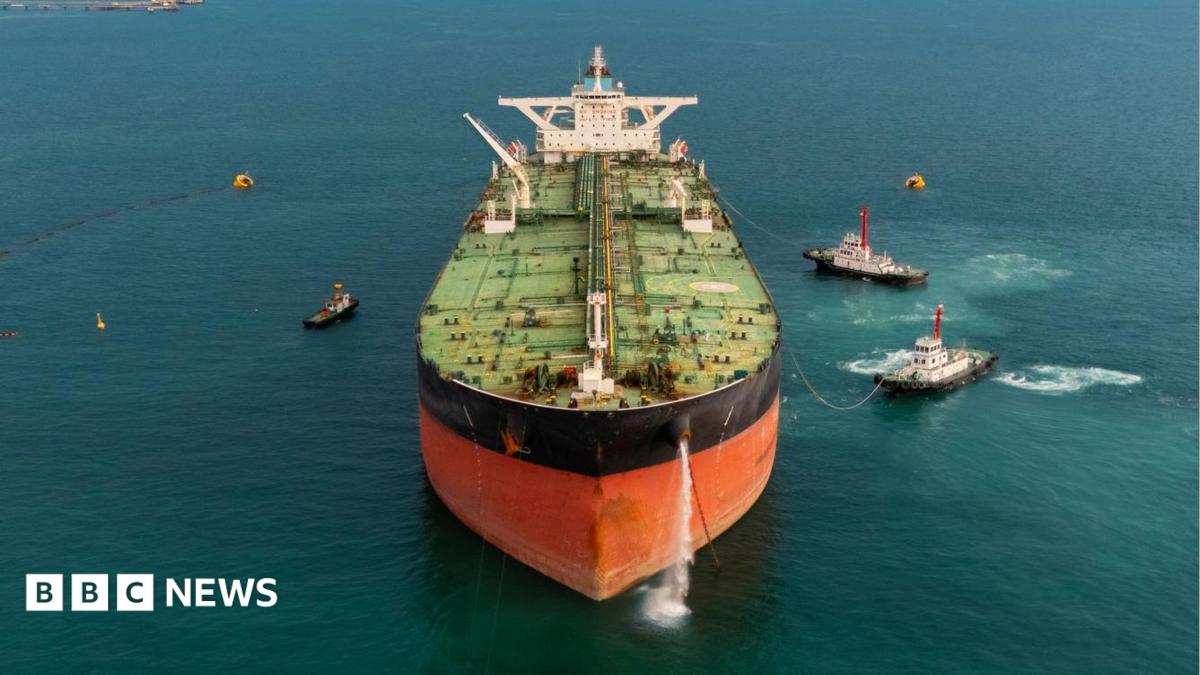
Three Indian-flagged crude oil tankers carrying more than 8.6 lakh metric tonnes (MT) of cargo and 94 Indian crew members successfully transited the Strait of Hormuz on Saturday, June 20, and are now sailing toward Indian ports, according to Union Minister for Ports, Shipping and Waterways Sarbananda Sonowal. This development relieves supply chain uncertainty for Indian refiners dependent on crude oil imports through this critical chokepoint.
Strait of Hormuz Passage Resumes
In a post on X, Sonowal stated, “3 Indian-flagged crude oil tankers, Desh Vaibhav, Desh Vibhor and Sanmar Herald carrying over 8.6 Lakh MT of cargo with 94 Indian crew members have successfully transited the Strait of Hormuz today and are en route to India.” The development comes days after the United States lifted its blockade on Iran and allowed oil tankers to resume movement through the strategically important waterway following a tentative agreement aimed at ending the Iran conflict, according to Business-Today. Sonowal added that the government is working to safeguard India’s maritime and energy interests under the leadership of Prime Minister Narendra Modi.
Vessel Details and Arrival Schedules
The three vessels are expected to reach Indian ports next week, according to news agency PTI:
| Vessel | Cargo (MT) | Crew | Destination Port | Expected Arrival |
|---|---|---|---|---|
| Desh Vaibhav | ~2.87 lakh (est.) | 94 total across vessels | Vadinar Port | June 24 |
| Desh Vibhor | ~2.87 lakh (est.) | 94 total | Sikka Port | June 24 |
| Sanmar Herald | ~2.87 lakh (est.) | 94 total | Paradip Port | July 1 |
(Cargo split estimated equally; total 8.6 lakh MT across three vessels.)
Rising Traffic Despite Tensions
According to Reuters, the United States military reported that commercial shipping traffic through the Strait of Hormuz increased on June 20, with more than 17 million barrels of oil moving through the waterway. US Central Command (CENTCOM) said 55 commercial vessels transited the strait on Saturday and that safe passage remained intact. CENTCOM stated, “US forces remain present and vigilant to ensure all aspects of the agreement with Iran are adhered to, obeyed, and in full force and effect.” The comments came shortly after Iran's Islamic Revolutionary Guard Corps (IRGC) announced the closure of the strait, alleging violations of the US-Iran truce by Israel and the United States. However, US Vice President JD Vance said earlier that he had seen no evidence of the waterway being shut and expressed confidence that the ceasefire would hold.
Implications for Indian Logistics Operators
For Indian crude oil importers and logistics managers monitoring the Persian Gulf route, the successful transit signals a resumption of flows through the Strait of Hormuz, which had been disrupted by the US blockade. Freight forwarders and shippers relying on Indian-flagged tankers should coordinate with port authorities at Vadinar, Sikka, and Paradip for berth allocation and cargo discharge scheduling, given the anticipated arrivals in late June and early July. The increase in commercial traffic — 55 vessels in a single day — suggests improving passage conditions, but ongoing geopolitical tensions mean operators should maintain contingency plans for potential re-escalation.
Watch List
- Iran-Israel-US tensions: The IRGC’s claim of strait closure, even if unsubstantiated, indicates fragility in the ceasefire. Any new violations could disrupt shipping again.
- US military posture: CENTCOM’s continued presence and vigilance could deter further threats; however, diplomatic developments will be key.
- Indian government coordination: Sonowal’s statement emphasizes active coordination with agencies; rapid communication channels should be maintained.
Sources: