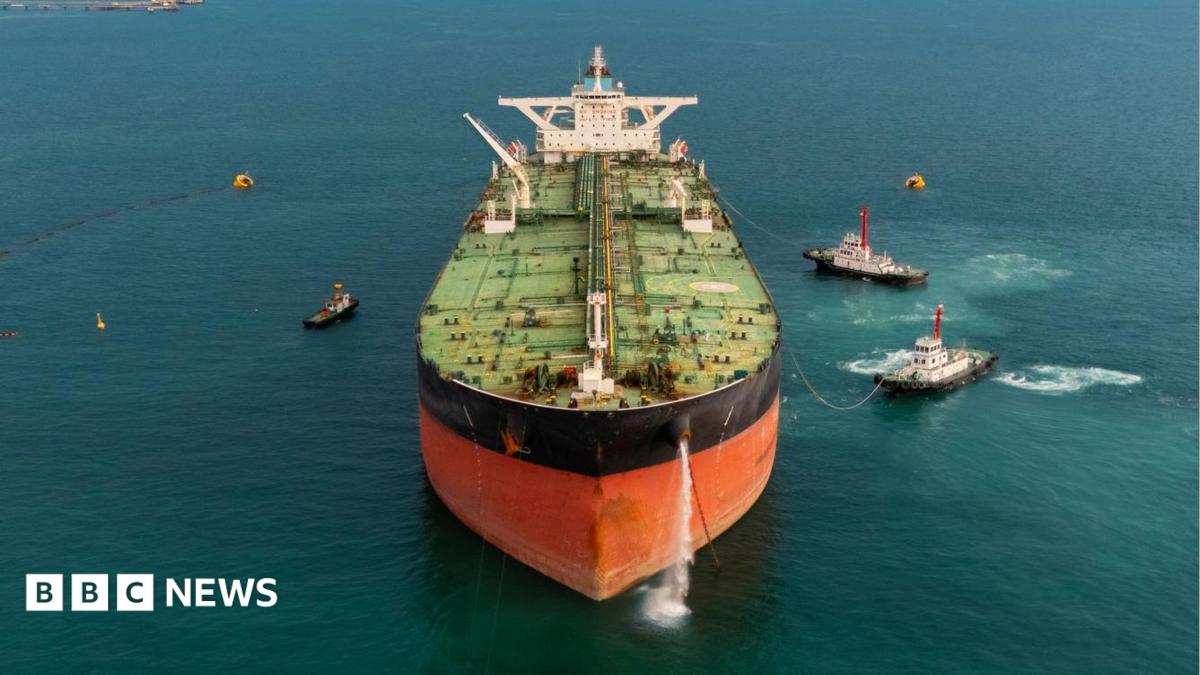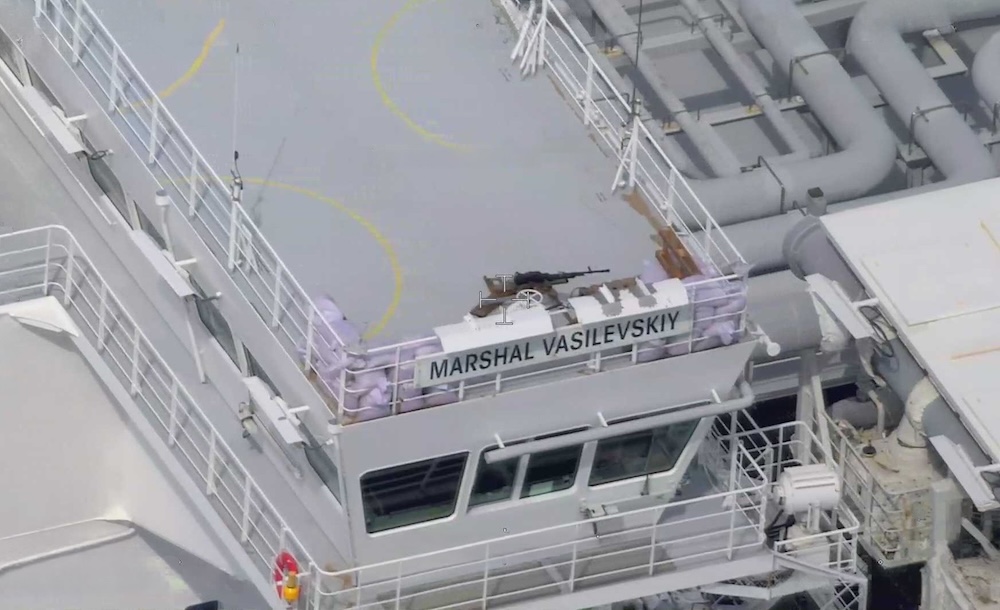
Russian energy giant Gazprom has armed an LNG carrier operating a regular commercial route in the Baltic Sea, marking an unprecedented militarisation of a civilian merchant vessel, according to an investigation by the Organized Crime and Corruption Reporting Project (OCCRP) and several European media partners. The presence of heavy machine guns and military-linked personnel aboard the Marshal Vasilevskiy introduces a new security risk for other shipping in the region and may trigger heightened scrutiny from NATO states and insurers.
Details of the Incident
Surveillance photographs taken by the Estonian Police and Border Guard Board in May show two 12.7 mm Kord heavy machine guns mounted in sandbagged firing positions on either side of the bridge of the Gazprom-owned LNG carrier Marshal Vasilevskiy as it transited the Baltic, according to the OCCRP investigation reported by Splash247. The vessel is a strategic asset for Russia, supplying liquefied natural gas between the mainland port of Bolshoy Bor and the Russian exclave of Kaliningrad, which is sandwiched between NATO members Poland and Lithuania.
Investigators also identified at least 22 individuals aboard the ship with backgrounds in the Russian military, the Federal Security Service (FSB), the National Guard, or the defence ministry. Passenger manifests reviewed by reporters showed several military-linked personnel repeatedly travelling on the vessel, suggesting the armed positions may be manned by trained operators rather than civilian crew. The report did not name specific individuals.
Operational Implications for Baltic Shipping
The findings come as tensions continue to rise across the Baltic, where NATO states have stepped up surveillance of Russian shipping following a series of sanctions enforcement actions and suspected acts of maritime sabotage, the article noted. The presence of heavy weapons on a merchant tanker on a regular route—the Marshal Vasilevskiy shuttles between Bolshoy Bor and Kaliningrad—raises several operational concerns for freight forwarders, ocean carriers, and insurers.
First, the militarisation of a commercial vessel could complicate transit risk assessments. Ships transiting the Baltic, particularly near the Kaliningrad corridor, may face increased risk of escalation if armed Russian vessels are encountered. Second, insurers may adjust war-risk premiums for Baltic routes, especially for vessels calling at Russian ports or passing near Kaliningrad. Third, the incident may prompt port authorities and coast guards in NATO countries to implement additional inspection or escort requirements for Russian-flagged tankers.
| Aspect | Details from Source |
|---|---|
| Vessel name | Marshal Vasilevskiy |
| Owner/operator | Gazprom |
| Route | Bolshoy Bor (mainland Russia) to Kaliningrad (exclave) |
| Observed armament | Two 12.7 mm Kord heavy machine guns in sandbagged positions |
| Evidence source | Surveillance photographs by Estonian Police and Border Guard (May) |
| Military personnel | At least 22 individuals with Russian military, FSB, National Guard, or defence ministry backgrounds |
| Investigating bodies | OCCRP and several European media partners |
Shipper and Operator Recommendations
For logistics and shipping companies operating in the Baltic, this development demands immediate attention. Freight forwarders should review their risk management protocols for vessels calling at Russian Baltic ports or transiting near Kaliningrad. Ocean carriers may need to brief crews on how to respond if they encounter armed Russian merchant ships. Insurers are likely to reassess coverage for Russian-linked voyages. The source did not provide specific rate or volume data, but the security environment is deteriorating. Operators should monitor NATO advisories and consider rerouting or delaying non-essential calls in the region until further risk assessments are completed.
Watch List
- NATO response: The alliance has already stepped up Baltic surveillance; further measures such as convoy escorts or restricted zones could follow.
- Sanctions enforcement: The armed tanker may test the ability of Western navies to enforce sanctions and maritime security without escalation.
- Insurance market: War-risk premiums for Baltic trading may increase, affecting overall shipping costs for the region.
- Further investigations: OCCRP and European media may publish additional findings on other Russian vessels or crew members.
Sources: