iGEN
Visit IGEN World Explore IGEN Expo
EXPLORE UPGRADE PLANS
BREAKING
US military runs secret ship-to-ship oil transfer operation near Strait of Hormuz to keep Gulf energy exports flowing Wasserstein Equilibrium Decoding Boosts Reliability in Medical Visual Question Answering BRITE Benchmark Reveals Critical Gaps in Text-to-Video Models' Object-Action Binding and Audio-Visual Sync Vocabulary Dropout Technique Prevents Diversity Collapse in LLM Co-Evolution Training Bayesian Visualization Helps Humans Negotiate with AI Across Multiple Issues, Study Shows Multi-Sequence Verifiers Cut Inference Latency in Half for LLM Reasoning Language-Guided AI Framework CLARITY Boosts Road Scene Segmentation for Autonomous Logistics When RAG Hurts: Research Identifies Attention Distraction in Vision-Language AI Models and Proposes Mitigation Strait of Hormuz Reopening: Mine Clearance Delays Threaten Weeks-Long Recovery for Oil Shipping India’s REITs and InvITs May Attract Rs 11.6 Lakh Crore Investment by 2030, Avendus Report Says US military runs secret ship-to-ship oil transfer operation near Strait of Hormuz to keep Gulf energy exports flowing Wasserstein Equilibrium Decoding Boosts Reliability in Medical Visual Question Answering BRITE Benchmark Reveals Critical Gaps in Text-to-Video Models' Object-Action Binding and Audio-Visual Sync Vocabulary Dropout Technique Prevents Diversity Collapse in LLM Co-Evolution Training Bayesian Visualization Helps Humans Negotiate with AI Across Multiple Issues, Study Shows Multi-Sequence Verifiers Cut Inference Latency in Half for LLM Reasoning Language-Guided AI Framework CLARITY Boosts Road Scene Segmentation for Autonomous Logistics When RAG Hurts: Research Identifies Attention Distraction in Vision-Language AI Models and Proposes Mitigation Strait of Hormuz Reopening: Mine Clearance Delays Threaten Weeks-Long Recovery for Oil Shipping India’s REITs and InvITs May Attract Rs 11.6 Lakh Crore Investment by 2030, Avendus Report Says
Home ›› Logistics ›› Shipping Freight ›› Tankers Lng ›› Strait of Hormuz Reopening: Mine Clearance Delays Threaten Weeks-Long Recovery for Oil Shipping

Strait of Hormuz Reopening: Mine Clearance Delays Threaten Weeks-Long Recovery for Oil Shipping

The US-Iran tentative agreement ends the three-month Middle East conflict, but the Strait of Hormuz faces a slow recovery due to mine clearance and shipping bottlenecks. Over 20% of global oil supply was disrupted, with 500 vessels stranded. Shipping resumes gradually, with analysts warning of weeks to months for normal flows.

iG
iGEN Editorial
June 16, 2026
Strait of Hormuz Reopening: Mine Clearance Delays Threaten Weeks-Long Recovery for Oil Shipping

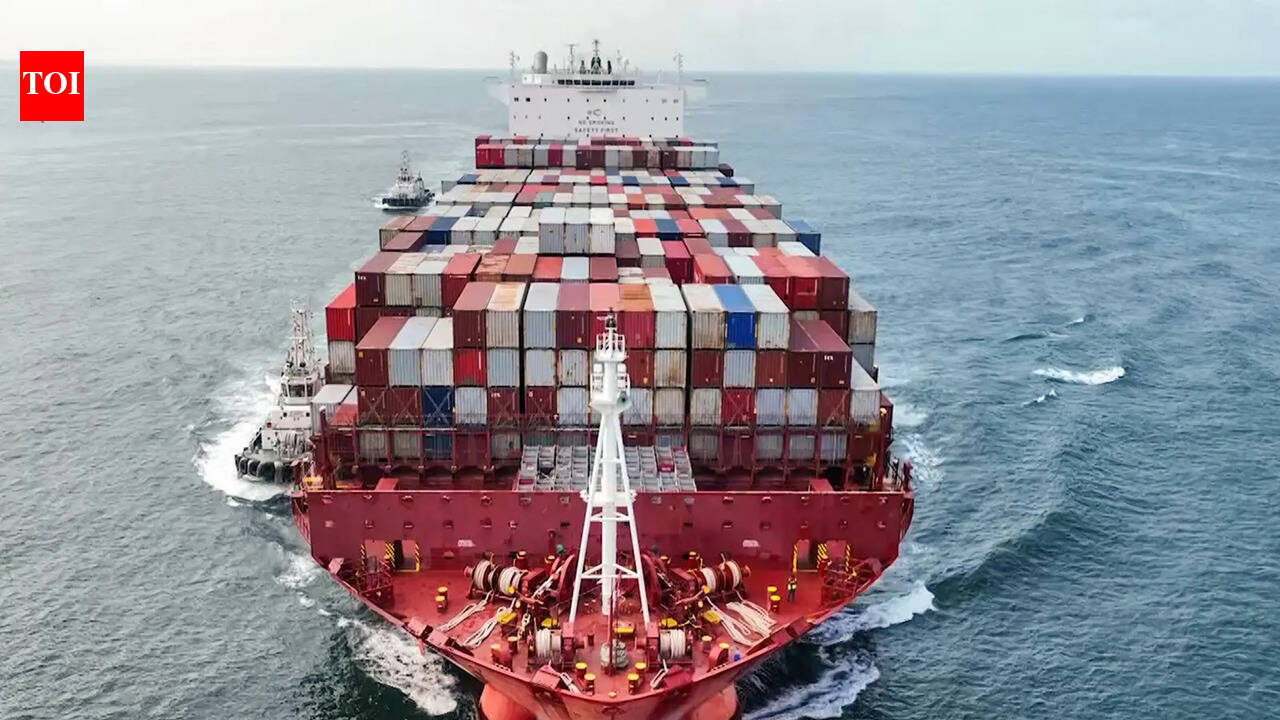
The tentative US-Iran agreement to end the three-month Middle East conflict has opened the Strait of Hormuz to traffic, but the return to normal shipping operations will be gradual, with mine clearance and risk-aversion among shipowners likely to delay full recovery by weeks or months, according to Business-Today. The disruption affected over 20% of the world's oil supplies, stranding hundreds of vessels and forcing Gulf producers to scale back output.

Mine Clearance and Shipping Bottlenecks

Even as President Trump said on Monday that "ships are starting to go out now" and that "on Friday it'll be completely opened," maritime intelligence firm Kpler reported around 500 commercial vessels remain inside the Persian Gulf. These vessels cannot all pass through the narrow waterway at once, creating a bottleneck. Richard Meade, editor-in-chief of Lloyd's List, noted the sector was "not rushing back," viewing mine clearance operations as "prerequisites for safe navigation." Amena Bakr, head of Middle East energy at Kpler, estimated that clearing mines could take as long as six months. The G7 leaders are set to decide on a framework to de-mine the waterway, but officials remain unclear about the number of mines present.

Timeline for Recovery

According to a senior US official, traffic will increase gradually, and it could take up to two weeks for shipping activity to significantly pick up. A return to pre-conflict levels could take even longer as shipping companies have different risk appetites. Jotaro Tamura, chief executive of Japan's Mitsui OSK Lines, told the Financial Times that shipowners are unlikely to rush back until they are convinced the deal is "material" and risks have eased. He estimated it may take "at least a couple of weeks or if not a month" for oil flows to resume. Compounding the delay, a round trip to Japan takes between 45 and 50 days.

Factor Timeline Source
Ships starting to go out Immediate (Trump) Business-Today
Significant activity pick-up Up to 2 weeks Senior US official
Full return to pre-conflict levels Longer (weeks to months) Senior US official
Mine clearance completion Up to 6 months Amena Bakr (Kpler)

Shipper and Operator Implications

Freight forwarders and logistics operators should anticipate extended lead times for crude and petroleum shipments transiting the Strait of Hormuz. Insurance premiums for vessels using the route may remain high until mine clearance is verified. US allies have proposed deploying warships to escort shipments, which could provide a temporary security buffer. Shippers should re-evaluate inventory buffers for crude-dependent supply chains, especially for Asian buyers reliant on Middle East supply.

"Given the experiences in the last couple of months, I think it's reasonable to assume that it may take at least a couple of weeks or if not a month," said Jotaro Tamura, CEO of Mitsui OSK Lines.

Watch List

  • G7 de-mining framework — final decision and implementation timeline.
  • Iran's fee collection demands — Iran has sought the right to collect fees from vessels using the passage, which could introduce new operational costs.
  • Vessel insurance market — changes in risk assessment and premium levels.
  • Alternative routes — potential diversion of some traffic via longer alternatives (e.g., Bab el-Mandeb) if security concerns persist.

Operators should monitor daily updates from maritime intelligence firms like Kpler and Lloyd's List for real-time clearance progress and vessel movement data.


Sources: Business-Today

Keep Reading

Recommended Stories

Hormuz Threat Level Stays Severe Despite Peace Breakthrough as Explosions and Uncertainty Persist Logistics

Hormuz Threat Level Stays Severe Despite Peace Breakthrough as Explosions and Uncertainty Persist

The Strait of Hormuz remains at a severe threat level despite a diplomatic breakthrough, with explosions reported, vessels requiring military protection, and uncertainty lingering. Over 500 vessels are stranded, facing biofouling issues that could increase fuel consumption by 15-30%. Shipbroker BRS warns it may take four to five months for traffic to normalize even if a deal is signed.

June 16, 2026
Hormuz Ceasefire Deal Leaves Shipping in Familiar Wait-and-See Mode as Operational Hurdles Remain Logistics

Hormuz Ceasefire Deal Leaves Shipping in Familiar Wait-and-See Mode as Operational Hurdles Remain

Asian shipping stocks rallied Monday on a tentative US-Iran ceasefire deal to reopen the Strait of Hormuz after 107 days, but industry experts caution that a full return to normal navigation will be gradual and uncertain. Major operational questions remain over mine clearance, traffic control, insurance, and the durability of the ceasefire, with over 500 vessels still stranded and traffic almost non-existent.

June 15, 2026
US military runs secret ship-to-ship oil transfer operation near Strait of Hormuz to keep Gulf energy exports flowing Logistics

US military runs secret ship-to-ship oil transfer operation near Strait of Hormuz to keep Gulf energy exports flowing

The US military has conducted scores of secretive ship-to-ship oil transfers off the coast of Fujairah, UAE, and Sohar, Oman, to keep Gulf energy exports flowing amid Iran's closure of the Strait of Hormuz. The operation, involving at least 116 ships and using aerial and water drones as well as helicopters, started in early May. An Apache helicopter involved in the mission was shot down by Iran on June 9, triggering retaliatory bombings.

June 16, 2026
12 ships carrying 6 lt of urea and DAP may head to India once Strait of Hormuz opens Logistics

12 ships carrying 6 lt of urea and DAP may head to India once Strait of Hormuz opens

The Indian government announced sufficient fertilizer stocks for the kharif season, with 196.65 lakh tonnes available as of June 14. Twelve ships carrying 3.3 lt of urea and 2.57 lt of di-ammonium phosphate (DAP) are awaiting passage through the Strait of Hormuz, expected to take 7-10 days to reach India once reopened.

June 15, 2026